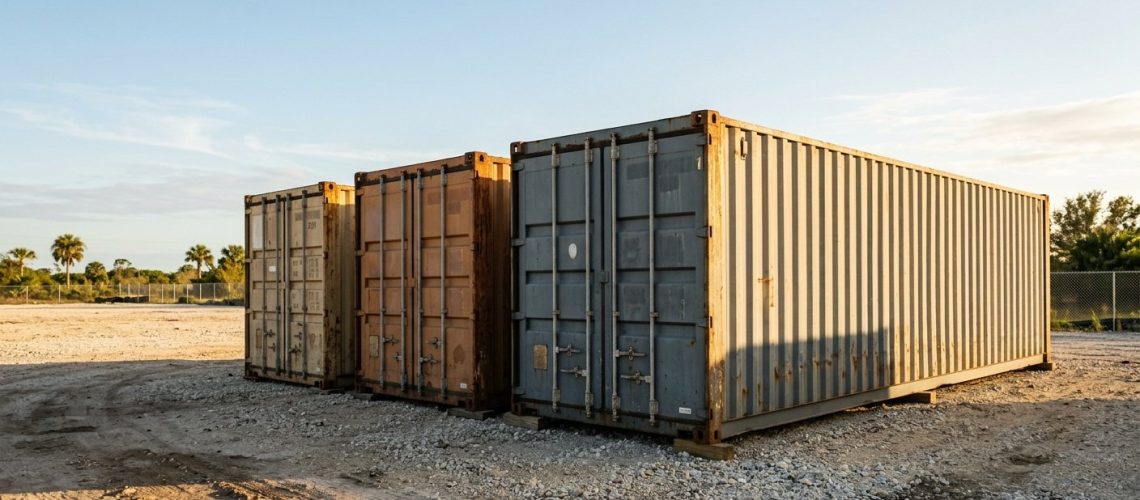
Choosing the wrong container size is one of the most common—and costly—mistakes people make when renting portable storage. Too small, and you’re scrambling for a second unit. Too large, and you’re paying for space you never use. Whether you’re managing a construction site in Port St. Lucie, staging a home for sale in Stuart, or reorganizing your business inventory in Palm Beach County, matching the right container to your actual needs saves time, money, and headaches.
This guide breaks down the most common conex container sizes, what fits in each one, and how to choose the right option for your specific situation—whether you’re a homeowner, contractor, or business owner.
What Is a Conex Container?
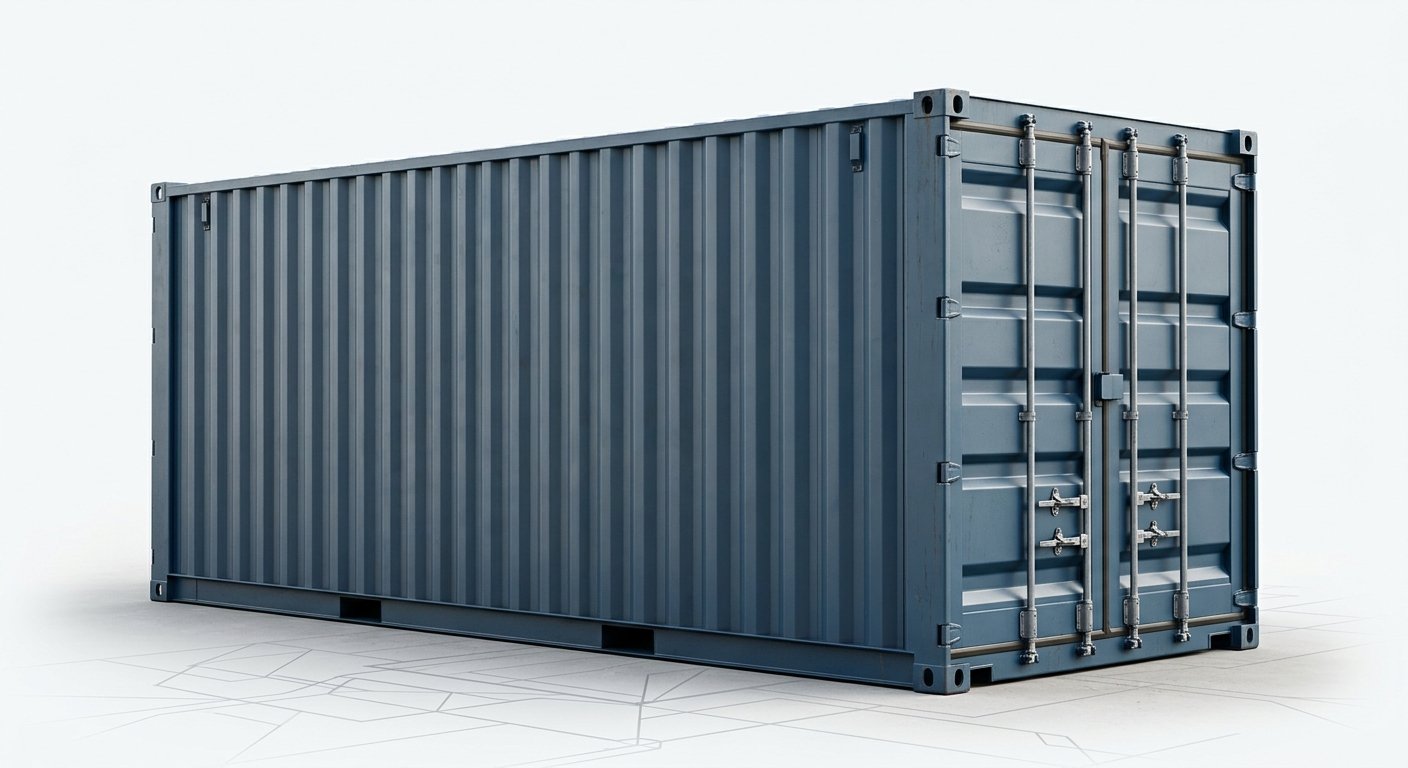
A conex container—short for “container express”—is a standardized steel storage container originally developed for military and shipping logistics. Today, the term is used interchangeably with shipping containers and steel storage containers for both commercial and residential portable storage applications.
Modern conex box rentals are designed to be weather-resistant, structurally secure, and stackable. They’ve become a go-to solution on construction sites, business lots, and residential properties because they offer ground-level access, high capacity, and durability that traditional storage options simply can’t match. According to the Bureau of Transportation Statistics, intermodal shipping containers follow strict ISO sizing standards, which is why container dimensions are consistent across the industry.
Standard Conex Container Sizes
Most conex container rentals fall into a few standard sizes. Understanding the dimensions—and what they can realistically hold—is the key to making the right call.
10-Foot Container
Dimensions: Approximately 10′ L × 8′ W × 8.5′ H
Interior capacity: Roughly 800 cubic feet
The 10-foot unit is ideal for smaller storage needs where space is limited on-site. Common use cases include:
- Studio or one-bedroom apartment moves
- Storing tools and materials for a small renovation project
- Seasonal storage for patio furniture or holiday items
- Small business overstock and supplies
This size is especially practical in tighter residential driveways or compact job sites where maneuvering a larger unit would be difficult.
20-Foot Container
Dimensions: Approximately 20′ L × 8′ W × 8.5′ H
Interior capacity: Roughly 1,170 cubic feet
The 20-foot shipping container is the most popular rental size—and for good reason. It hits the sweet spot between capacity and footprint, making it versatile enough for a wide range of projects.
- Moving or staging a 2-3 bedroom home
- Whole-home renovation storage while you temporarily relocate
- Construction site tool storage, equipment, and materials
- Restaurant equipment during kitchen remodels
- Retail or warehouse overflow inventory
A 20-foot conex container rental is typically the right call for mid-sized residential moves and most commercial short-term storage needs. It’s large enough to hold the contents of a modest home and fits comfortably in most standard driveways with room to open the doors fully.
40-Foot Container
Dimensions: Approximately 40′ L × 8′ W × 8.5′ H
Interior capacity: Roughly 2,350 cubic feet
For large-scale projects, the 40-foot steel storage container rental is the heavy hitter. If you’re moving a 4-5 bedroom home, managing a large construction project, or need serious inventory storage for a growing business, this is your unit.
- Large home moves with full furniture sets, appliances, and garage contents
- Commercial construction sites needing centralized, secure tool storage
- Business inventory warehousing for seasonal or overflow stock
- Property managers handling tenant transitions or full property cleanouts
Keep in mind that a 40-foot container requires more clearance for delivery and placement. Make sure you have adequate driveway length or lot space before requesting this size.
How to Choose the Right Size: A Practical Framework
Picking the right container comes down to three questions: What are you storing? How long do you need it? And where will it be placed?
Match Size to Your Home or Business
Here’s a simple reference guide based on residential square footage and business type:
- Studio or 1-bedroom apartment (under 800 sq ft): 10-foot container
- 2-3 bedroom home (800–1,800 sq ft): 20-foot container
- 4+ bedroom home or full household (1,800+ sq ft): 40-foot container
- Small business inventory or contractor tools: 20-foot container
- Large-scale commercial or construction needs: 40-foot container
Factor in How You’ll Load It
One advantage of a conex container rental through Dash Mobile Storage is ground-level access. Unlike traditional storage units that may require lifting items onto a platform or navigating ramps, ground-level containers make loading and unloading significantly easier—especially for heavy furniture, appliances, and equipment. This matters most when you’re working without a moving crew or when contractors are moving tools in and out regularly throughout a job.
Plan for Florida’s Unique Challenges
South Florida and the Treasure Coast bring specific considerations to any storage project. If you’re storing items during a renovation that spans hurricane season (June through November), choosing a steel container over a fabric or soft-sided portable storage option provides meaningful structural resilience. Steel conex containers are built to withstand significant external forces, though no storage solution eliminates all risk from major storm events. Always follow guidance from Florida’s Division of Emergency Management when preparing property and stored items before a named storm.
Humidity is another real concern. While steel containers aren’t airtight by design, storing items off the ground and away from concrete surfaces using pallets or shelving can help reduce moisture contact. Packing items in sealed bins rather than cardboard boxes also makes a notable difference in preserving your belongings over longer rental periods.
Conex Containers for Business and Construction
Commercial users have different priorities than homeowners—mainly security, accessibility, and consistent availability. A 20-foot or 40-foot steel storage container rental on a job site becomes the central hub for tools, materials, and equipment. Workers can access what they need at ground level without climbing into a truck bed or rummaging through a cluttered trailer.
For businesses, portable container rentals offer flexibility that traditional warehouse space doesn’t. You can scale up or down based on seasonal inventory levels, position the unit exactly where it’s needed on your property, and avoid long-term lease commitments. The U.S. Small Business Administration emphasizes flexibility in managing operational costs—and portable storage is one way businesses can reduce fixed overhead while maintaining logistical capability.
Backed by 70+ years of logistics experience through the Armellini Logistics heritage, Dash Mobile Storage understands the operational needs of businesses and contractors throughout South Florida and the Treasure Coast. That background informs how we think about delivery, placement, and container selection—not just as a transaction, but as a logistics challenge worth solving correctly.
Should You Rent or Buy a Container?
For most homeowners and project-based users, renting is the smarter financial choice. Buying a container requires significant upfront capital, ongoing maintenance responsibility, and a permanent place to store it when it’s not in use. Renting a conex container gives you access to the capacity you need for exactly as long as your project requires—without the long-term commitment.
For businesses with ongoing, year-round storage needs, purchasing may eventually make sense. But even then, starting with a shipping container rental lets you test placement, workflow, and the right size before committing to ownership.
Explore your rental options through our conex shipping container rentals page, or take a look at our full range of portable storage units if you need a more compact solution. For customers in the middle of a move, our relocation services offer additional options designed specifically for transitions.
Frequently Asked Questions
What is the most common conex container size for residential use?
The 20-foot container is the most popular choice for homeowners. It comfortably holds the contents of a 2-3 bedroom home and fits in most standard driveways, making it practical for moves, renovations, and staging projects.
How do I know if a 40-foot container will fit on my property?
You’ll need at least 40 feet of clear, level space for placement plus additional clearance for the delivery truck to maneuver. If you’re uncertain, contact our local team for a consultation before booking—we can help assess your site and recommend the best solution.
Are conex containers secure enough for construction sites?
Yes. Steel conex containers are significantly more secure than soft-sided or trailer-based storage options. Their heavy-gauge steel construction and lockable cargo doors make them a practical choice for storing tools, equipment, and materials on active job sites.
Can I store business inventory in a conex container long-term?
Absolutely. Many businesses use conex container rentals as a cost-effective alternative to warehouse space for seasonal or overflow inventory. Just ensure items are properly packed and elevated off the container floor to manage humidity, especially in Florida’s climate.
What’s the difference between a conex container and a portable storage unit?
Conex containers are full-size ISO-standard steel shipping containers (typically 20 or 40 feet long) offering maximum capacity and durability. Portable storage units are generally smaller, lighter-weight containers suited for residential moves and short-term projects. Both offer ground-level access through Dash Mobile Storage.
Ready to Find Your Size?
Getting the right container the first time is easier than you think—especially with a local team that knows South Florida logistics inside and out. Whether you’re clearing a house in Palm Beach County, running a construction project on the Treasure Coast, or managing inventory for your business, Dash Mobile Storage has a container size built for the job.
Contact our team today to discuss your project, get a quote, and schedule delivery at a time that works for you. We’ll help you get the right size, in the right place, at the right time.