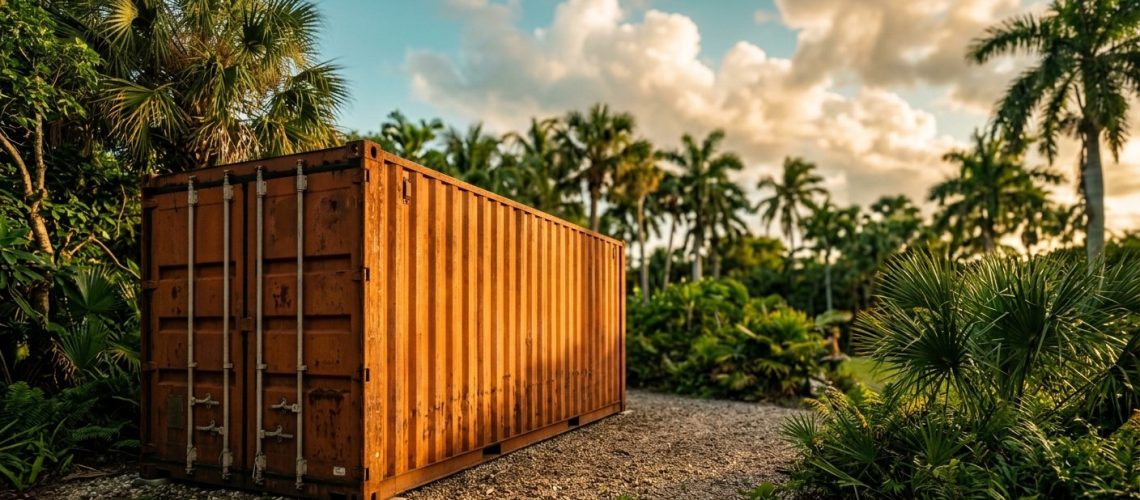
Conex containers handle Florida’s humidity well because they are built from corten (weathering) steel, which forms a self-protecting oxide layer that resists corrosion. For most stored goods, the bigger concern is interior condensation rather than the container structure itself. Understanding how to manage airflow, vapor, and heat inside the unit keeps your belongings protected in South Florida’s subtropical climate.
- Corten steel construction makes conex containers naturally resistant to the corrosive effects of saltair and humidity.
- Interior condensation—not the container shell—is the primary humidity threat to stored contents.
- Ventilation, desiccants, and proper load arrangement can dramatically reduce moisture buildup inside a unit.
- Ground-level accessible containers make inspecting and rotating stored items far easier in South Florida conditions.
- Dash Mobile Storage delivers units directly to your site, so you control the storage environment from day one.
Why Florida Humidity Is a Real Storage Challenge
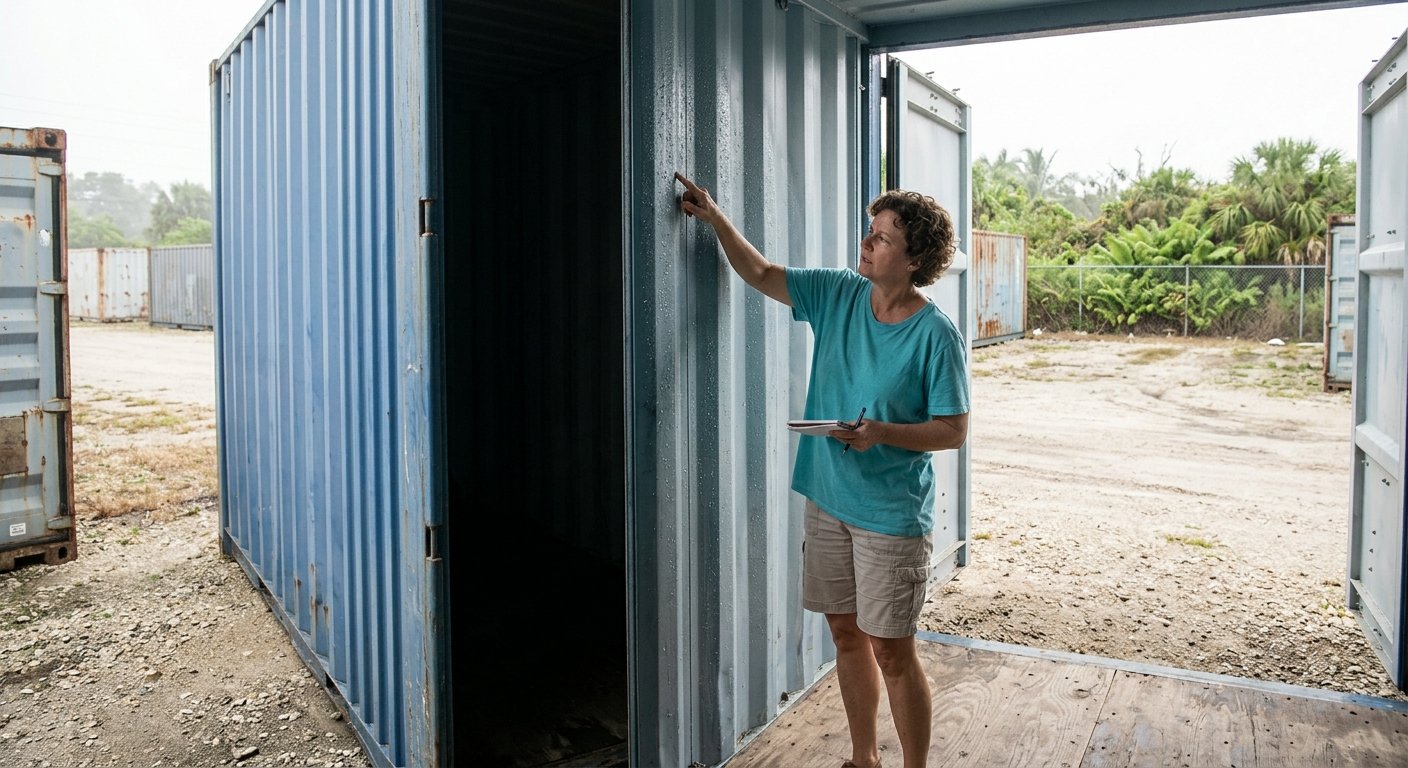
South Florida and the Treasure Coast sit in a subtropical climate zone where relative humidity regularly exceeds 80 percent during summer months. That level of ambient moisture is hostile to electronics, tools, documents, wood furniture, textiles, and many building materials. When warm, humid outside air enters a metal container and contacts the cooler steel interior, it can condense—a phenomenon often called “container rain.” Droplets form on the ceiling and walls, dripping onto stored goods exactly when you least expect it.
The challenge is not unique to any one storage type, but steel containers amplify it because metal conducts temperature quickly. Understanding the physics helps you plan smarter rather than discover a mold problem weeks into a renovation or construction project.
Salt-laden coastal air accelerates corrosion on standard steel. Corten steel used in quality shipping containers responds differently—its surface oxidizes into a stable patina that actually slows further rust. This is one reason a well-maintained container can remain structurally sound for years in a marine environment, though interior humidity management remains essential for protecting stored contents.
How Corten Steel Resists Corrosion

Standard ISO shipping containers—including the conex boxes used in portable storage rentals—are manufactured from ASTM A588 weathering steel, commonly called corten. When exposed to moisture and oxygen, corten develops a dense rust-like patina that bonds tightly to the surface, unlike ordinary rust, which flakes and exposes fresh metal underneath. The patina essentially becomes a sacrificial barrier.
For South Florida and Treasure Coast property owners, this matters because the container structure itself is designed to withstand decades of marine shipping conditions. The steel hull is not your weak point. The contents—and the microclimate inside the container—require the active attention.
Managing Interior Condensation
Ventilation Is the First Line of Defense
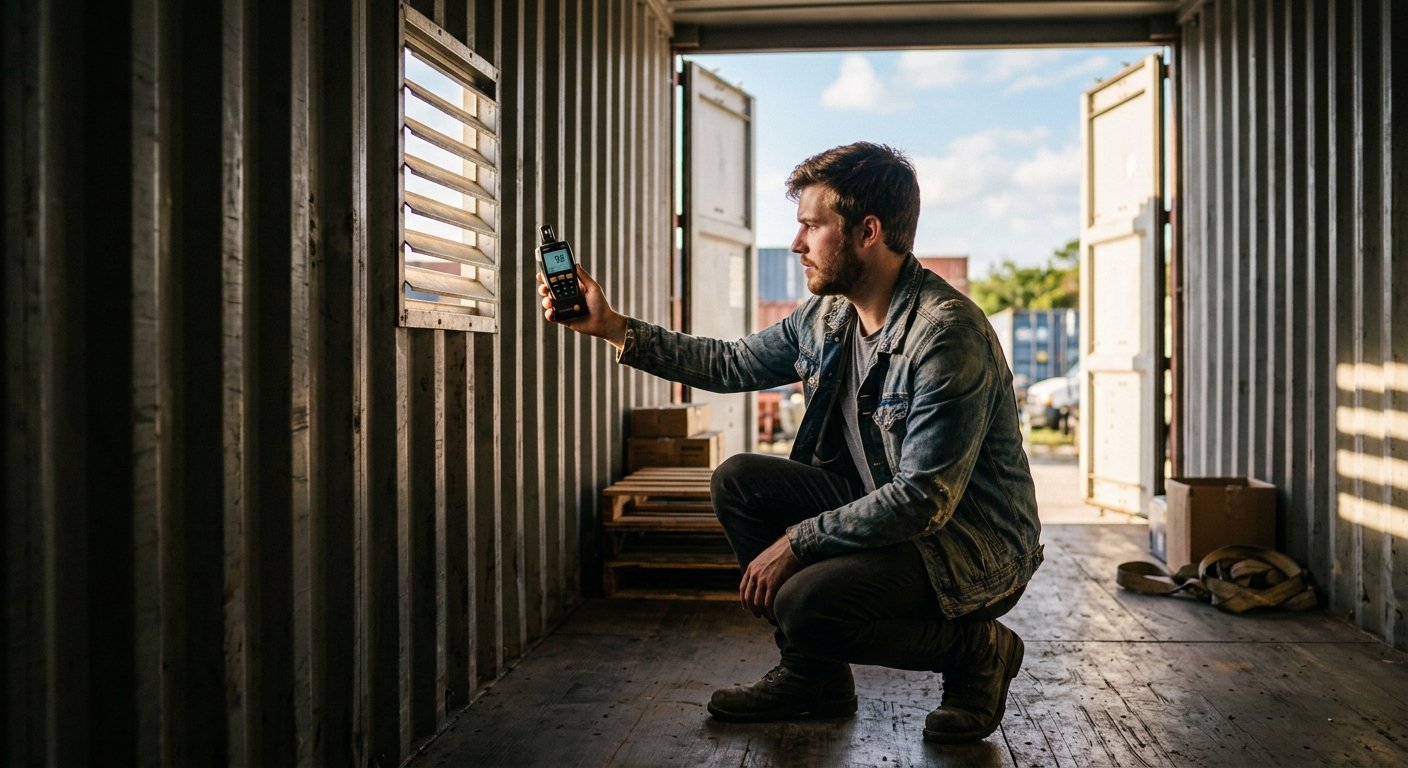
Most quality containers include vent holes or louvered vents near the top of each wall. These allow warm air to escape rather than accumulate. When positioning a container on your property or job site, orient it so prevailing winds can cross-ventilate through the vents. Avoid sealing the container airtight unless you are using a controlled desiccant system specifically designed for enclosed spaces.
If a container will be used in a high-humidity application—such as long-term storage during a multi-phase home renovation—supplemental ventilation options like passive roof vents can be added to most units before delivery.
Desiccants and Moisture Absorbers
Hanging desiccant bags rated for container use (sometimes called “container desiccants” or “cargo dry” products) absorb ambient moisture before it can condense. These are a low-cost, practical solution for sealed or minimally vented storage. Replace them on a schedule—typically every 30 to 60 days depending on ambient conditions and the volume of the space.
The EPA’s guidance on mold prevention consistently points to moisture control as the most effective strategy. Keeping relative humidity below 60 percent inside the container substantially reduces mold and mildew risk for stored goods.
Place a simple digital hygrometer inside your container when you first load it. Check readings over the first week to understand how humidity fluctuates before committing to a desiccant or ventilation strategy. A $15 hygrometer can save hundreds in damaged inventory or materials.
Load Arrangement Reduces Risk
How you organize the interior matters almost as much as the container itself. Follow these practices:
- Elevate pallets and boxes off the floor using timber dunnage or plastic pallets to allow airflow beneath stored goods.
- Leave a gap between boxes and container walls to reduce direct condensation contact.
- Group humidity-sensitive items (electronics, documents, fabric) toward the center of the container, away from walls.
- Use sealed plastic bins rather than cardboard for long-term or moisture-sensitive storage.
- Avoid packing the container to the ceiling—hot air rising needs space to escape through vents.
Ground-Level Access Makes Humidity Management Easier
One practical advantage of ground-level accessible portable storage units is that you can inspect, rotate, and reorganize stored goods without the risk of a ladder or elevated platform. In Florida’s humid summers, this ease of access encourages regular checks—which is exactly when you catch a ventilation issue, a failing desiccant bag, or an early sign of moisture intrusion before it becomes a costly problem.
Dash Mobile Storage delivers units directly to your location—whether a residential driveway in Palm Beach County, a construction site on the Treasure Coast, or a commercial property undergoing phased renovation. Backed by over 70 years of logistics experience through the Armellini Logistics heritage, the team understands what Florida conditions demand from a storage solution.
The container structure is not your weak point—the microclimate inside requires the active attention.
Conex Containers vs. Other Temporary Storage Options
| Factor | Conex / Steel Container | Fabric/Tent Storage |
|---|---|---|
| Structural humidity resistance | High — corten steel with oxide barrier | Low — fabric degrades, allows moisture penetration |
| Security | Heavy-duty lockbox and steel doors | Limited — fabric can be cut |
| Ventilation control | Built-in vents; supplemental options available | Passive only; humidity not controlled |
| Wind and storm resilience | Designed for ocean freight conditions | Vulnerable to high winds |
| Ground-level access | Yes — roll-up or swing doors at grade | Varies — often uneven flooring |
Hurricane Season Considerations
Florida’s hurricane season runs June through November, and humidity spikes sharply during and after tropical events. Steel containers are engineered to survive ocean freight—conditions that routinely include Category-equivalent winds and wave spray. While no storage solution prevents all hurricane damage or flooding, a properly positioned conex container offers substantial structural integrity compared to fabric, wood, or lightweight alternatives.
Positioning matters: place containers on stable, level ground away from flood-prone low spots. Avoid placing them directly under large trees that could shed branches. If your property is in a coastal flood zone, elevating the container on blocking may be appropriate—discuss site specifics when you arrange delivery so the team can advise on positioning for your location.
For more about how portable storage fits into hurricane preparedness planning, Dash’s portable storage units page outlines available options and configurations suited to Florida conditions.
No storage container prevents flooding from storm surge. If your site is in a FEMA-designated Special Flood Hazard Area, review your local floodplain ordinances before placing any ground-level structure, including portable containers. Check the FEMA Map Service Center to confirm your flood zone designation.
Frequently Asked Questions
Will a conex container rust in Florida’s saltair environment?
Quality containers made from corten (weathering) steel develop a protective oxide layer that resists salt-accelerated corrosion far better than standard mild steel. Surface discoloration is normal and is part of that protective process. Regular inspection for deep pitting or damage to door seals keeps the container performing well over its rental period.
How do I prevent mold inside my rental container?
Control moisture by keeping relative humidity below 60 percent inside the unit. Use container-rated desiccants, ensure vents are not blocked, elevate goods off the floor, and inspect the container regularly. Avoid storing wet or damp items—they introduce moisture directly into the enclosed space.
Can I use a conex container for business inventory storage in Florida?
Yes. Steel container rentals are widely used for commercial inventory, equipment, and seasonal stock. For businesses managing goods sensitive to humidity—electronics, packaged food, textiles—a desiccant program and periodic ventilation checks are the standard operational practice. Dash Mobile Storage works with South Florida and Treasure Coast businesses on both short-term and extended rental arrangements.
What is the difference between a conex container rental and a standard portable storage unit?
The terms are often used interchangeably. “Conex” refers to the original military designation for steel intermodal containers; today it broadly describes any steel shipping container used for storage. Portable storage units from Dash are ground-level accessible steel containers delivered to your location—functionally the same structure. See the conex shipping container rentals page for size and configuration details.
Does Dash Mobile Storage deliver to construction sites?
Yes. Dash serves contractors and project managers across South Florida and the Treasure Coast. Ground-level accessible units are ideal for job sites because tools, materials, and equipment can be loaded and retrieved without lifting over a threshold. Contact the team to discuss site access requirements before scheduling delivery.
Planning Your Rental
Whether you need short-term storage during a home renovation, a construction site solution for a multi-month build, or longer-term commercial inventory space, selecting the right container size and positioning it correctly from the start saves time and protects your investment. Dash Mobile Storage’s relocation services page is also worth reviewing if your storage need is connected to a residential or business move.
The combination of corten steel construction, smart interior setup, and regular monitoring gives you a reliable, secure storage environment—even in one of the most humid regions in the continental United States. Florida’s climate demands more from storage than a northern state might, but a properly managed container rental meets that demand without complication.
Ready to store with confidence in Florida’s climate?
Contact the Dash Mobile Storage team to discuss unit sizes, site requirements, and delivery scheduling for your South Florida or Treasure Coast location.
About Dash Mobile Storage
Dash Mobile Storage provides convenient, secure, and affordable portable storage solutions for South Florida and Treasure Coast homeowners, contractors, and businesses. Drawing on 70+ years of logistics experience through the Armellini Logistics heritage, Dash delivers ground-level accessible storage units directly to customers' locations. The company specializes in helping clients navigate Florida-specific storage challenges including moves, renovations, construction site organization, hurricane preparedness, and business inventory management with a locally-rooted, customer-first approach. Visit dashmobilestorage.com →