
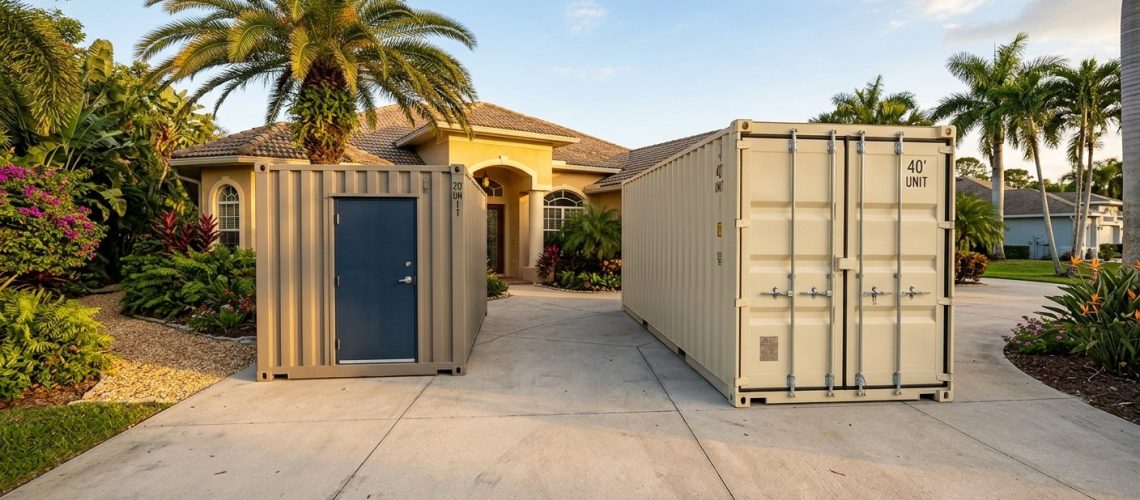
The right on-site storage container size depends on the volume and type of items you need to store, the available space at your property or job site, and how long you need access. For most residential moves or renovations, a 20-foot unit handles one to three rooms comfortably. Contractors and businesses typically need a 40-foot unit for equipment, materials, and inventory. Matching size to your actual need prevents overspending on unused space or under-ordering and making do.
- Container sizes typically range from 10 to 40 feet — the right choice depends on project scope, not guesswork.
- Ground-level accessible units make loading and unloading faster and safer, especially for heavy equipment or furniture.
- Ordering too small costs more in the long run; a sizing consultation before delivery prevents mid-project headaches.
- Florida-specific factors — humidity, storm season, and coastal conditions — should influence how you pack and position your unit.
- Construction contractors and business owners often need different sizing logic than residential customers — this article covers both.
Why Container Size Matters More Than You Think
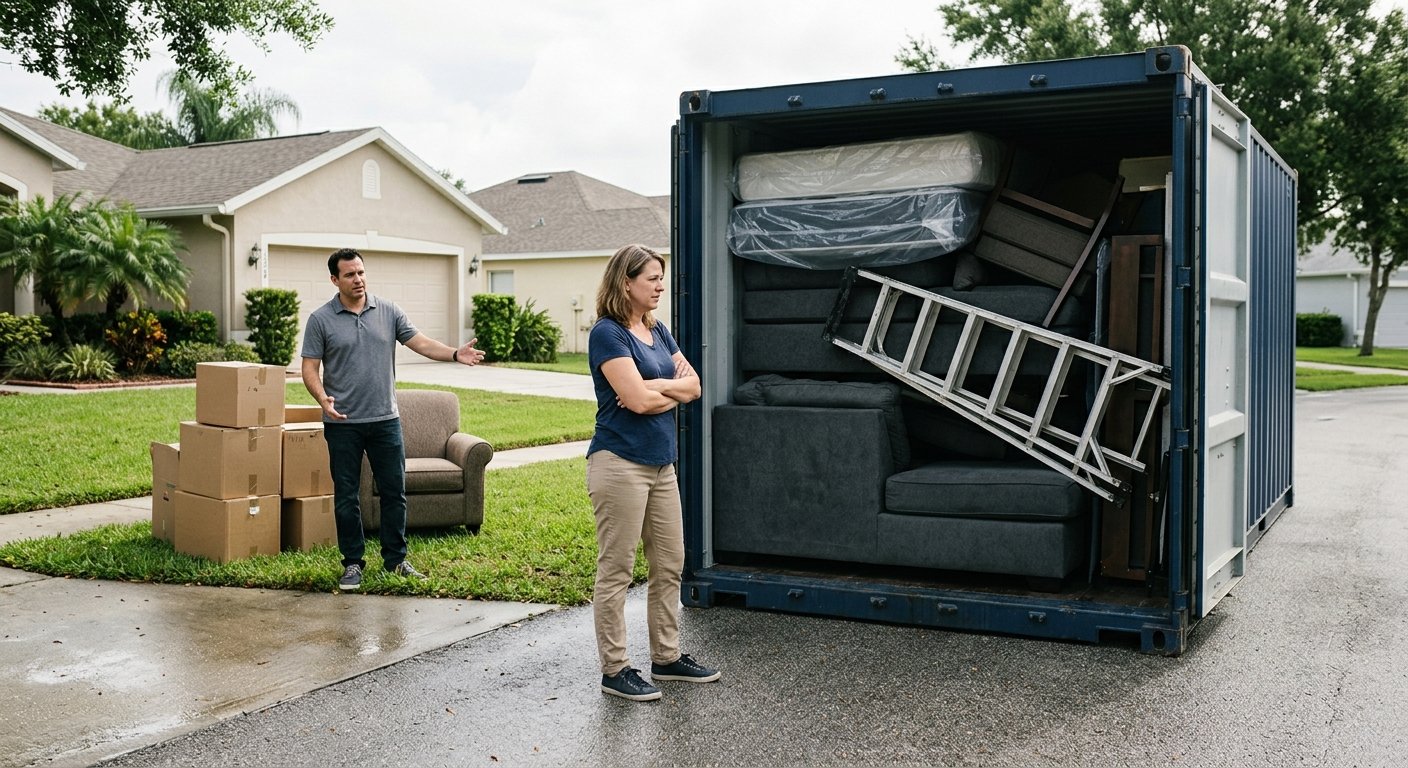
Most people underestimate how quickly a storage container fills up. Furniture, appliances, and construction materials have awkward shapes that don’t stack neatly, and boxes take up far more floor space than their contents suggest. Choosing the wrong size doesn’t just mean inconvenience — it can mean a second delivery trip, project delays, or paying for a unit that’s mostly empty air.
The good news is that sizing doesn’t have to be complicated. With a clear picture of what you’re storing, how often you need to access it, and how long the unit will be on-site, you can match the right container to your situation quickly and confidently.
Before calling to schedule a unit, walk through every room or area you plan to clear and make a rough inventory. Note large items — refrigerators, sofas, lumber racks, equipment crates — separately from boxes. This 15-minute exercise prevents most sizing mistakes.
Understanding Standard Container Sizes
Portable storage containers and conex container rentals come in a handful of standard lengths. Here’s what each size realistically holds and where it fits best:
10-Foot Units
A 10-foot unit is roughly equivalent to a large walk-in closet. It works well for studio apartment storage, a single room during a renovation, or a small business needing to stage overflow inventory temporarily. If you’re only clearing one bedroom or storing seasonal equipment between project phases, this is often enough.
20-Foot Units
The 20-foot container is the most popular choice for residential customers. It holds the contents of a two- to three-bedroom home comfortably when packed with reasonable care. It’s also a common fit for mid-sized construction site storage — enough room for tools, hardware, and materials without monopolizing the job site footprint. For homeowners doing a whole-home renovation in stages, one 20-foot unit staged near the work area covers most scenarios.
40-Foot Units
A 40-foot unit doubles the usable space and becomes the right call for larger homes, full commercial relocations, or active construction sites where multiple subcontractors need to store equipment simultaneously. Contractors managing ground-up builds or major commercial renovations often find the 40-foot the only practical option once materials, power tools, and safety equipment are all accounted for.
| Container Size | Best Fit — Residential | Best Fit — Construction / Business |
|---|---|---|
| 10-foot | Studio / 1-bedroom, single-room reno | Small equipment, tool staging |
| 20-foot | 2–3 bedroom home, whole-home reno | Mid-size job site, inventory overflow |
| 40-foot | 4+ bedroom home, full estate move | Large construction site, commercial relocation |
Sizing for Residential Moves and Renovations
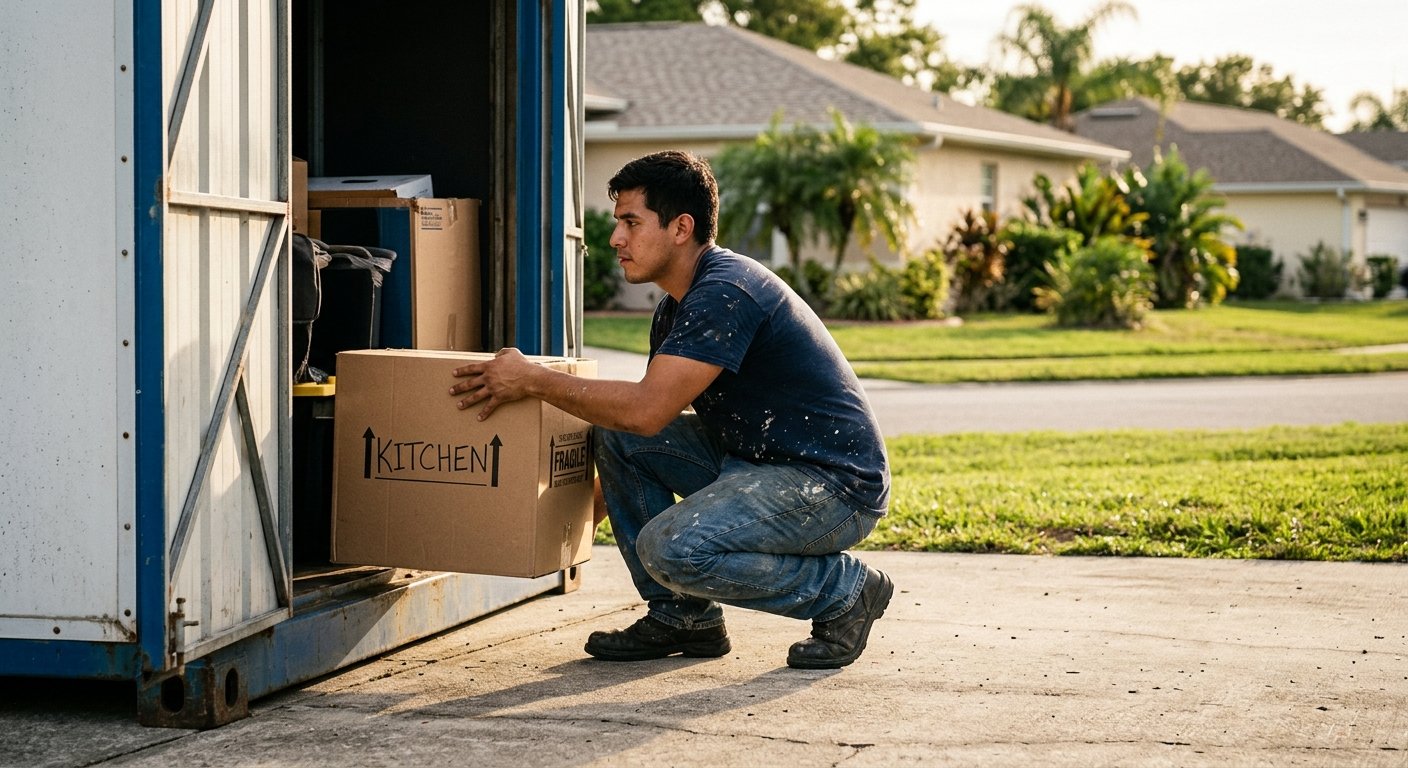
South Florida homeowners often deal with a specific challenge: renovation projects that unfold in stages rather than all at once. You might clear one wing of the house, complete the work, then move to the next section. In these cases, a portable storage unit parked in your driveway or yard becomes the staging hub for your entire project.
For a kitchen and bathroom renovation affecting a 2,000-square-foot home, a 20-foot unit typically covers furniture from common areas while the work is underway. If you’re doing a full gut renovation — walls, floors, and all — or staging a home before listing it on the market, consider stepping up to a 40-foot unit so you’re not making multiple trips to a secondary storage facility.
One advantage of portable storage units versus off-site facilities is that your belongings stay accessible throughout the project. Ground-level access makes it practical to retrieve a specific piece of furniture or a box of kitchen supplies without rearranging half the unit.
If your renovation overlaps with hurricane season (June through November), think about how items are stored inside the unit. The Federal Emergency Management Agency recommends elevating valuables off the floor in flood-prone areas. Even inside a container, placing items on pallets or shelving provides an extra layer of protection in low-lying coastal areas.
Sizing for Construction and Job Site Storage
Job site storage is a different calculation than residential. The question isn’t just volume — it’s workflow. Tools and materials need to be organized so that workers aren’t losing time hunting for equipment or stacking lumber in ways that create safety hazards.
The Occupational Safety and Health Administration notes that construction site disorganization contributes to slips, trips, and struck-by hazards. A properly sized and organized on-site storage container keeps materials off the ground, separates trades’ equipment, and reduces the risk of theft or weather damage to expensive tools overnight.
For a single-family residential build, a 20-foot unit often covers the bulk of tool storage and smaller material staging. For commercial projects with multiple subcontractors — electrical, plumbing, HVAC, and finish trades overlapping — a 40-foot unit or multiple units become necessary. Some general contractors on large projects use one container per trade phase, then consolidate as the project winds down.
Explore on-site storage solutions designed specifically for contractors who need secure, accessible, ground-level units delivered directly to the build location.
Inventory what you’re storing
List every major item category — furniture, appliances, tools, materials, inventory pallets. Separate bulky items from stackable boxes.
Estimate cubic footage, not just count
A dozen boxes sounds small. Stacked 4 feet high across a 10-foot wall, they fill space fast. Think in three dimensions.
Factor in access frequency
If you’ll retrieve items daily, leave aisle space. Tight packing works for long-term storage but slows down active job sites.
Check your site or driveway clearance
A 40-foot container needs meaningful straight-line delivery access. Measure your available space before committing to a length.
Plan for the full project duration
Short rentals that get extended cost more than booking the right duration upfront. Build in a buffer if your timeline has uncertainty.
Business Inventory and Commercial Applications
Retailers, restaurants undergoing renovations, and property managers often need temporary storage that scales with their operation — not a long-term lease at a fixed facility. A conex container rental delivered directly to your commercial property gives you a secure, on-demand solution without committing to permanent infrastructure.
For retail inventory overflow, a 20-foot unit typically handles seasonal merchandise staging. Restaurants clearing kitchen equipment during a remodel often find a 20-foot unit sufficient for appliances and smallwares. Property managers overseeing multi-unit renovations sometimes maintain a 40-foot unit on-site as a shared resource across crews.
The right container size isn’t about what fits — it’s about what works for how your team operates on the ground.
Backed by 70+ years of logistics experience through the Armellini Logistics heritage, Dash Mobile Storage understands that commercial storage needs are rarely one-size-fits-all. The local South Florida and Treasure Coast team can help businesses assess their specific requirements before delivery, preventing costly mid-project adjustments.
Frequently Asked Questions
What’s the most common mistake people make when choosing a container size?
Most people underestimate the volume of their belongings, especially furniture and appliances. A three-bedroom house often fills a 20-foot unit more tightly than expected once sofas, mattresses, and appliances are loaded. When in doubt, sizing up is almost always the better decision — you’ll use the extra space for organization and aisle access.
Can I get a container delivered to a tight driveway or urban lot?
Delivery access is the most common site constraint. A 40-foot container requires a clear, relatively straight approach path. A 20-foot unit is significantly easier to place in tighter driveways or urban settings. When you schedule your delivery, share details about your site access — the local Dash team can advise on the right unit length for your specific location.
How long can I keep a portable storage container on-site?
Rental periods are flexible and typically range from short-term (a few weeks for a move or renovation phase) to multi-month arrangements for ongoing construction projects or business needs. Duration affects overall cost, so it’s worth estimating your timeline realistically and building in a small buffer rather than extending repeatedly.
Do I need a permit to place a storage container on my property in Florida?
Permit requirements vary by municipality and county across South Florida and the Treasure Coast. Some jurisdictions require a permit for containers placed for more than a set number of days; others don’t require one for short-term residential use. Check with your local building or zoning department before delivery to avoid fines or removal orders.
Are portable storage containers secure enough for tools and equipment overnight?
Quality steel containers with heavy-duty locking mechanisms provide strong deterrence against opportunistic theft, which is the most common risk on construction sites. Combining a secure container with a lockbox over the latch adds another layer of protection. No storage solution eliminates all risk, but a properly secured container significantly reduces exposure compared to leaving tools in an open trailer or vehicle.
Get the Right Size Delivered to Your Site
Tell us what you’re storing and where — the Dash Mobile Storage team will help you choose the right unit and schedule delivery to your South Florida or Treasure Coast location.

About Dash Mobile Storage
Dash Mobile Storage provides convenient, secure, and affordable portable storage solutions for South Florida and Treasure Coast homeowners, contractors, and businesses. Drawing on 70+ years of logistics experience through the Armellini Logistics heritage, Dash delivers ground-level accessible storage units directly to customers' locations. The company specializes in helping clients navigate Florida-specific storage challenges including moves, renovations, construction site organization, hurricane preparedness, and business inventory management with a locally-rooted, customer-first approach. Visit dashmobilestorage.com →