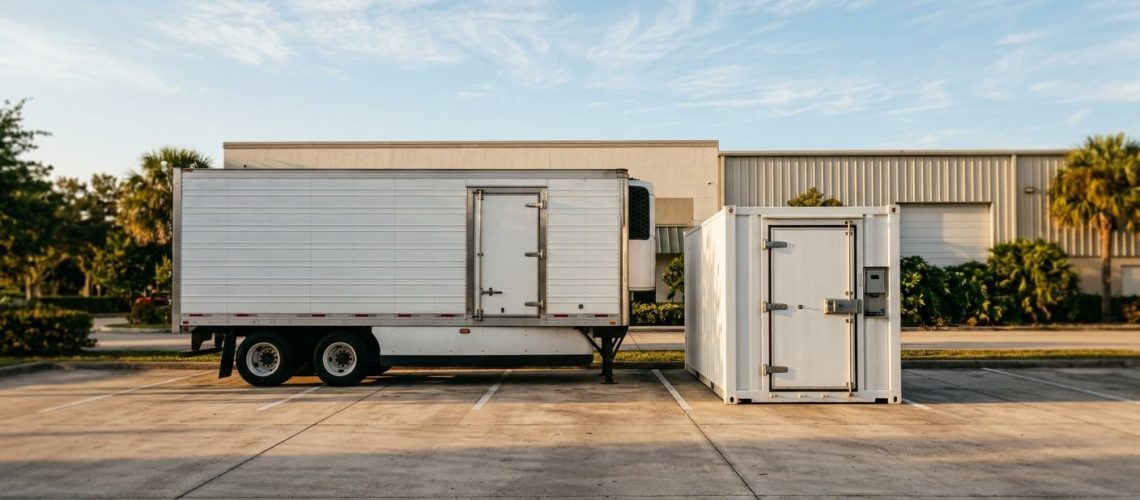
A refrigerated trailer rental and portable cold storage units both keep temperature-sensitive goods safe, but they serve different needs. Reefer trailers are best for large-scale or mobile refrigeration—think restaurant renovations, event catering, or pharmaceutical overflow. Portable cold storage containers suit stable, on-site needs where ground-level access, flexibility, and longer placement durations matter most. The right choice depends on volume, duration, and site conditions.
- Reefer trailers offer high capacity and mobility; portable cold storage units prioritize ground-level accessibility and longer-term placement.
- South Florida businesses must account for heat, humidity, and hurricane season when selecting temporary refrigeration solutions.
- Duration, access frequency, site space, and cargo type are the four factors that determine the right fit.
- Dash Mobile Storage—backed by 70+ years of Armellini Logistics heritage—serves South Florida and the Treasure Coast with both options.
- Either solution eliminates the costly downside of permanent cold storage commitments when you only need temporary capacity.
Understanding the Two Options
Before comparing them side by side, it helps to understand what each solution actually is—and isn’t. Both are forms of mobile cold storage, but their designs, intended use cases, and operational requirements differ significantly.
What Is a Refrigerated Trailer?
A refrigerated trailer—commonly called a reefer trailer—is a truck-sized insulated unit mounted on wheels, equipped with a self-contained diesel or electric refrigeration system. These units are typically 48 to 53 feet long and can hold large volumes of perishable goods at precise temperature ranges. According to the U.S. Department of Energy, refrigerated transport units are engineered to maintain consistent interior temperatures regardless of ambient conditions, making them reliable even in South Florida’s intense summer heat.
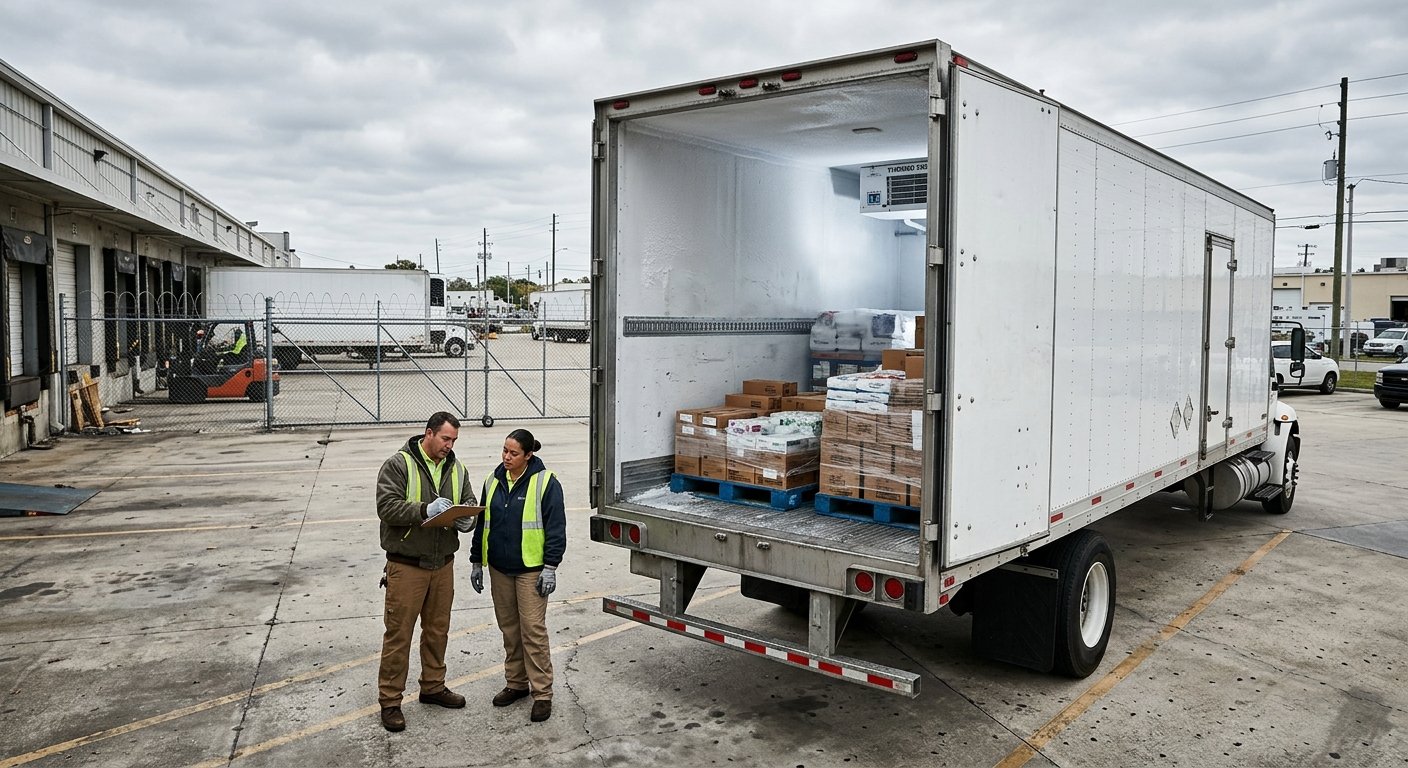
Reefer trailers are commonly used for short-duration, high-volume needs: a restaurant kitchen undergoing a two-week renovation, a catering company staging a large outdoor event, or a grocery distributor managing seasonal overflow. They typically require a power hookup or a running diesel engine to maintain temperature, and they occupy meaningful footprint—usually a large parking lot or loading dock area.
What Is Portable Cold Storage?
Portable cold storage containers are ground-level, intermodal-style units with integrated refrigeration. Unlike trailers, they don’t require a chassis or truck to remain in place—they’re delivered to your site, set down at ground level, and stay put for days, weeks, or months. This design makes them easier to load and unload without specialized dock equipment, which matters enormously for smaller businesses, contractors, and property managers without commercial loading infrastructure.
For South Florida businesses that need reliable access to refrigerated inventory during a remodel, a seasonal demand spike, or an emergency equipment failure, portable cold storage offers a practical middle ground between a permanent walk-in cooler and a full reefer trailer.
If your team will be accessing the unit multiple times per day, ground-level access is a significant operational advantage. Climbing into a raised reefer trailer repeatedly adds time and physical strain to every shift—especially in Florida’s heat.
Side-by-Side Comparison
The right choice often comes down to a handful of practical factors. Here’s how the two options compare across the criteria that matter most to South Florida businesses and homeowners.
| Criteria | Reefer Trailer | Portable Cold Storage |
|---|---|---|
| Access height | Raised dock height | Ground level |
| Capacity | Very high (48–53 ft) | Moderate (varies by unit) |
| Ideal duration | Short-term (days to weeks) | Short to medium-term (weeks to months) |
| Power requirement | Diesel or shore power | Standard electrical hookup |
| Site space needed | Large (truck + trailer) | Compact (container footprint) |
| Mobility | Can be relocated easily | Stays in place once delivered |
| Best use case | Events, large renovations, overflow | Ongoing access, remodels, small business |
When a Reefer Trailer Rental Makes More Sense
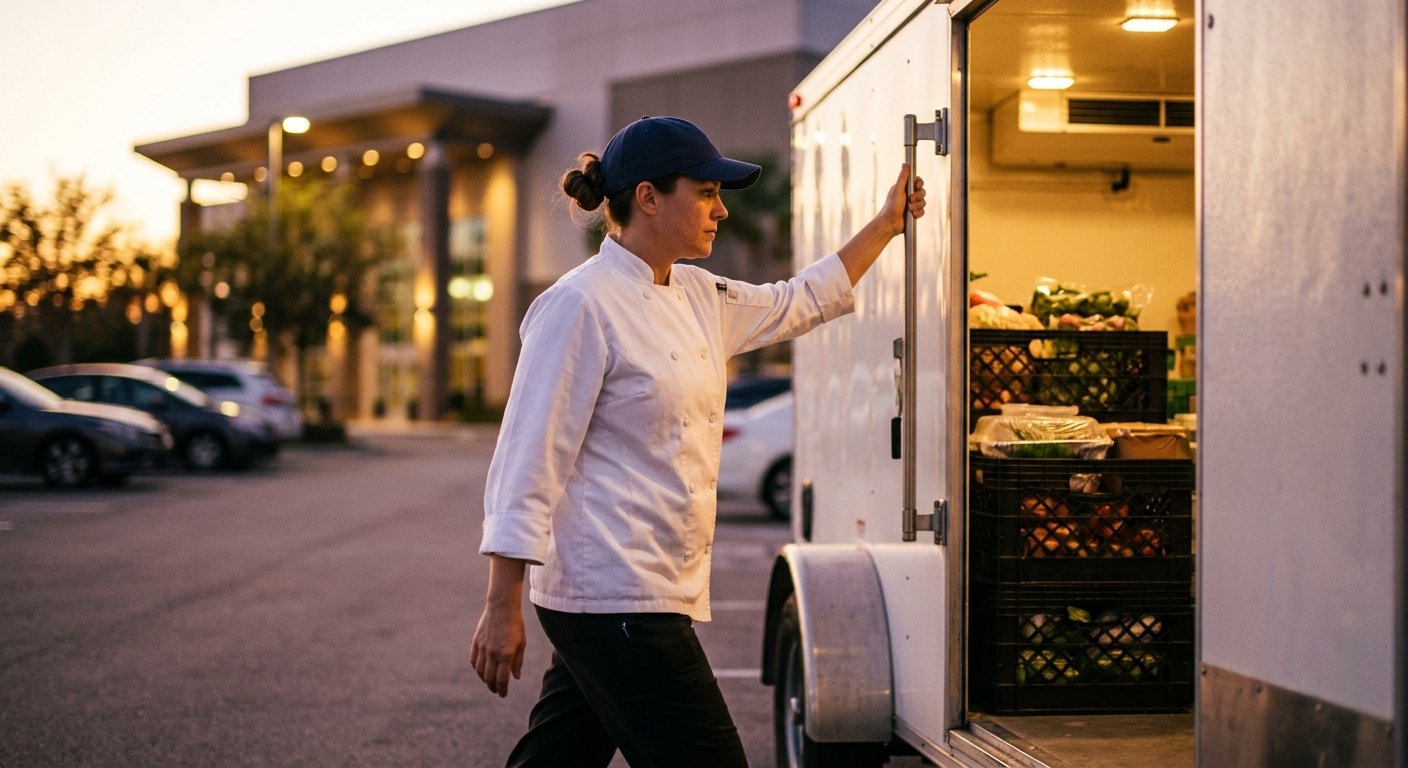
A reefer trailer rental is the stronger choice when volume is the primary concern. If you’re a produce distributor managing a spike in inventory, a caterer handling a 500-person event, or a hospital system temporarily expanding pharmaceutical storage, the sheer cubic footage of a full reefer trailer may be non-negotiable.
Mobility is another advantage. If the refrigerated goods need to move—from a central distribution point to a satellite location, for example—a reefer trailer on a truck chassis can be repositioned quickly. This flexibility doesn’t exist with a placed container.
However, reefer trailers come with operational demands. Diesel units generate noise and require fuel management. Shore power setups require adequate amperage at the site. And without a loading dock, accessing a raised trailer can slow down your team. For businesses without existing logistics infrastructure, these friction points add up.
During South Florida’s hurricane season, which runs June through November per the National Hurricane Center, a wheeled reefer trailer may need to be relocated or secured differently than a ground-set container. Factor site-specific storm protocols into your decision before hurricane season peaks.
When Portable Cold Storage Is the Better Fit
For most small and mid-sized businesses on the Treasure Coast and in South Florida, portable cold storage hits the practical sweet spot. It’s designed for situations where a unit stays in one place and gets accessed regularly by staff without specialized equipment.
Consider a restaurant undergoing a kitchen renovation that still needs to store produce and proteins safely for four to six weeks. A ground-level cold storage container placed in the parking lot gives kitchen staff easy cart-in, cart-out access without requiring a forklift or loading dock. The same logic applies to floral shops preparing for Valentine’s or Mother’s Day inventory surges, pharmacies managing vaccine or medication overflow, and property managers handling building infrastructure projects.
Dash Mobile Storage’s refrigerated trailer rental options are specifically designed with South Florida logistics in mind, backed by the Armellini Logistics heritage of 70+ years in the field. Ground-level delivery eliminates the access challenges that raise operational costs for smaller operators.
Ground-level access isn’t a convenience—it’s an operational multiplier that reduces loading time and physical labor on every single access.
Florida-Specific Considerations
Choosing temporary refrigeration solutions in South Florida isn’t the same as making that decision anywhere else in the country. The ambient heat and humidity here place extra demand on refrigeration systems—a unit that performs adequately in a cooler climate may struggle to maintain target temperatures during an August afternoon in Palm Beach County.
Placement matters too. Positioning a cold storage unit in direct sun versus a shaded area can meaningfully affect compressor workload and energy consumption. Whenever possible, shaded or covered placement reduces strain on the refrigeration system and supports consistent temperature maintenance.
Humidity is a secondary concern for certain cargo types. The FDA’s Food Safety Modernization Act sets clear guidelines for temperature control in food storage—temporary solutions must still meet these standards. Working with a provider who understands Florida-specific conditions and regulatory requirements matters when your cargo is regulated.
For businesses exploring broader on-site storage needs alongside refrigeration—whether for equipment, dry goods, or inventory—on-site storage solutions can be paired with cold units to create a complete temporary logistics setup on your property.
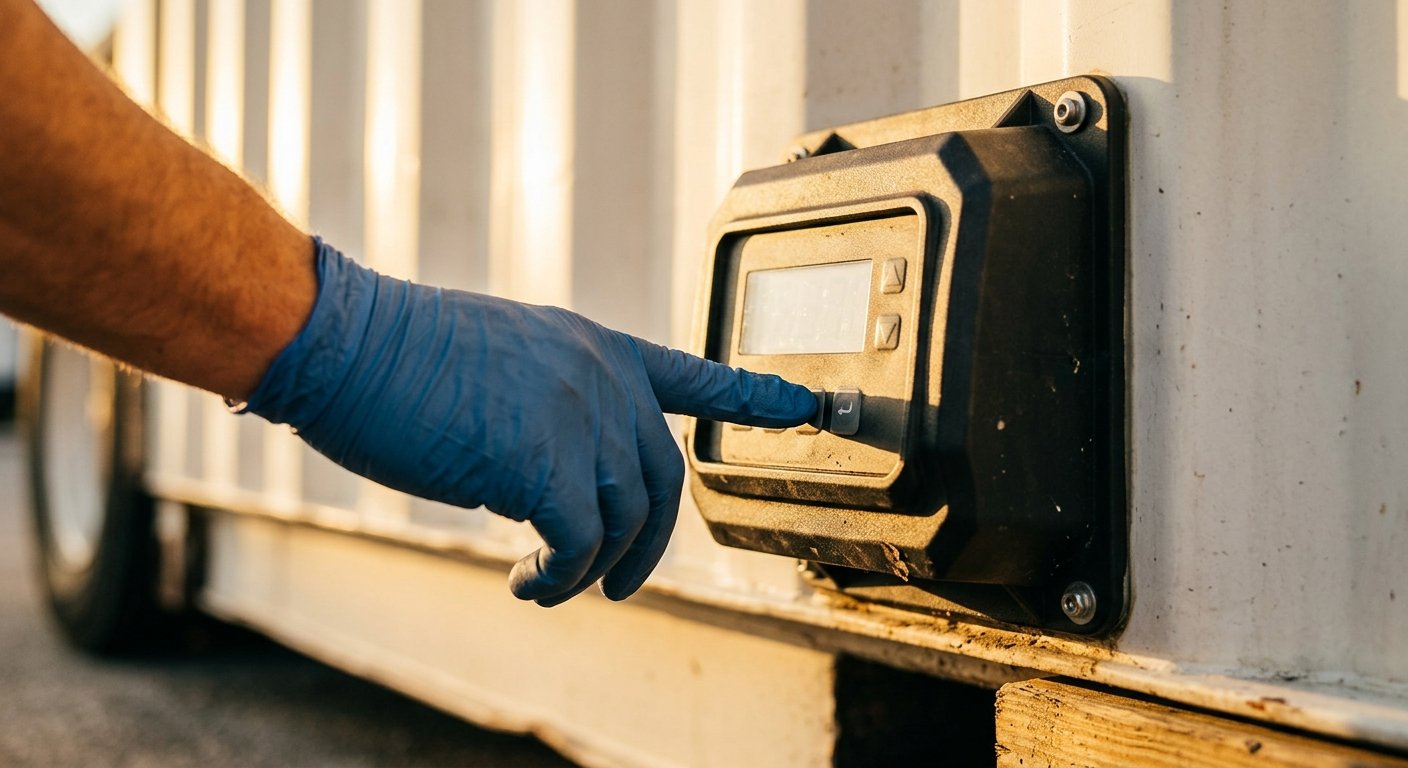
Businesses storing food or pharmaceutical products in temporary refrigeration should document temperature logs throughout the rental period. This protects you in the event of a product quality dispute and may be required for regulatory compliance depending on your industry.
Cost Considerations Without the Guesswork
Both reefer trailers and portable cold storage units are priced based on unit size, rental duration, delivery distance, and power configuration. Rather than comparing invented price ranges, the most accurate step is to request a direct quote based on your specific location, duration, and cargo requirements.
What’s worth knowing: longer rental durations typically offer better per-day economics than short emergency rentals. Planning ahead—especially before a scheduled renovation or seasonal peak—gives you more options and typically more favorable availability. Emergency rentals during peak seasons carry fewer guarantees around unit availability.
For businesses evaluating the full scope of their temporary storage needs—including dry goods, equipment, and materials alongside refrigeration—reviewing portable storage units in combination with cold storage options often reveals a more cost-efficient integrated solution.
Frequently Asked Questions
Can I use a portable cold storage unit for pharmaceutical or vaccine storage?
Portable cold storage units can be used for pharmaceutical and vaccine storage when the unit maintains the required temperature range and the operator follows applicable regulatory guidelines. FDA and CDC both publish storage requirements for vaccines and medications. Always confirm the unit’s temperature range and stability with your provider before storing regulated products.
How much space does a portable cold storage container require on-site?
Container footprints vary by unit size, but most portable cold storage containers require a level, firm surface and enough clearance for delivery vehicle access and door swing. A concrete parking area, paved lot, or compacted surface works well. Your provider will assess site conditions before delivery to confirm feasibility.
What power source does portable cold storage require?
Most portable cold storage containers connect to standard electrical service at the site—typically a dedicated circuit. Your provider can specify the amperage requirements for the unit you’re renting. Unlike diesel reefer trailers, electric-connected containers are quieter and don’t require fuel management.
How far in advance should I book a refrigerated container rental?
For planned projects like renovations or seasonal inventory surges, booking two to four weeks in advance is advisable, especially during South Florida’s busy seasons. Emergency availability cannot be guaranteed during peak demand periods, so early planning provides the most options and avoids gaps in your cold chain.
Can I keep a cold storage container on-site for several months?
Yes. Portable cold storage containers are well-suited to medium-term placements lasting weeks to several months. They’re designed to remain stationary and accessed regularly, making them a practical alternative to permanent cold storage commitments during extended projects or business transitions.
Find the Right Cold Storage Fit for Your Operation
Tell us about your project, timeline, and cargo—our South Florida and Treasure Coast team will match you with the right refrigerated solution and walk you through next steps.
About Dash Mobile Storage
Dash Mobile Storage provides convenient, secure, and affordable portable storage solutions for South Florida and Treasure Coast homeowners, contractors, and businesses. Drawing on 70+ years of logistics experience through the Armellini Logistics heritage, Dash delivers ground-level accessible storage units directly to customers' locations. The company specializes in helping clients navigate Florida-specific storage challenges including moves, renovations, construction site organization, hurricane preparedness, and business inventory management with a locally-rooted, customer-first approach. Visit dashmobilestorage.com →