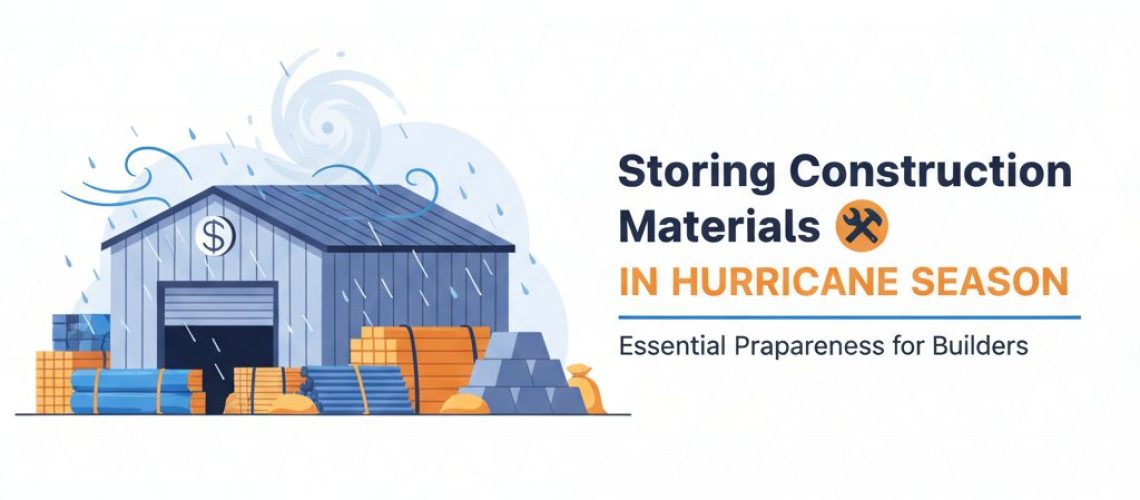
When a hurricane watch goes into effect, construction contractors across Florida face a critical 48-hour window to secure materials worth thousands of dollars. The 2025 Atlantic hurricane season saw eight named storms make landfall, causing an estimated $14 billion in construction project delays and material losses. With predictions for an active 2026 season, understanding how to properly store construction materials before, during, and after storms isn’t just good practice—it’s essential for project survival and profitability.
Florida’s construction industry operates under unique pressures during the June through November hurricane season. The challenge extends beyond simply protecting materials from wind and rain; humidity, salt air, and sustained exposure to tropical conditions can compromise material integrity even when storms don’t directly hit your area.
Understanding Florida’s Hurricane Storage Challenges
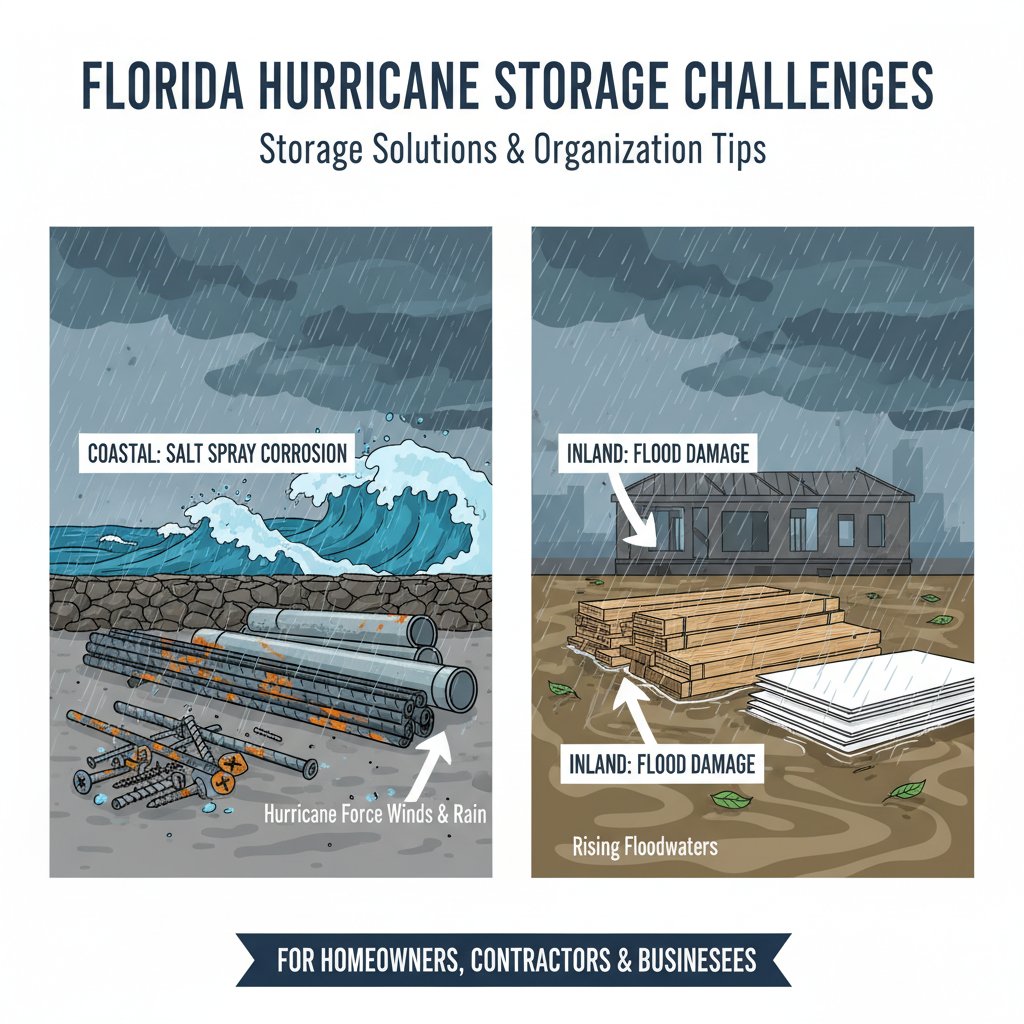
Construction materials face multiple threats during hurricane season that go beyond the obvious wind and water damage. Coastal projects deal with salt spray that corrodes metal fasteners and equipment. Inland sites contend with flooding from storm surge and rainfall that can saturate lumber, drywall, and insulation days before arrival.
The humidity factor cannot be ignored. Florida’s relative humidity regularly exceeds 80% during summer months, and enclosed storage without proper ventilation creates perfect conditions for mold growth on wood products, moisture damage to electrical components, and rust on steel materials. When a storm approaches, these conditions intensify.
Temperature fluctuations during storm events also affect certain materials. Adhesives, sealants, and paints may separate or lose effectiveness when exposed to temperature swings of 30-40 degrees within a 24-hour period—common during hurricane passages.
Pre-Season Planning for Job Site Storage
Successful construction site storage during hurricane season starts months before the first tropical depression forms. Contractors who wait until a storm is in the Gulf of Mexico find themselves competing for limited resources and making costly last-minute decisions.
Conduct a Material Vulnerability Assessment
Begin by categorizing every material type on your job sites based on vulnerability levels. High-risk items include drywall, insulation, lumber, electrical components, and specialty finishes. Medium-risk materials encompass tools, fasteners, and sealed paints. Low-risk items are typically masonry products, properly stored steel, and concrete materials.
Document the replacement cost and lead time for each material category. Some specialty items may have 8-12 week delivery windows, making their protection paramount. This assessment helps prioritize your hurricane storage solutions and budget allocation.
Establish Relationships with Storage Providers
Securing on-site storage containers before hurricane season begins gives you guaranteed access when storms threaten. Portable storage units in Florida become scarce resources when a hurricane enters the forecast cone. Companies with deep logistics experience, like those with 70+ years in supply chain management, understand the urgency and can provide reliable solutions.
Steel storage container rental offers superior protection compared to temporary structures or tarps. A 20-foot steel container provides approximately 1,170 cubic feet of secured, weather-resistant space—enough for materials serving a 2,000-square-foot residential project.
Critical Materials Requiring Protected Storage
Not all construction materials demand the same level of protection, but certain categories require immediate attention when storms approach.
Wood Products and Lumber
Dimensional lumber, plywood, and engineered wood products absorb moisture rapidly in hurricane conditions. Once saturated, lumber can warp, twist, or develop mold within 48-72 hours. Store lumber on pallets at least six inches off ground level inside sealed contractor storage solutions. Maintain airflow between stacks using spacers, but ensure the storage environment prevents direct rain penetration.
Drywall and Insulation
These materials suffer irreversible damage from water exposure. A single sheet of water-damaged drywall compromises structural integrity and becomes a mold liability. Insulation loses R-value permanently when soaked. Both require completely enclosed, elevated storage in equipment storage rental units with moisture barriers on the floor.
Electrical Components and HVAC Systems
Electrical panels, wiring, fixtures, and HVAC equipment represent significant investments that fail catastrophically when exposed to moisture. Even high humidity can cause corrosion on connection points. These items need climate-stable storage—not necessarily air-conditioned, but protected from humidity spikes and temperature extremes that cause condensation.
Tools and Equipment
Power tools, generators, compressors, and specialty equipment face both theft and weather risks during hurricanes. The chaos surrounding storm events creates opportunities for theft, while moisture destroys electric motors and creates rust on precision surfaces. Secure these items in lockable job site storage with proper organization to maximize space efficiency.
Implementing Hurricane Storage Solutions
The most effective construction site storage strategy combines permanent protective measures with rapid-deployment protocols when storms threaten.
On-Site Storage Containers
Modern portable storage units Florida contractors rely on feature weather-tight construction, lockable doors, and ground-level accessibility that speeds loading during time-sensitive situations. Ground-level access eliminates the need for ramps or lift equipment, allowing crews to quickly move materials when a storm enters the 5-day forecast window.
Position containers on level, well-drained ground away from trees and temporary structures that could become wind-borne debris. Orient door openings away from prevailing wind directions during storms—typically from the east or southeast for most Florida locations.
Elevation and Drainage Strategies
Even the best storage containers fail if positioned in locations vulnerable to flooding. Construction sites often have disturbed drainage patterns, creating unexpected water accumulation during heavy rainfall. Survey your site for low spots and ensure containers sit on high ground or elevated platforms.
For coastal projects or low-lying areas, consider placing containers on concrete blocks or railroad ties to create an additional 12-18 inches of elevation. This buffer can mean the difference between safe storage and catastrophic loss during storm surge or sheet flooding.
Interior Organization Methods
Space efficiency inside storage units directly impacts how much material you can protect. Use vertical space with heavy-duty shelving for smaller items, fasteners, and tools. Store the heaviest materials on the bottom, creating a low center of gravity that adds stability.
Create clear pathways to access critical items without unpacking the entire container. Group materials by project phase or type, and maintain an inventory list posted on the interior door. This organization proves invaluable when resuming work after a storm passes.
Hurricane Watch Protocols
When the National Hurricane Center issues a hurricane watch for your area—typically 48 hours before potential impacts—activate your pre-planned storage protocols.
First six hours: Move all high-vulnerability materials into protected storage. Prioritize drywall, insulation, electrical components, and specialty finishes. Assign specific crew members to material categories to avoid confusion and ensure nothing is overlooked.
Hours 6-24: Secure medium-risk materials including tools, fasteners, unopened paint, and equipment. Remove or secure any materials that could become wind-borne projectiles, including loose lumber, metal flashing, and empty containers.
Hours 24-48: Complete final site inspection. Verify all storage containers are properly secured and locked. Document stored items with photos for insurance purposes. Ensure nothing remains exposed that could damage neighboring properties if it becomes airborne.
Post-Storm Material Assessment
After the all-clear is given, conduct systematic inspection of stored materials before resuming construction activities. Check containers first for any breach points or water intrusion. Even small leaks can cause significant damage to vulnerable materials.
Inspect wood products for moisture content using a moisture meter. Lumber reading above 19% moisture content should not be installed and may need disposal. Look for visible mold growth, which can appear within 48 hours on damp surfaces.
Test electrical components and tools before use. Corrosion on terminals or moisture in motor housings requires professional evaluation or replacement to prevent safety hazards.
Long-Term Storage Considerations
Projects spanning multiple hurricane seasons benefit from permanent or semi-permanent storage solutions rather than seasonal arrangements. Year-round access to secure construction site storage reduces the stress of last-minute storm preparations and provides secure storage for valuable equipment between uses.
For contractors managing multiple simultaneous projects, maintaining dedicated storage at each site streamlines operations and eliminates transportation logistics during emergencies. The cost of steel storage container rental often proves less expensive than replacing materials or dealing with project delays after storm damage.
Protecting Your Investment and Timeline
Hurricane-related material losses and project delays cost Florida contractors millions annually, but most damage is preventable with proper planning and storage infrastructure. The key lies in implementing solutions before storm season rather than scrambling when warnings are issued.
Reliable contractor storage solutions protect more than materials—they safeguard project timelines, client relationships, and your reputation. Ground-level accessibility ensures rapid deployment, while steel construction provides proven hurricane resistance that temporary measures cannot match.
Ready to protect your construction materials before the next storm threatens? Dash Mobile Storage brings more than seven decades of logistics expertise to Florida contractors who refuse to let hurricane season disrupt their projects. Our steel storage containers deliver ground-level convenience and weather-tight security exactly where you need it. Contact us today to discuss hurricane storage solutions tailored to your project requirements and ensure your materials stay protected all season long.