
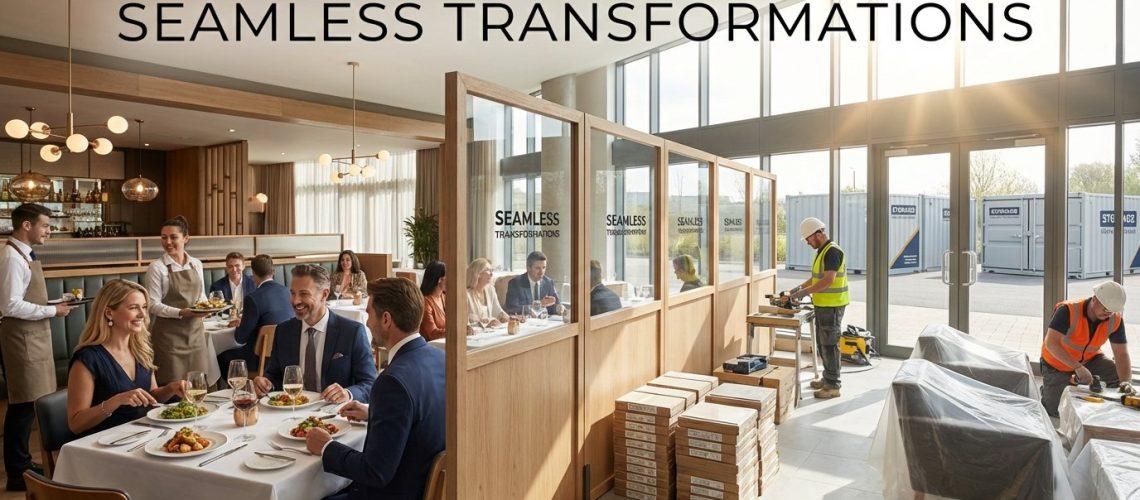
Restaurant renovations present a unique dilemma: you need to upgrade your space to stay competitive, but closing your doors means losing revenue, disappointing loyal customers, and potentially watching staff move to other establishments. For South Florida restaurant owners, the pressure is even greater—seasonal tourism demands and competition across the Treasure Coast require strategic planning to minimize disruption.
The key to maintaining operations during a renovation isn’t just careful scheduling—it’s having the right restaurant storage solutions in place. With proper planning and secure off-site storage, many restaurants successfully navigate renovations while keeping their kitchens operational, even if at reduced capacity.
The Real Cost of Closing During Renovations

Before exploring storage solutions, understanding what’s at stake clarifies why restaurant owners go to such lengths to remain open. A complete closure during renovation typically means:
- Revenue loss: Every day closed represents lost income without reduced overhead costs like rent, insurance, and loan payments
- Customer attrition: Regular diners develop new habits quickly, and winning them back requires significant marketing investment
- Staff turnover: Experienced kitchen and front-of-house staff can’t afford unpaid time off and often find positions elsewhere
- Vendor relationships: Food suppliers may adjust or eliminate accounts during extended closures
- Market positioning: Competitors gain ground while you’re offline, especially during peak dining seasons
For restaurants in tourist-heavy areas like the Treasure Coast, closing during high season isn’t just inconvenient—it’s financially devastating. This reality drives many owners to explore partial operations, limited menus, or creative service models during renovations.
Planning Your Restaurant Renovation Storage Strategy

Successful renovations while maintaining operations require methodical planning weeks before demolition begins. The foundation of this planning is understanding what needs storage, what needs immediate access, and what can be temporarily eliminated.
Inventory Your Assets
Create a comprehensive list categorizing every piece of equipment, furniture, and inventory:
- Essential equipment: Items required for your limited operational menu (core cooking equipment, refrigeration, prep tools)
- Secondary equipment: Items you can operate without temporarily but want protected during construction
- Furniture and décor: Dining room pieces, artwork, and fixtures that need protection from dust and damage
- Dry goods and non-perishables: Inventory that can be safely stored off-site
- Documents and records: Important paperwork, licenses, and financial records requiring secure storage
Timeline Coordination
Work backward from your target reopening date. Commercial kitchen storage needs shift throughout renovation phases. During demolition, dust and debris make on-site storage nearly impossible. During reconstruction, you’ll need staged access to equipment as various kitchen stations come online.
Ground-level accessible storage containers positioned near your restaurant allow for flexible retrieval schedules without the hassle of navigating storage facility hours or loading docks. This accessibility proves invaluable when contractors finish sections ahead of schedule or when you realize you need specific equipment sooner than anticipated.
Strategic Storage Solutions for Operating Restaurants
Different renovation scopes require different approaches to restaurant storage solutions. The right choice depends on your operational strategy during construction.
On-Site Mobile Container Storage
For restaurants with adequate parking or adjacent space, positioning secure Conex containers on-site provides immediate access to stored items. This approach works exceptionally well when you’re maintaining limited operations from a temporary kitchen setup or operating with a reduced menu.
These commercial-grade containers offer weather-tight protection—critical in Florida’s humid climate and during summer storm season. Unlike traditional storage units, you control access timing without depending on facility hours, allowing your team or contractors to retrieve items as needed throughout the workday.
Off-Site Secure Storage
Some renovations create too much disruption for on-site container placement, or local regulations may restrict it. Off-site storage through a facility that understands commercial kitchen storage requirements becomes essential. Look for facilities offering:
- Climate-controlled options for sensitive equipment and electronics
- Flexible access hours matching your operational schedule
- Security features including surveillance and gated access
- Ground-level loading to protect heavy commercial equipment during moves
If your restaurant inventory or equipment storage needs are growing beyond your immediate space, recognizing the signs that your business needs off-site storage helps you make proactive decisions rather than reactive ones.
Hybrid Approach
Many successful restaurant renovations utilize both on-site and off-site storage. Keep frequently-needed items in accessible on-site containers while storing seasonal equipment, extra inventory, and furniture requiring longer-term protection at a secure off-site facility.
Protecting Your Investment: Food Service Equipment Storage
Commercial kitchen equipment represents significant capital investment. Proper storage during renovations protects this investment while maintaining equipment warranties and functionality.
Refrigeration and Freezer Units
Walk-in coolers, reach-in refrigerators, and freezers require special consideration. If you’re maintaining them off-site and unplugged, ensure doors remain slightly ajar to prevent mold and odor development. Clean and sanitize thoroughly before storage. Document serial numbers and photograph equipment condition before moving.
Cooking Equipment
Ranges, ovens, fryers, and grills should be professionally cleaned and protected from moisture. Remove all grease and food residue—Florida’s humidity combined with organic material creates ideal conditions for rust and corrosion. Cover equipment with breathable protective materials rather than plastic, which traps moisture.
Small Wares and Tools
Kitchen tools, utensils, and small appliances require organized storage for easy retrieval. Use clearly labeled, pest-proof containers. Commercial-grade metal shelving in storage containers keeps items organized and accessible while maximizing vertical space.
Maintaining Limited Operations During Construction
Many restaurants successfully operate with modified service during renovations. This approach requires careful planning around what you can realistically accomplish with reduced space and equipment.
Consider implementing a limited menu focused on signature dishes that require minimal equipment. Some restaurants transition to take-out only service, eliminating dining room concerns entirely while focusing kitchen operations on a temporary prep area. Others negotiate with nearby establishments to share kitchen space during peak service hours.
Portable refrigeration solutions, including refrigerated trailers (reefer trailers), provide temporary cold storage when your main walk-in cooler is inaccessible or being replaced. These units maintain proper food safety temperatures while giving your operation flexibility during the renovation timeline.
Restaurant Renovation Tips for Smooth Transitions
Beyond storage logistics, several strategies help restaurants navigate renovations successfully:
Communicate transparently with customers: Use social media, your website, and in-store signage to keep regular customers informed about renovation progress, modified hours, and limited menu options. Many loyal customers appreciate being part of the journey and will support you through the transition.
Protect your staff: Maintain employment for key team members even with reduced operations. Cross-train staff for different roles during the renovation period. Consider having team members assist with the renovation itself during slow periods, building investment in the outcome.
Leverage the downtime: Use reduced operations as an opportunity for deep cleaning, equipment maintenance, staff training, or menu development. This proactive approach transforms renovation disruption into strategic advantage.
Document everything: Photograph and video your renovation journey for marketing content. Customers enjoy behind-the-scenes content, and this documentation proves valuable for insurance purposes and future reference.
Florida-Specific Considerations
South Florida’s climate and seasonal patterns create unique considerations for restaurant renovation storage. Hurricane season (June through November) requires special planning—ensure storage containers are properly secured and positioned to minimize wind exposure. Avoid scheduling major equipment moves during peak storm months when possible.
Humidity protection is non-negotiable in coastal areas. Even short-term storage in Florida’s climate can lead to rust, mold, and electrical component damage without proper protection. Weather-tight containers with moisture-absorbing products protect your investment.
Tourism seasonality influences renovation timing across the Treasure Coast. Most restaurants schedule major renovations during slower summer months, but this coincides with hurricane season. Balance these competing considerations in your planning timeline.
Frequently Asked Questions
What is the 30/30/30/10 rule for restaurants?
The 30/30/30/10 rule is a budgeting guideline suggesting restaurants allocate approximately 30% of revenue to cost of goods sold, 30% to labor, 30% to operating expenses, and aim for 10% profit margin. During renovations, this ratio typically shifts as operating expenses temporarily increase while revenue may decrease, making it essential to plan financially for reduced profitability during the transition period.
How do I stockpile food for one year?
Long-term food stockpiling isn’t typically necessary or practical for restaurant renovations, which usually last weeks to months rather than a year. Focus instead on maintaining just-in-time inventory for your limited operational menu, storing dry goods and non-perishables in pest-proof, climate-appropriate containers, and maintaining relationships with suppliers for rapid restocking as renovation phases complete.
What containers can mice not chew through?
Mice cannot chew through metal, glass, or heavy-duty hard plastic containers with tight-sealing lids. For restaurant storage, commercial-grade metal shelving with sealed metal or thick plastic bins provides best protection. Avoid cardboard boxes, thin plastic bags, or soft containers. Elevate stored food items off the ground and maintain clean storage areas to minimize pest attraction.
What are some affordable kitchen storage options?
Affordable commercial kitchen storage during renovations includes mobile storage containers delivered to your location (eliminating transportation costs), used commercial shelving units (often available from restaurant supply auction sites), and multi-purpose equipment that serves temporary storage and operational needs simultaneously. Negotiating with your renovation contractor for on-site secure storage areas can also reduce external storage costs.
Moving Forward with Your Restaurant Renovation
Restaurant renovations challenge even the most organized operators, but with strategic planning and appropriate restaurant storage solutions, you can protect your investment while maintaining business continuity. The key is starting early—waiting until construction begins creates chaos and rushed decisions that cost more in both time and money.
Whether you’re updating a dining room, expanding kitchen capacity, or completing a full restaurant transformation, having secure, accessible storage for equipment and inventory provides the foundation for successful operations during construction. With 70+ years of logistics expertise through the Armellini Logistics heritage, Dash Mobile Storage understands the unique challenges South Florida restaurants face during renovations.
Ground-level accessible containers can be delivered to your Treasure Coast location with same-day emergency availability when needed, providing convenient, secure, and affordable storage that adapts to your renovation timeline. Don’t let storage logistics derail your renovation plans or force unnecessary closures. Contact Dash Mobile Storage today to discuss your specific restaurant storage needs and develop a customized solution that keeps your business operating while you build the restaurant of your dreams.