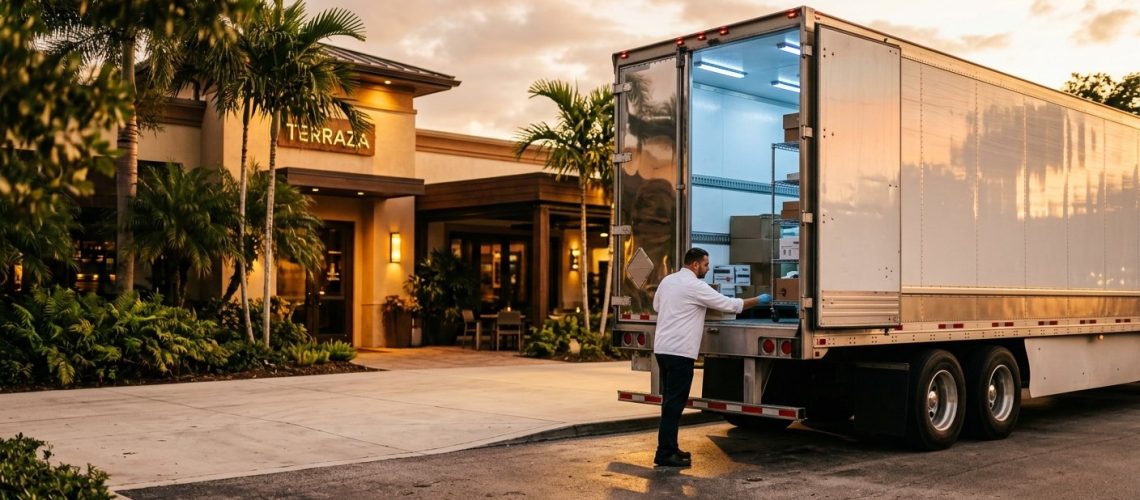
A walk-in cooler failure on a Saturday night before a packed dinner service. A kitchen renovation that stretches two weeks longer than expected. A catering event that requires three times more cold storage than your facility can handle. For restaurant owners across South Florida and the Treasure Coast, these aren’t hypothetical scenarios — they’re real operational challenges that can cost thousands of dollars in lost inventory and revenue.
Refrigerated trailer rental has become one of the most practical tools in a restaurant operator’s toolkit, offering flexible, on-site cold storage that bridges the gap when permanent refrigeration systems fall short. Here’s what Florida restaurant owners need to know about temporary refrigeration solutions and how to use them effectively.
Why Florida Restaurants Need Temporary Cold Storage
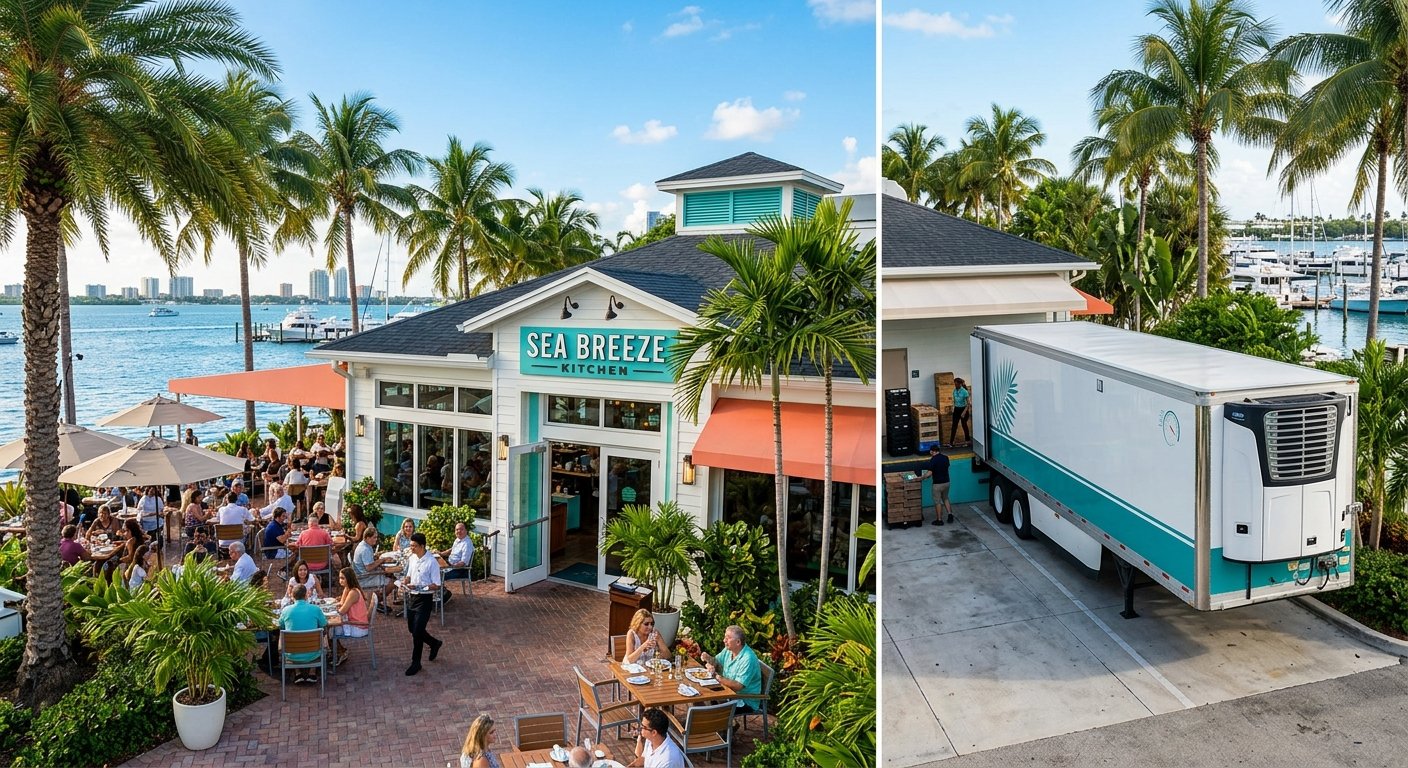
Florida’s restaurant industry operates under unique pressures. The combination of year-round tourism, seasonal population surges, and a competitive food service market means that downtime is exceptionally costly. According to the National Restaurant Association, food costs represent 28–35% of most restaurant revenues — making inventory protection a financial priority, not just an operational one.
Common situations where a reefer trailer rental makes immediate business sense include:
- Refrigeration equipment failure — Commercial refrigeration units can fail without warning. A refrigerated container rental positioned outside your facility can protect your entire perishable inventory while repairs are completed.
- Kitchen renovations — Remodeling a kitchen means disrupting your cold storage infrastructure. Mobile cold storage keeps operations running during the transition.
- Health department inspections and upgrades — When facilities require temporary shutdowns or equipment replacement to meet compliance standards, external cold storage preserves inventory.
- Large-scale catering and events — Expanded capacity for weddings, corporate events, festivals, and holiday catering requires more cold space than most restaurant kitchens provide.
- Seasonal demand surges — The influx of snowbirds and tourists during peak South Florida season can double or triple inventory requirements almost overnight.
- Hurricane preparedness — Storing additional emergency inventory before a storm requires cold space that existing walk-ins simply may not accommodate.
Understanding Refrigerated Trailer Rental: The Basics
A refrigerated trailer — commonly called a reefer trailer — is a temperature-controlled mobile unit that can be delivered directly to your restaurant’s parking area, loading dock, or adjacent property. These units maintain consistent internal temperatures, protecting everything from fresh produce and dairy to seafood, meat, and prepared foods.
Commercial refrigeration rental units vary in size, typically ranging from 20 to 53 feet in length, giving restaurant operators significant flexibility depending on the volume of inventory they need to protect or store. Unlike traditional self-storage facilities with fixed locations, mobile cold storage comes to you — a critical advantage when your team is already stretched thin managing an operational disruption.
Dash Mobile Storage, backed by 70+ years of logistics experience through the Armellini Logistics heritage, delivers refrigerated trailer rental units directly to restaurant locations across South Florida and the Treasure Coast. Ground-level accessibility means your kitchen staff can load and unload inventory easily without specialized equipment or complicated logistics.
Key Factors to Evaluate When Renting a Reefer Trailer
Temperature Range Requirements
Different food categories require different temperature zones. Fresh produce typically holds between 35–45°F, while frozen items require 0°F or below. Before committing to a restaurant refrigeration rental, confirm the unit’s temperature range aligns with your specific inventory needs. Some operations — particularly those handling both fresh and frozen products — may need to evaluate multiple units or partition storage accordingly.
Power Supply Considerations
Refrigerated trailers require a reliable electrical connection to maintain temperature. Work with your rental provider to confirm the unit’s power requirements and verify that your facility’s available electrical service can support the unit. In some cases, a generator may be recommended as a backup power source — a consideration worth factoring into your planning, especially during Florida’s active hurricane season.
Placement and Access
Think through placement before the unit arrives. The trailer should be positioned close enough to your kitchen to minimize the time food spends outside the cold chain during transfers. Ground-level accessible units — like those provided by Dash Mobile Storage — make this process significantly easier for kitchen teams moving heavy containers, sheet pans, and shelving.
Rental Duration Flexibility
Operational disruptions don’t always follow a predictable schedule. A renovation that was supposed to take two weeks may extend to four. Equipment repairs can take longer than initially estimated. Look for a refrigerated trailer rental provider that offers flexible rental terms so you’re not locked into a rigid schedule that doesn’t match your real-world timeline.
Protecting Food Safety Compliance During Disruptions
Florida restaurant operators are held to strict food safety standards enforced by the Florida Department of Business and Professional Regulation (DBPR) and local health departments. The FDA Food Code establishes temperature control as one of the foundational requirements for safe food handling — and those standards don’t pause because your walk-in cooler is down.
Using a temporary refrigeration solution doesn’t eliminate your food safety obligations — it fulfills them. Maintaining proper cold chain protocols during equipment failures or renovations can be the difference between preserving your inventory and writing off a significant financial loss while also protecting your customers and your food service license.
Key food safety practices to maintain when using mobile cold storage include:
- Monitoring and logging internal temperatures regularly throughout the day
- Keeping raw proteins stored below ready-to-eat items to prevent cross-contamination
- Minimizing the time food spends in transit between the trailer and your kitchen
- Training staff on proper loading organization so the unit supports efficient food handling
- Labeling inventory clearly to maintain FIFO (first in, first out) rotation
Commercial Refrigeration Rental for Catering and Events
Beyond emergency situations, refrigerated trailer rental is increasingly a planned tool for South Florida restaurants that operate catering arms or host large events. A 300-person wedding reception or a corporate holiday party may require two to three times your normal cold storage capacity — inventory that needs to be prepped, staged, and held safely before service begins.
Positioning a reefer trailer at an event venue or staging area gives catering teams the flexibility to prep ingredients off-site, transport them safely, and maintain temperature control through service. It also reduces the number of trips between your restaurant kitchen and the event location, improving both efficiency and food safety.
Explore how Dash Mobile Storage’s refrigerated trailer rental options can support your restaurant’s catering and event operations.
How Refrigerated Trailers Fit Into Broader Restaurant Storage Planning
Temporary cold storage is often just one component of a broader operational storage need during a restaurant renovation or expansion. Many restaurant owners find that while a reefer trailer handles perishable inventory, they also need dry storage for smallwares, equipment, packaging materials, and non-perishable supplies.
Dash Mobile Storage offers portable storage units alongside refrigerated trailer options, making it possible to address both cold and dry storage needs with a single, locally-rooted provider. For restaurants undergoing significant renovations or relocations, coordinating both storage types through one provider simplifies logistics considerably.
Frequently Asked Questions
How quickly can a refrigerated trailer be delivered to my restaurant?
Delivery timelines depend on unit availability and your location within the service area. For South Florida and Treasure Coast restaurants, Dash Mobile Storage coordinates delivery scheduling directly with you. It’s always advisable to arrange rental as early as possible — particularly during peak season or following major weather events when demand for cold storage rental increases significantly.
What size refrigerated trailer does a restaurant typically need?
Size requirements vary based on the volume of inventory you need to store and how long you’ll need the unit. Smaller operations dealing with temporary equipment failures may find a 20-foot unit sufficient, while restaurants handling large-scale catering or extended renovations often benefit from larger 40–53 foot units. Discussing your specific inventory volumes with your rental provider will help identify the right fit.
Does a refrigerated trailer rental require a special electrical connection?
Yes. Reefer trailers typically require a dedicated electrical connection to operate. Your rental provider should walk you through the power requirements before delivery so you can confirm your facility has compatible service. Generator backup options are worth discussing as well, especially given Florida’s storm season.
Can I use a refrigerated trailer rental for a catering event off-site?
Absolutely. Mobile cold storage is well-suited for off-site catering events, festivals, and large gatherings. The unit can be positioned at the event venue to support food staging and temperature control throughout the event. Discuss your event logistics with your provider to ensure proper placement and power access at the venue.
Is a reefer trailer rental a cost-effective option compared to buying portable refrigeration equipment?
For most restaurant operators dealing with temporary or unpredictable cold storage needs, rental is significantly more cost-effective than purchasing standalone refrigeration equipment. Rental eliminates capital expenditure, maintenance responsibilities, and storage of the unit when not in use — making it a practical choice for both emergency situations and planned seasonal needs.
Get Cold Storage Working for Your Restaurant
Operational disruptions are an inevitable part of running a restaurant. What separates operators who weather them successfully from those who absorb serious losses often comes down to how quickly and effectively they solve the immediate logistics problem.
Refrigerated trailer rental gives South Florida and Treasure Coast restaurant owners a practical, scalable solution for protecting inventory, maintaining food safety compliance, and keeping operations moving — whether that’s through a kitchen renovation, an equipment failure, or an ambitious catering season.
Dash Mobile Storage brings 70+ years of logistics expertise through the Armellini Logistics heritage to every delivery, with ground-level accessible units and a local team that understands the unique demands of Florida’s food service industry.
Ready to protect your restaurant’s inventory with dependable mobile cold storage? Contact Dash Mobile Storage today to discuss your refrigerated trailer rental needs and get a quote tailored to your operation.