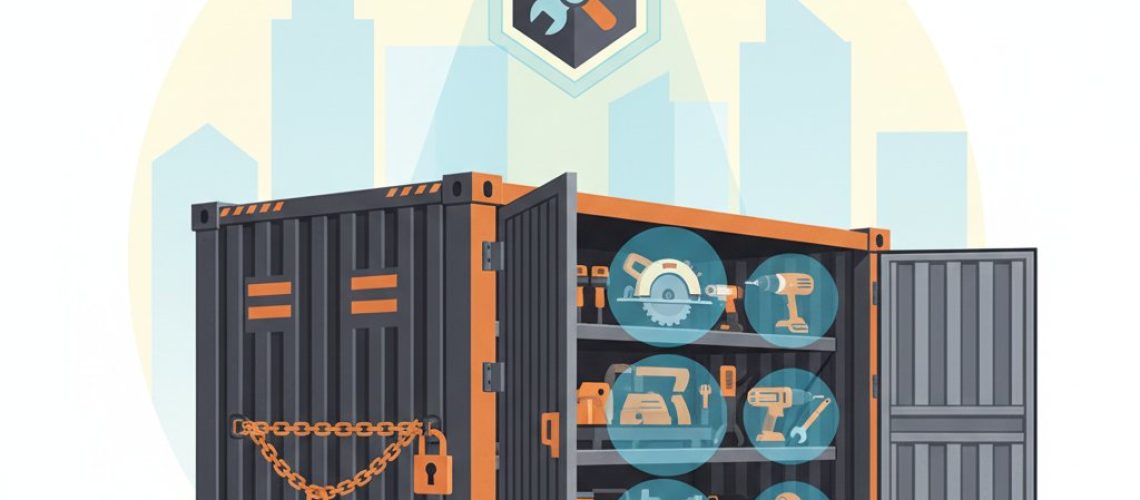
Construction theft costs the industry over $1 billion annually, with tools and equipment vanishing from job sites across the country. In South Florida and the Treasure Coast, where development continues at a rapid pace, protecting valuable tools in on-site storage containers isn’t just good practice—it’s essential for keeping projects on schedule and budgets intact.
Job site storage containers offer a secure base of operations, but their effectiveness depends entirely on how you use them. From organization strategies to security measures, understanding how to maximize protection for your tools and equipment can mean the difference between a profitable project and costly setbacks.
Understanding Your Job Site Storage Security Needs
Before implementing protection strategies, assess what you’re actually safeguarding. Construction sites typically house thousands of dollars in power tools, hand tools, safety equipment, and materials. A single DeWalt battery set can cost $400, while specialized equipment like laser levels, concrete saws, or pneumatic nail guns can reach into thousands per unit.
Tool storage containers face unique challenges in Florida’s construction environment. High humidity can cause rust and corrosion, while the hurricane season from June through November adds weather-related concerns. Additionally, coastal projects near areas like Jupiter, Stuart, or Fort Pierce deal with salt air that accelerates equipment degradation.
Professional contractor storage solutions address these environmental factors while providing the security infrastructure necessary to deter theft and protect your investment.
Essential Security Measures for Construction Site Storage
Physical Security Upgrades
Equipment storage rental containers come with standard security features, but additional measures significantly improve protection. Start with these fundamental upgrades:
- High-security padlocks: Replace standard locks with shrouded shackle padlocks that prevent bolt cutters from gaining leverage. Look for locks rated BHMA Grade 1 or CEN Grade 6.
- Lock boxes: Install external lock boxes that completely enclose padlocks, eliminating exposure to cutting tools.
- Reinforced hasps: Standard hasps are often the weakest point. Upgrade to hardened steel hasps with concealed screws.
- Container alarms: Battery-powered motion sensors and door alarms provide immediate alerts when containers are accessed after hours.
- Security lighting: Motion-activated LED lights around your on-site storage containers discourage nighttime intrusion attempts.
Ground-level accessibility, while convenient for loading and unloading, also requires strategic positioning. Place containers in well-lit areas visible from site trailers or main roads when possible, creating natural surveillance zones that deter would-be thieves.
Access Control Systems
Controlling who enters your tool storage containers is fundamental to security. Implement a clear access protocol that includes:
- Designated keyholders with documented authority
- Sign-in/sign-out logs for container access
- Regular lock combination or key changes, especially after employee turnover
- Time restrictions for container access outside normal working hours
For larger projects with multiple crews, consider smart lock systems that track entry times and user identity. These systems provide accountability and create audit trails that help identify security breaches.
Interior Organization for Maximum Protection
How you organize tools inside construction site storage containers directly impacts both security and equipment longevity. A well-organized container makes inventory checks easier, helping you quickly identify missing items before losses escalate.
Strategic Layout Planning
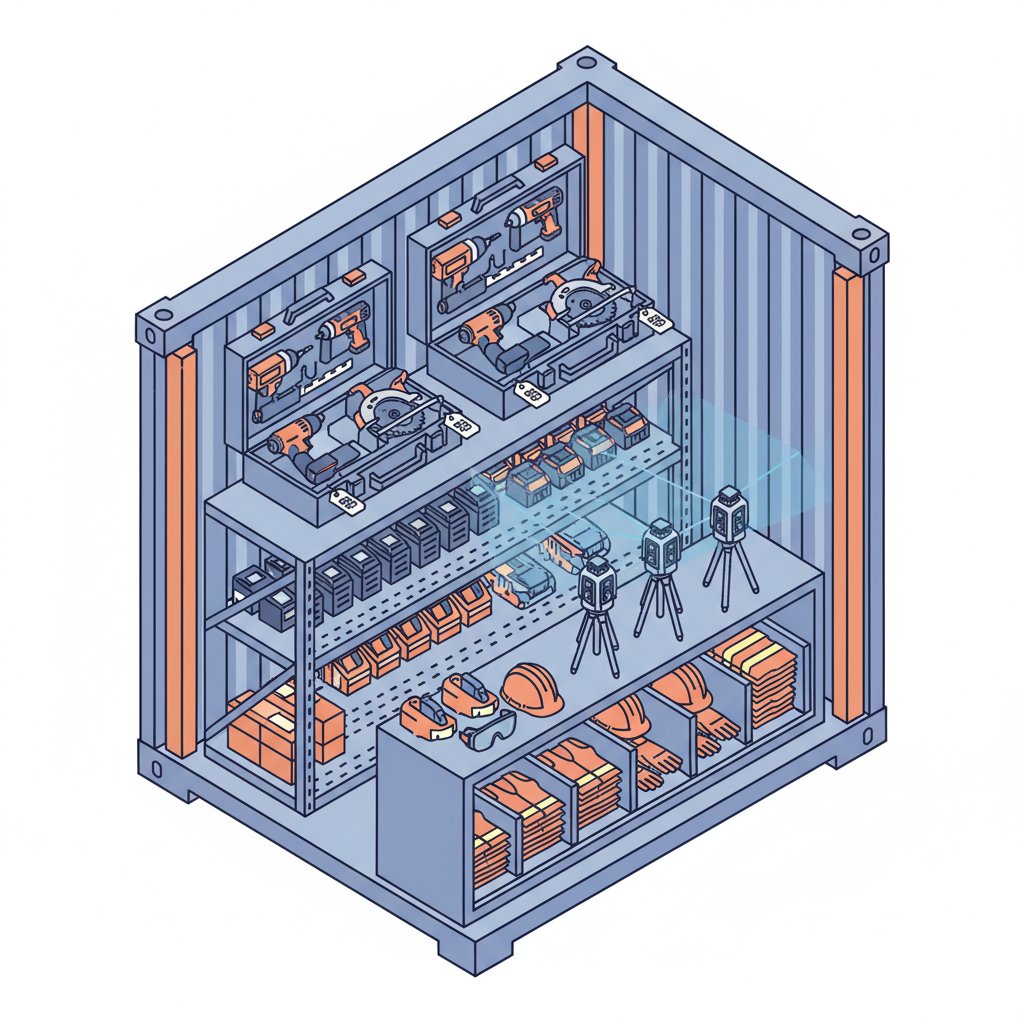
Position your most valuable equipment toward the back of the container, creating multiple barriers between high-value items and potential entry points. This simple strategy adds crucial seconds to any theft attempt, often enough to discourage thieves looking for quick grabs.
Install heavy-duty shelving units secured to container walls. Freestanding units can shift during transport or severe weather, potentially damaging tools. Wall-mounted pegboards keep hand tools visible and organized while maximizing vertical space.
Create designated zones for different tool categories:
- Power tools and batteries in enclosed cabinets
- Hand tools on pegboards or in drawer systems
- Safety equipment near the entrance for easy access
- Consumables and materials in labeled bins
- Sensitive electronics in sealed, climate-controlled cases
Climate Control Considerations
Florida’s humidity averages between 60-80% year-round, creating ideal conditions for rust and corrosion. Protect tools in your job site storage containers by implementing moisture control measures:
- Desiccant packs or rechargeable dehumidifiers reduce interior moisture levels
- Silica gel containers placed in toolboxes absorb local humidity
- Vapor corrosion inhibitor (VCI) products create protective barriers on metal surfaces
- Regular ventilation during dry weather prevents moisture accumulation
Never store wet or damp tools without proper drying. A single wet item can raise humidity levels throughout the entire container, affecting everything inside.
Inventory Management and Documentation
Accurate inventory records serve dual purposes: they help recover stolen items and support insurance claims. Photograph every significant tool and piece of equipment, capturing serial numbers, model information, and any distinguishing marks.
Maintain a digital inventory spreadsheet that includes:
- Item description and manufacturer
- Serial and model numbers
- Purchase date and value
- Current condition notes
- Assigned user or crew
- Container location
Update this inventory weekly, or immediately when adding or removing high-value items. Cloud-based inventory systems allow real-time updates accessible from mobile devices, making it easy to conduct spot checks during site visits.
Engraving or marking tools with company identifiers makes them less attractive to thieves and easier to identify if recovered. Use electric engravers on metal surfaces or UV pens for items where visible marking isn’t practical.
Insurance and Loss Prevention Strategies
Even with robust security measures, no system is completely foolproof. Verify that your contractor insurance policy adequately covers tools and equipment stored in on-site storage containers. Many standard policies have sublimits for tools that may not reflect your actual inventory value.
Consider inland marine insurance, specifically designed to cover equipment that moves between locations. This coverage typically provides broader protection than standard commercial policies and may include replacement cost coverage rather than depreciated value.
Document your security measures when applying for coverage. Insurance providers often offer premium discounts for enhanced security features like alarm systems, upgraded locks, and GPS tracking devices.
Hurricane and Severe Weather Preparation
South Florida’s hurricane season demands specific preparation for construction site storage. When tropical systems threaten, implement your severe weather protocol:
- Secure all loose items inside containers and ensure doors are properly sealed
- Photograph container contents and conditions for insurance documentation
- Move high-value or irreplaceable items to secure inland facilities if time permits
- Ensure containers are on level, stable ground that won’t flood
- Document container GPS coordinates and identifiable features for post-storm location
Quality equipment storage rental containers are engineered to withstand significant wind loads, but proper preparation maximizes protection. The Armellini Logistics heritage, with over 70 years of experience in Florida operations, means understanding these regional challenges and providing containers designed for local conditions.
Team Training and Security Culture
Your crew represents the first line of defense for tool protection. Conduct regular security briefings covering:
- Proper container locking procedures
- Reporting suspicious activity around job site storage areas
- Personal tool accountability and check-out systems
- End-of-day security walkthroughs
Encourage workers to treat company tools with the same care they’d give their personal equipment. Creating accountability through tool assignment—where specific workers are responsible for particular equipment—reduces carelessness and improves tracking.
Establish clear consequences for security protocol violations. A single unlocked container or misplaced key can compromise your entire security system.
Technology Solutions for Enhanced Protection
Modern technology offers additional protection layers for contractor storage solutions. GPS tracking devices hidden within containers allow real-time location monitoring. If a container is moved without authorization, you’ll receive immediate alerts with location data to provide law enforcement.
Wireless security cameras with cellular connectivity provide visual monitoring without requiring on-site power or internet infrastructure. These systems record motion-activated footage to cloud storage, creating evidence trails while deterring theft attempts.
Some construction operations use Bluetooth-enabled tool trackers that alert when tagged items leave designated zones. While adding per-tool cost, these systems can be worthwhile for high-value specialized equipment.
Choosing the Right Container for Your Needs
Not all tool storage containers offer equal protection. When selecting construction site storage, prioritize these features:
- Steel construction with reinforced corners and edges
- Weather-tight seals that prevent water intrusion
- Secure locking mechanisms with protected hinges
- Ground-level access that simplifies loading without compromising security
- Adequate size to prevent overcrowding that damages tools
Local providers understand regional requirements better than national chains. Companies with deep Florida roots recognize humidity challenges, hurricane preparation needs, and coastal project considerations that out-of-state operations might overlook.
Regular Maintenance and Security Audits
Schedule monthly security audits of your on-site storage containers. Check lock functionality, inspect seals and weather stripping, verify alarm systems, and confirm inventory accuracy. Address any issues immediately—small security gaps can quickly become major vulnerabilities.
Lubricate locks and hinges quarterly to ensure smooth operation and prevent seizure from salt air exposure. Replace worn or damaged components before they fail completely.
Protect Your Investment with Professional Job Site Storage
Tool protection in construction site storage requires multiple layers of security, from physical barriers to organizational systems and team training. By implementing comprehensive strategies tailored to South Florida’s unique environment, you’ll minimize theft risk, reduce weather-related damage, and maintain the equipment reliability that keeps projects moving forward.
Quality job site storage begins with the right container partner. Look for providers who understand local conditions, offer ground-level accessibility for easy loading, and back their service with decades of logistics expertise.
Ready to upgrade your on-site storage security? Contact Dash Mobile Storage to discuss contractor storage solutions designed for South Florida’s construction environment. Our team brings the trusted reliability of 70+ years in logistics operations, delivering and positioning containers exactly where you need them. Get a quote today and protect your tools with storage built for serious professionals.