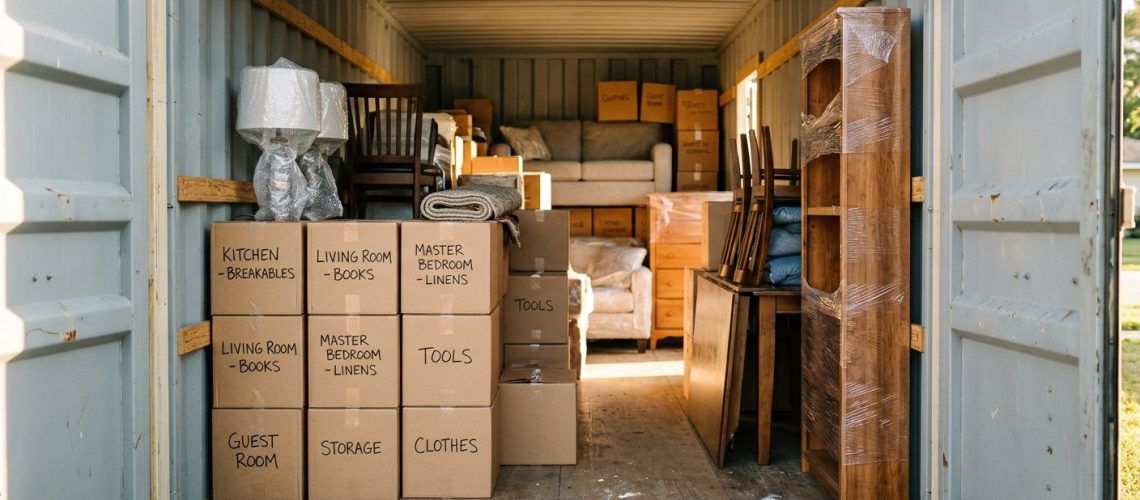
Packing a portable storage container efficiently means loading heavy items first, distributing weight evenly, maximizing vertical space, and labeling everything clearly before the door closes. Done right, you can fit significantly more into a single container, protect fragile items, and retrieve anything you need without unpacking the entire unit — whether you’re managing a home renovation, a construction site, or a business inventory refresh on the Treasure Coast.
- Load heavy, dense items on the floor first and distribute weight side to side to keep the container stable.
- Vertical space is your most underused asset — stack boxes to the ceiling using sturdy containers and shelf supports.
- Florida humidity demands moisture-resistant packaging; use sealed plastic bins and desiccant packs for anything sensitive.
- A consistent labeling system on three sides of every box saves hours of searching later.
- Keep a clear center aisle if you’ll need to access the unit regularly — convenience beats maximum density every time.
Start With a Plan Before You Load Anything
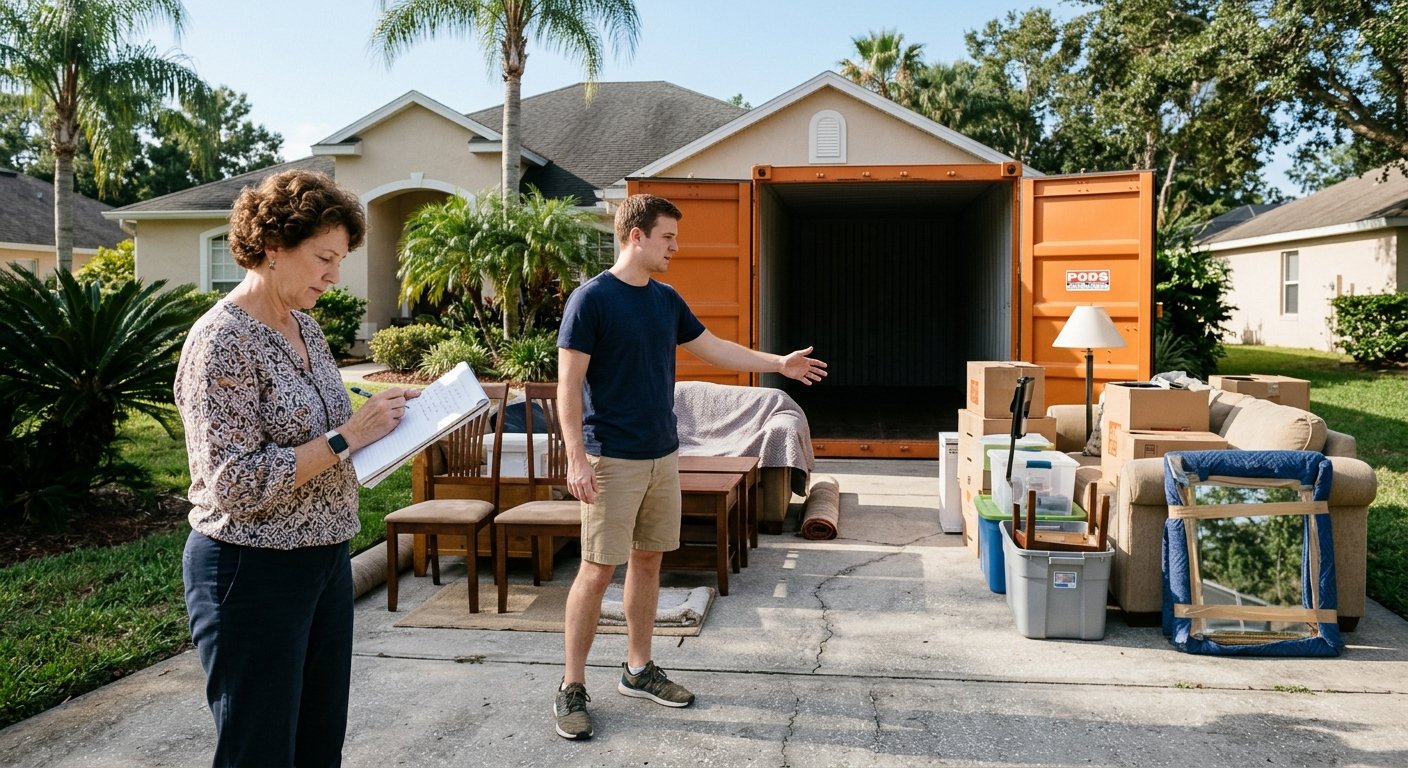
Walking up to a portable storage container with a truck full of items and no strategy is how things get damaged and space gets wasted. Spend fifteen minutes before loading to sort items into three categories: large and heavy (furniture, appliances, equipment), medium and stackable (boxes, bins, tools), and fragile or irregularly shaped (mirrors, artwork, power tools, loose hardware).
Sketch a rough floor plan, even on a napkin. Identify which items you’ll need to access frequently — those go in last so they’re closest to the door. Items going into long-term storage can go to the back wall. This simple step prevents the frustration of dismantling a fully loaded container two weeks into a renovation because you can’t find the tile grout.
For contractors storing equipment and supplies on a job site, create categories by trade phase: framing materials together, finish materials together, electrical and plumbing supplies labeled and separated. This mirrors your workflow and cuts retrieval time on busy mornings.
The Right Loading Order Makes Everything Easier
Loading order is the single biggest factor in how well a container performs for you. Follow this sequence every time, and the logic becomes second nature.
Lay the foundation with heavy items
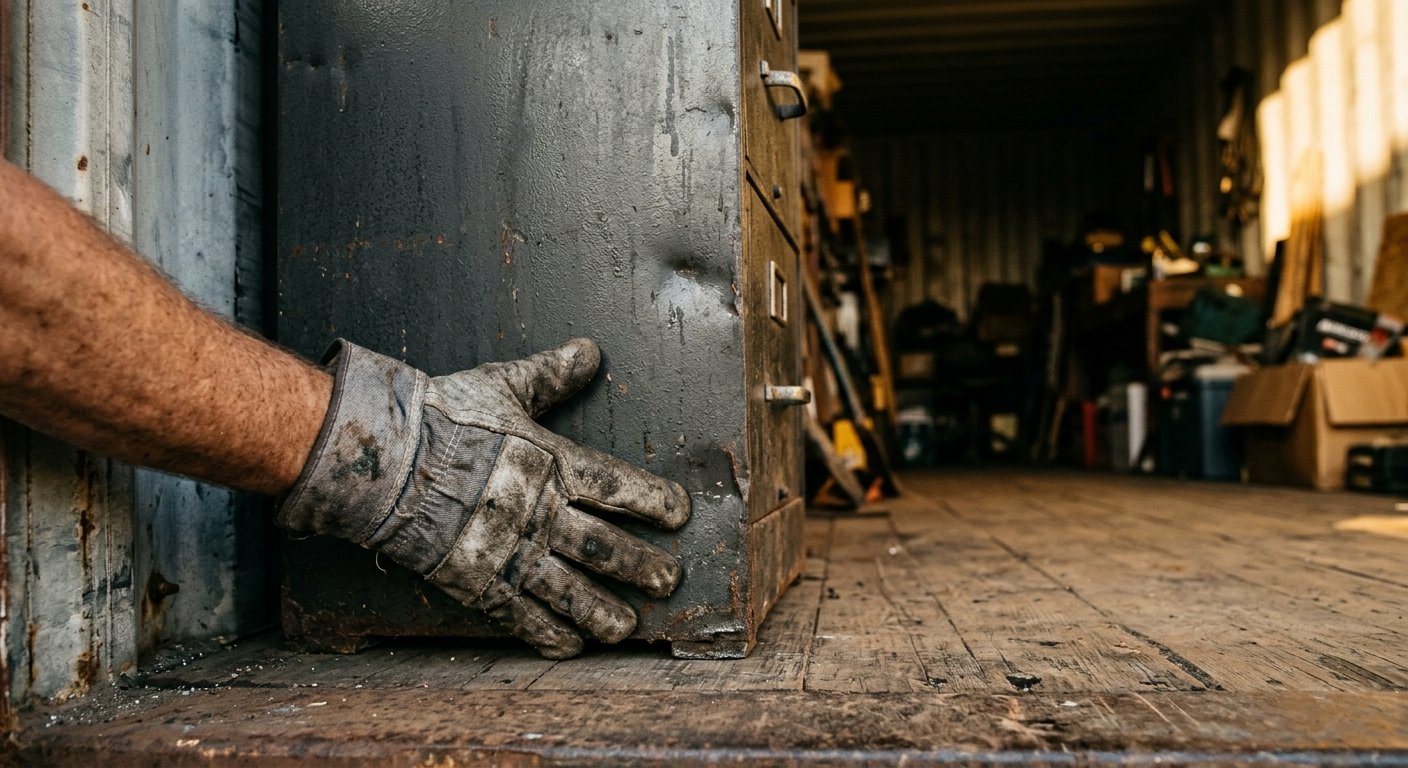
Appliances, large furniture pieces, tool chests, and filing cabinets go against the back wall and along the sides first. Place them flat on the container floor and push them as tight to the walls as possible. This creates a stable base and keeps the center of gravity low.
Fill gaps with medium-weight boxes
Stack sturdy, uniformly packed boxes on top of and beside large items. Boxes of the same size stack cleanly and make full use of vertical space. Avoid overpacking boxes to the point where they bow — a bowed box collapses under weight and dominoes into adjacent stacks.
Protect and place fragile items last
Wrap mirrors, artwork, and glass items in moving blankets or bubble wrap and stand them vertically — flat glass stored horizontally is far more likely to break under pressure. Place fragile items near the door, on top of soft items, never underneath heavy boxes.
Secure furniture and prevent shifting
Use moving straps or rope to anchor tall furniture like bookcases and bed frames to the container wall tie-down rings if available. A bookcase that topples in transit can destroy everything around it. Disassemble what you reasonably can — table legs off, bed frames broken down — to reclaim cubic footage.
Weight Distribution: More Important Than It Looks
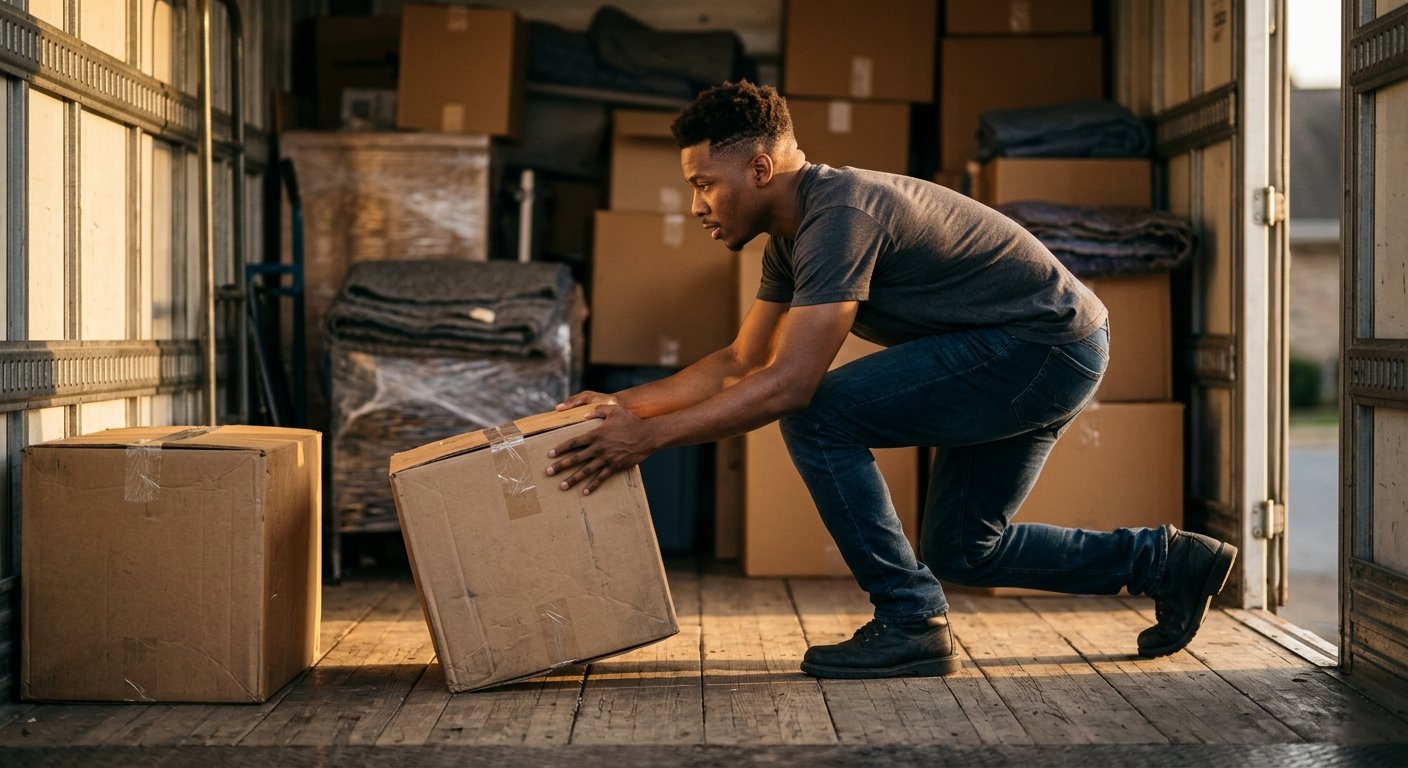
An unevenly loaded container puts stress on the structure and, if it’s being transported, creates handling problems. Distribute heavy items evenly from left to right across the floor — not all on one side. The Federal Motor Carrier Safety Administration’s cargo securement guidelines emphasize even weight distribution and proper tie-down ratios for transported loads, and those principles apply just as well to containers delivered and parked on-site.
For homeowners, the practical takeaway is simple: if you put a refrigerator on the left, balance it with another large item of similar mass on the right. Fill vertical columns evenly rather than building one tall tower on one side of the unit.
The most common packing mistake isn’t wasted space — it’s uneven weight that makes every item inside less secure.
Florida-Specific Considerations: Humidity and Heat
South Florida and the Treasure Coast present storage challenges that colder, drier climates simply don’t. Average relative humidity in the region regularly exceeds 70% — conditions that accelerate mold, mildew, rust, and material degradation inside enclosed spaces. According to the U.S. Environmental Protection Agency, indoor mold growth begins when relative humidity rises above 60% and organic materials are present.
Practical steps to protect your belongings:
- Use sealed plastic bins instead of cardboard boxes for anything moisture-sensitive — clothing, documents, electronics, wooden items.
- Add desiccant packs or moisture-absorbing products inside the container and inside bins containing electronics or leather goods.
- Elevate items off the floor using wooden pallets or plastic risers if you’re concerned about ground-level condensation during heavy rain periods.
- Wrap wooden furniture in breathable moving blankets rather than plastic wrap, which traps moisture against the surface and encourages mildew.
- Avoid storing flammable materials or anything with strong off-gassing in an enclosed, warm container — Florida heat amplifies both risks.
Portable storage containers significantly reduce exposure to the elements, but no storage solution eliminates all risk from Florida’s humidity. Thoughtful packaging and preparation are always part of the equation — especially for irreplaceable items.
For those planning hurricane season storage, ground-level accessible units like the ones Dash Mobile Storage delivers make it far easier to load and unload quickly. When you’re preparing for a storm, every minute matters, and not having to navigate a staircase or loading dock can make a real difference.
Labeling: The System That Saves You Later
A box labeled “Miscellaneous” is a box you will open and regret. A box labeled “Kitchen — Pots, colander, mixing bowls — NOT fragile” is one you can find and retrieve in sixty seconds. Labeling discipline during packing is one of the most underrated efficiency tools in any storage project.
Follow these labeling practices:
- Label on at least three sides of every box — top, front, and one side — so you can identify contents no matter how the box is stacked.
- Use color-coded tape by room or category (blue for master bedroom, red for kitchen, yellow for contractor tools) for visual scanning at a glance.
- Number boxes and maintain a simple master list — even a notes app on your phone — that maps box numbers to contents. This becomes invaluable for businesses managing inventory inside temporary storage containers.
- Mark fragile boxes with large, clear text on all four sides and on top, not just a small stamp on one corner.
Maximizing Space Without Sacrificing Access
Maximum density and easy access are in tension — you have to decide which matters more for your situation. For long-term storage where you won’t need frequent entry, pack wall to wall and floor to ceiling. For active renovation projects or construction sites where the container is essentially a working tool shed, preserve a center aisle that lets two people pass and work comfortably.
For businesses exploring whether a container makes sense for their inventory workflow, our guide on when your business has outgrown its current storage setup walks through the operational signals that indicate it’s time to act.
A few space-maximizing techniques that consistently pay off:
- Fill dresser drawers with soft items like linens or clothing rather than emptying them and boxing those contents separately.
- Use the interior space of appliances — refrigerators, washing machines, and large bins can hold smaller items safely.
- Stack chairs seat-to-seat and stack tables upside down on top of sofas to reduce floor footprint.
- Use portable shelving units inside the container to create organized vertical tiers for smaller items and tools.
Dash Mobile Storage’s ground-level accessible containers make this kind of organized loading straightforward — there’s no ramp to navigate, no lift gate to operate, and no step up that turns moving a heavy appliance into a safety hazard. That ground-level design, backed by the logistics expertise of the Armellini heritage spanning more than 70 years, translates directly into a better packing experience from the first box to the last.
If you’re planning a renovation and need on-site storage delivered directly to your location in Stuart, Port St. Lucie, Jupiter, Palm City, Fort Pierce, or Hobe Sound, our portable storage units page outlines the options available and how delivery works. For construction teams that need container-scale capacity, the Conex container rental page covers the larger-format solutions suited to active job sites.
Frequently Asked Questions
What goes in first when loading a portable storage container?
Heavy, large items go in first: appliances, furniture, tool chests, and filing cabinets against the back wall and along the sides. This creates a stable base and keeps the container’s center of gravity low, which protects both the structure and everything stacked on top.
How do I protect items from humidity inside a storage container in Florida?
Use sealed plastic bins rather than cardboard for moisture-sensitive items, add desiccant packs inside bins containing electronics or leather goods, and wrap wooden furniture in breathable moving blankets rather than plastic wrap. Elevating items on pallets can also help if you anticipate condensation during heavy rain periods common on the Treasure Coast.
Can I access my container after it’s been loaded and delivered?
Yes. One of the key advantages of portable storage units delivered to your location is that you retain access throughout the rental period. Packing with a clear center aisle and placing frequently needed items near the door makes retrieval fast and practical without unpacking the entire unit.
How many boxes should I label, and how?
Label every box on at least three sides — top, front, and one side — with contents and destination room. Use color-coded tape by room or category for quick visual scanning, and number boxes with a corresponding master list if you’re storing a large volume of items or managing business inventory.
Does it matter how weight is distributed side to side in the container?
Yes. Uneven weight distribution puts stress on the container structure and creates instability, particularly during transport. Balance heavy items from left to right across the floor rather than concentrating mass on one side, and build vertical columns of similar height evenly across the unit.
Ready to get your storage container delivered?
Tell us your project details and Dash Mobile Storage will deliver a ground-level accessible unit directly to your location in Palm City, Stuart, Port St. Lucie, Jupiter, Fort Pierce, or Hobe Sound.
About Dash Mobile Storage
Dash Mobile Storage provides convenient, secure, and affordable portable storage solutions for South Florida and Treasure Coast homeowners, contractors, and businesses. As part of Armellini Logistics, Dash delivers ground-level accessible storage units directly to customers' locations. The company specializes in helping clients navigate Florida-specific storage challenges including moves, renovations, construction site organization, hurricane preparedness, and business inventory management with a locally-rooted, customer-first approach. Visit dashmobilestorage.com →