

Florida’s tropical climate poses unique challenges for furniture storage. With average humidity levels ranging from 60% to 90% and summer temperatures regularly exceeding 90°F, unprotected furniture can suffer significant damage in just a few months. Understanding what happens to different materials in these conditions—and how to prevent it—can save you thousands of dollars in replacement costs.
How Florida’s Climate Affects Different Furniture Materials
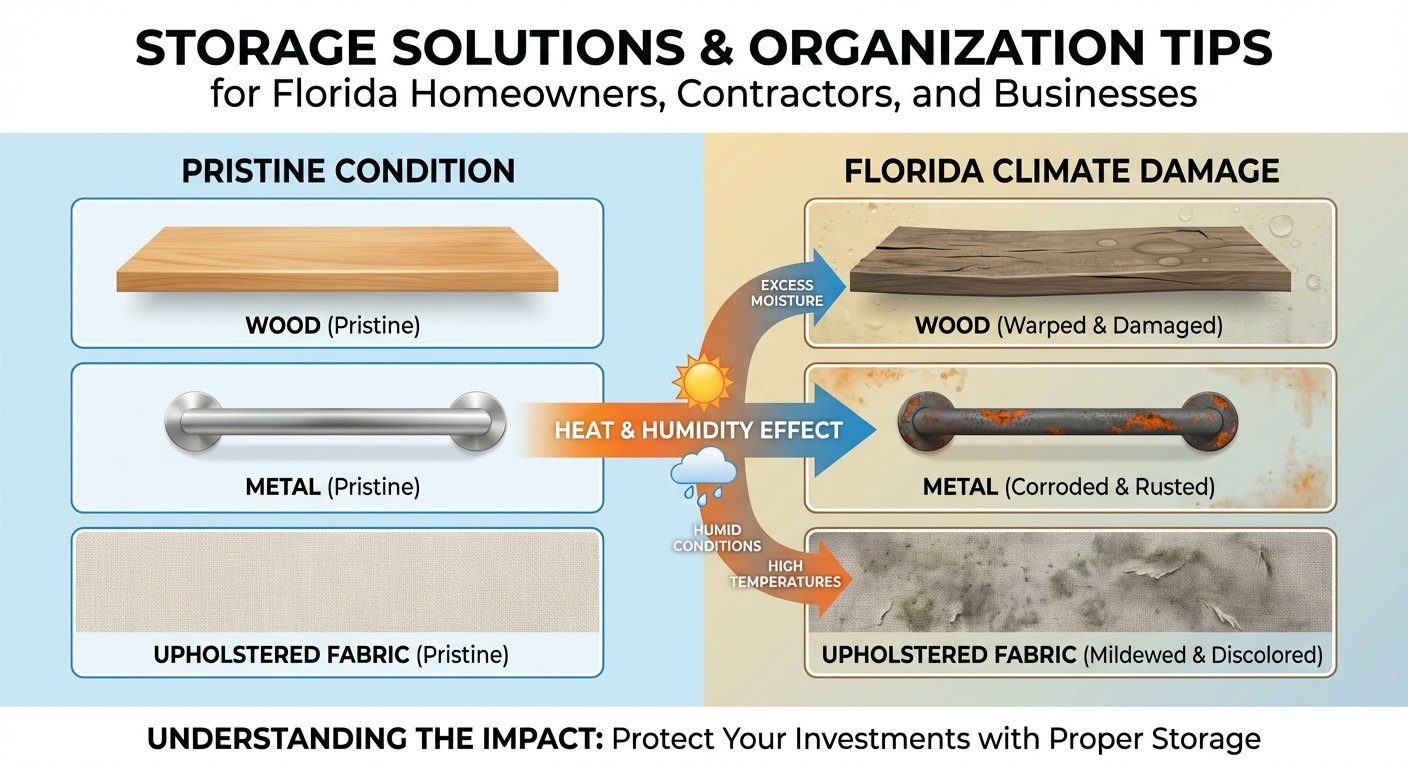
The combination of heat and moisture creates a perfect storm for furniture deterioration. Each material responds differently to these environmental stressors, and knowing the specific risks helps you take appropriate protective measures.
Wood Furniture and High Humidity
Wood is hygroscopic, meaning it naturally absorbs and releases moisture from its surroundings. In Florida’s humid environment, wooden furniture undergoes continuous expansion and contraction cycles that compromise its structural integrity.
Unfinished or poorly sealed wood absorbs moisture rapidly, causing boards to swell, warp, and eventually crack. Joints loosen as the wood expands beyond its original dimensions, creating gaps and instability. Veneer surfaces are particularly vulnerable—the thin layer of decorative wood can separate from the substrate, bubble, or peel entirely.
Dark, enclosed storage spaces with poor air circulation accelerate these problems. Mold and mildew develop on wood surfaces when humidity exceeds 60%, leaving permanent stains and musty odors that penetrate deep into the grain. Even worse, wood-boring insects like powderpost beetles thrive in humid conditions, potentially infesting entire furniture collections.
Upholstered Furniture Risks
Fabric upholstery acts like a sponge in humid environments. Natural fibers including cotton, linen, and wool absorb atmospheric moisture, creating damp conditions that promote mold growth. Once mold establishes itself in upholstery, it’s nearly impossible to completely eliminate.
The foam padding inside cushions presents additional concerns. Heat accelerates the breakdown of polyurethane foam, causing it to crumble and lose its supportive qualities. Moisture trapped within the foam creates an ideal breeding ground for bacteria and mold spores.
Leather furniture faces its own challenges. While treated leather has some moisture resistance, excessive humidity causes it to become sticky and develop mildew. The leather may lose its suppleness, become discolored, or develop permanent water stains. Untreated leather is even more susceptible, potentially rotting in extreme conditions.
Metal Components and Coastal Corrosion
Metal furniture hardware, frames, and decorative elements face accelerated corrosion in Florida’s humid air. Iron and steel develop rust quickly, especially in coastal areas where salt particles in the air act as catalysts for oxidation.
Chrome finishes may pit and flake, while brass and copper develop tarnish and verdigris. Even stainless steel, though more resistant, can corrode under prolonged exposure to high humidity combined with heat.
Composite Materials and Adhesives
Particleboard, MDF, and plywood construction materials are especially vulnerable. These engineered woods rely on adhesive bonds that break down under heat and humidity exposure. The materials swell dramatically when absorbing moisture, often never returning to their original dimensions even after drying.
Glued joints throughout all furniture types weaken in hot, humid conditions. Traditional wood glues lose their holding power, causing chairs, tables, and cabinet doors to literally fall apart.
Timeline of Furniture Damage in Uncontrolled Storage
Understanding the progression of damage helps illustrate why proper storage conditions matter from day one.
First 2-4 weeks: Initial moisture absorption begins. Wood starts swelling, metal surfaces may show early condensation, and fabrics begin accumulating moisture. Changes might not be visually obvious yet, but the deterioration process has started.
1-3 months: Visible damage emerges. Mold spots appear on fabric and wood surfaces. Wood joints start loosening. Metal hardware shows early rust formation. Musty odors develop and permeate porous materials.
3-6 months: Significant structural damage occurs. Wood warping becomes pronounced. Veneer separates and bubbles. Upholstery develops extensive mold colonies. Metal corrosion spreads. Foam padding begins deteriorating.
6+ months: Furniture may be beyond repair. Severe warping, widespread mold infestation, collapsed foam, extensive rust, and adhesive failure make restoration impractical or impossible. At this point, replacement often costs less than professional restoration.
The Science Behind Climate Controlled Storage Florida
Climate controlled storage Florida facilities maintain consistent temperature and humidity levels that protect furniture from environmental damage. These units typically keep temperatures between 55°F and 85°F and maintain humidity levels around 30% to 50%—well below the threshold where mold, mildew, and material degradation occur.
Temperature controlled storage prevents the heat-related breakdown of materials like foam, adhesives, and finishes. Consistent conditions eliminate the expansion-contraction cycles that damage wood and composite materials. Proper air circulation within climate controlled units prevents moisture accumulation and stagnant air pockets where mold thrives.
The investment in climate controlled storage pays for itself by preserving furniture value. A quality bedroom set worth $5,000 can be completely destroyed in six months of uncontrolled storage, making the monthly cost of proper storage a wise financial decision.
Florida Storage Tips for Furniture Protection
Whether you’re using climate controlled storage or need to protect furniture in less-than-ideal conditions, these strategies minimize damage risk.
Preparation Before Storage
Clean all furniture thoroughly before storing furniture in humidity. Dirt, food particles, and organic residue attract pests and provide nutrients for mold growth. Use appropriate cleaners for each material type, and ensure everything is completely dry before moving it into storage.
Apply protective treatments to vulnerable materials. Wax or polish wood furniture to create a moisture barrier. Treat leather with conditioner to maintain suppleness and resistance. Apply rust-prevention spray to exposed metal components.
Disassemble furniture when possible. This reduces stress on joints, allows better air circulation around components, and makes efficient use of storage space. Keep all hardware in labeled bags attached to the corresponding furniture pieces.
Proper Covering and Wrapping
Never use plastic sheeting or tarps to cover furniture in storage. Plastic traps moisture against surfaces, creating condensation that accelerates mold growth and material damage. Instead, use breathable fabric covers, old sheets, or furniture blankets that allow air circulation while protecting against dust.
For upholstered pieces, consider covering with canvas drop cloths rather than fitted covers. The loose fit promotes air flow around cushions and fabric surfaces.
Strategic Placement Within Storage Units
Elevate furniture off the floor using pallets, blocks, or shelving. This protects against potential water intrusion and improves air circulation underneath pieces. Ground-level accessibility makes this easier—with storage containers delivered directly to your location, you can organize furniture strategically without navigating stairs or elevators.
Leave space between furniture pieces and storage unit walls. This gap allows air to circulate completely around each item, preventing moisture accumulation and mold growth on rear surfaces.
Avoid stacking heavy items on furniture not designed to bear weight. This can cause permanent compression damage to upholstery and structural failure in weakened joints.
Moisture Control Products
Use desiccant packets or moisture absorber products throughout your storage space. These products actively remove humidity from the air, providing an extra layer of protection. Replace or recharge them according to manufacturer instructions—they lose effectiveness once saturated.
Avoid using scented products or dryer sheets as moisture deterrents. While they may temporarily mask odors, they don’t address humidity and can actually attract pests.
When Climate Control Becomes Essential
While protective measures help, certain situations absolutely require temperature controlled storage in Florida’s climate.
Antique and valuable furniture cannot withstand environmental fluctuations. The investment value and irreplaceable nature of these pieces make climate control non-negotiable. Family heirlooms, designer furniture, and collectible pieces deserve the protection that controlled environments provide.
Long-term storage beyond three months significantly increases damage risks in uncontrolled conditions. The longer furniture remains exposed to heat and humidity, the more extensive and permanent the deterioration becomes. Climate controlled units make long-term storage viable.
Pianos, both upright and grand, require stable temperature and humidity levels. The complex interaction between wood, felt, strings, and glue makes pianos extremely sensitive to environmental conditions. A single summer in uncontrolled storage can necessitate thousands of dollars in restoration or render an instrument unplayable.
Electronics and media storage within furniture units also demands climate control. Entertainment centers, office furniture with integrated components, and any furniture containing electronics need consistent conditions to prevent circuit board corrosion and electronic failure.
Protect Furniture in Storage: The Professional Advantage
Professional storage solutions offer advantages beyond just climate control. Experienced providers understand the specific challenges of storing furniture in Florida’s environment and design their services accordingly.
With over 70 years of logistics expertise through the Armellini heritage, professional mobile storage companies bring deep knowledge of material handling and preservation. This experience translates into better storage solutions, from container design to positioning recommendations.
Ground-level accessibility eliminates the physical strain and damage risk associated with carrying furniture up ramps or into elevated units. Mobile storage containers delivered to your location allow you to load furniture carefully at your own pace, reducing the rushing and mishandling that often occurs with traditional storage facilities.
Flexible rental terms accommodate varying storage needs, whether you’re between homes during a move, undergoing renovations, or need seasonal storage solutions. This adaptability ensures you’re not paying for longer than necessary while still having the protection your furniture requires.
Hurricane Season Considerations
Florida’s hurricane season from June through November adds another dimension to furniture storage planning. Secure storage protects furniture not just from everyday humidity but also from potential storm damage.
Mobile storage containers should be positioned away from trees, power lines, and structures that could cause damage if compromised during a storm. Discuss hurricane preparedness protocols with your storage provider to understand how containers are secured during severe weather events.
Maintaining an inventory with photos of stored furniture helps with insurance claims if the unexpected occurs. Document condition before storage and keep records accessible outside your storage location.
Choosing the Right Storage Solution
Protecting your furniture investment starts with selecting appropriate storage. Evaluate options based on your specific needs, furniture value, and storage duration.
For valuable furniture collections, antiques, or long-term storage needs, climate controlled storage Florida facilities provide essential protection. The controlled environment prevents the cascade of damage that Florida’s heat and humidity can inflict.
Mobile storage solutions offer convenience that traditional facilities cannot match. Having a container delivered to your location means less handling, reduced transportation risks, and the ability to organize your storage space thoughtfully without time pressure.
Local providers understand regional challenges better than national chains. A company familiar with Florida’s specific climate concerns, hurricane preparedness, and coastal conditions can offer more relevant guidance and solutions.
When evaluating storage options, ask specific questions about temperature and humidity control systems, security measures, accessibility hours, and what happens during power outages or severe weather. Understanding these details ensures your furniture receives the protection it needs.
Don’t let Florida’s challenging climate destroy your valuable furniture. Professional storage solutions with climate control protect your investment while providing the convenience and peace of mind you deserve. Contact Dash Mobile Storage today to discuss your specific furniture storage needs and discover how ground-level accessibility and climate controlled options can keep your belongings in perfect condition, no matter how long you need to store them.