Nearly 60% of Florida homeowners who downsize report feeling overwhelmed by the sheer volume of possessions they’ve accumulated over the years. Whether you’re retiring to a smaller coastal condo, relocating for work, or simply embracing a minimalist lifestyle, downsizing requires more than just deciding what to keep—it demands a strategic approach to managing your belongings during the transition.
The downsizing process doesn’t mean abandoning treasured possessions or rushing into decisions you’ll regret. With the right storage strategy, you can take your time, make thoughtful choices, and ensure your move happens on your timeline rather than under pressure.
Why Florida Homeowners Are Downsizing
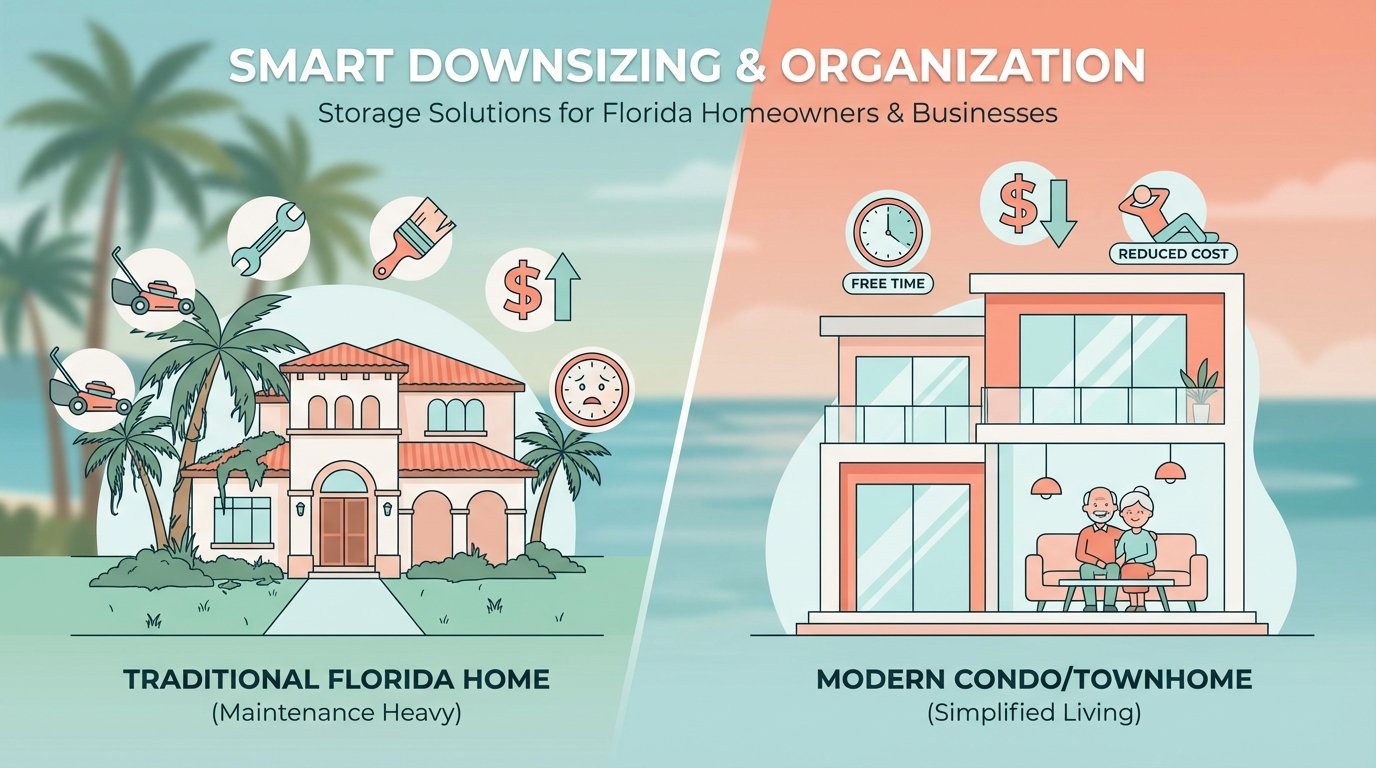
The trend toward smaller living spaces has accelerated across South Florida and the Treasure Coast. Rising property costs, maintenance concerns, and a desire for simpler living are driving homeowners to trade spacious houses for more manageable properties. Many retirees are discovering that maintaining a large home no longer aligns with their lifestyle, while younger families are prioritizing location and affordability over square footage.
However, downsizing from a 2,500-square-foot home to a 1,200-square-foot condo means confronting a fundamental challenge: where does everything go? This is where portable storage units become essential to a successful transition.
The Three-Phase Downsizing Approach
Successful downsizing follows a structured timeline that prevents hasty decisions and reduces stress. This three-phase approach gives you control over the process while keeping your belongings secure and accessible.
Phase 1: Sort and Categorize (Weeks 1-4)
Begin by categorizing everything in your current home into four groups: keeping immediately, storing temporarily, selling or donating, and discarding. This phase requires honest assessment of what truly adds value to your life.
Start with one room at a time to avoid overwhelm. Create a detailed inventory of items you’re uncertain about—these candidates for temporary storage deserve thoughtful consideration rather than rushed decisions. Family heirlooms, seasonal decorations, hobby equipment, and sentimental items often fall into this category.
Many Florida homeowners underestimate the volume of items they’ll need to store temporarily. A good rule of thumb: if you haven’t used something in 18 months but can’t bear to part with it, that item belongs in temporary storage while you adjust to your new space.
Phase 2: Secure Temporary Storage (Weeks 3-5)
Once you’ve identified items for temporary storage, it’s time to arrange for portable storage units. Unlike traditional storage facilities that require multiple trips and vehicle rentals, moving storage containers come directly to your property for convenient loading at ground level.
This approach offers several advantages for downsizing homeowners. You can load items gradually over several days or weeks without rushing. Everything remains on your property until you’re ready, eliminating the pressure of coordinating truck rentals and storage facility access hours. Ground-level accessibility means no stairs, ramps, or elevators—particularly important when handling heavy furniture or fragile antiques.
Consider requesting residential moving storage containers before you list your home for sale. Removing excess furniture and personal items makes rooms appear larger and helps potential buyers envision themselves in the space. This staging strategy can reduce time on market and potentially increase your sale price.
Phase 3: Transition and Evaluate (Months 2-6)
After moving into your smaller home, live with your essential items for at least three months before retrieving anything from storage. This evaluation period reveals what you genuinely miss versus what you simply thought you’d need.
Many downsizers discover they don’t miss 70-80% of stored items after this adjustment period. The belongings that do call to you are worth retrieving; the rest can be sold, donated, or given to family members who’ll appreciate them.
Temporary storage rental during this phase provides flexibility without long-term commitment. You’re not locked into keeping everything or making permanent decisions under pressure.
Humidity Protection for Florida Storage
Florida’s subtropical climate presents unique challenges for storing belongings. High humidity levels can damage wood furniture, promote mold growth, and deteriorate fabrics, papers, and photographs during extended storage periods.
When selecting portable storage units near me, verify that containers offer weather-resistant construction with proper ventilation. Quality storage containers should include:
- Steel construction with weatherproof seals to prevent moisture intrusion
- Ventilation systems that allow air circulation while keeping rain and humidity out
- Ground-level placement on stable surfaces to prevent flooding during heavy rains
- Secure locking mechanisms that maintain seal integrity
Before loading humidity-sensitive items, consider using moisture absorbers, covering upholstered furniture with breathable fabric covers, and avoiding plastic wrap that traps condensation. Electronics, photographs, and important documents benefit from additional protection in sealed plastic containers with desiccant packets.
Room-by-Room Storage Strategy
Organizing your storage strategically ensures you can access needed items without unpacking everything. This systematic approach works particularly well with portable storage for moving.
Living Areas and Furniture
Large furniture pieces often don’t fit in downsized homes. Rather than selling a beloved dining set or family heirloom sofa immediately, store these items temporarily. You may find creative placement solutions after living in your new space, or you might decide to pass them along to adult children once they’re settled.
Disassemble furniture when possible to maximize space efficiency. Keep hardware in labeled bags taped to the corresponding furniture piece. Load largest, heaviest items first, positioning them against walls of the storage container.
Seasonal Items and Decorations
Florida’s year-round warm weather means seasonal clothing takes up valuable closet space in smaller homes. Holiday decorations accumulated over decades can overwhelm limited storage areas. These items are ideal candidates for temporary storage during your transition.
Pack seasonal items in clear, labeled bins organized by category and season. This organization allows you to retrieve specific items if needed without searching through everything.
Hobby and Recreation Equipment
Golf clubs, fishing gear, crafting supplies, and hobby equipment can consume significant space. If you’re uncertain whether you’ll continue these activities after downsizing, store the equipment temporarily rather than abandoning hobbies prematurely.
After several months in your new home, you’ll have a clearer sense of which activities remain priorities and which equipment you’re ready to release.
Coordinating Downsizing with Home Sales
Timing presents one of the biggest challenges when downsizing. Your current home may sell before you’ve found the perfect smaller property, or you might need to renovate your new place before moving in. Moving and storage services that offer flexible solutions solve this timing problem.
Portable storage units can remain on your property during the selling process, then be transported to your new location when you’re ready—or held at a secure facility if there’s a gap between properties. This flexibility eliminates the need for coordinating multiple moving dates or settling for interim housing.
Some downsizers choose to load storage containers with items they’re keeping before moving day, reducing the volume of belongings that movers need to transport to the new property. This staged approach simplifies the actual moving day and prevents overwhelming your smaller space with boxes and furniture.
Cost-Effective Storage During Transition
Downsizing often happens during significant life transitions that may include reduced income, particularly for retirees. Temporary storage during move shouldn’t strain your budget while you’re managing closing costs, moving expenses, and potential renovations.
Portable storage solutions typically offer better value than traditional storage facilities when you factor in the complete cost picture. You eliminate truck rental fees, multiple trips to off-site facilities, and the physical burden of loading and unloading repeatedly. Ground-level loading reduces injury risk and the potential need for professional loading assistance.
Request transparent pricing that includes delivery, pickup, and monthly rental rates. Understanding total costs upfront helps you budget appropriately for your downsizing timeline.
Avoiding Common Downsizing Mistakes
Learning from others’ experiences can save you time, money, and regret during your downsizing journey. These common mistakes can be easily avoided with proper planning:
- Rushing decisions under pressure from moving deadlines
- Underestimating the emotional impact of parting with possessions
- Failing to measure doorways and spaces in the new home before moving furniture
- Not photographing valuable items before storage for insurance purposes
- Choosing the cheapest storage option without considering security and climate protection
- Neglecting to create a detailed inventory of stored items
Taking time to plan your approach and securing reliable temporary storage rental gives you the breathing room to make thoughtful decisions rather than reactive ones.
Making Downsizing a Positive Experience
While downsizing can feel overwhelming initially, many homeowners report that it becomes a surprisingly liberating experience. Releasing possessions you no longer need or use creates mental clarity and reduces the maintenance burden that comes with managing a large home full of things.
The key to a positive downsizing experience is removing time pressure from the equation. When you’re not forced to make instant decisions about every possession, you can approach the process thoughtfully and even enjoy reminiscing about items before deciding their fate.
Portable storage units provide this crucial time buffer, allowing you to move forward with your life transition while keeping options open for belongings that deserve more consideration.
Ready to Start Your Downsizing Journey?
Downsizing your Florida home doesn’t have to mean sacrificing treasured possessions or making rushed decisions you’ll regret. With strategic planning and flexible storage solutions, you can navigate this transition at your own pace.
Dash Mobile Storage brings over 70 years of logistics expertise through the Armellini family heritage to South Florida and Treasure Coast homeowners. Our portable storage units deliver directly to your property with ground-level access for convenient loading, then remain on-site or transfer to secure storage as your timeline demands.
Contact Dash Mobile Storage today to discuss your downsizing needs and discover how the right storage strategy can transform a stressful move into a manageable, even enjoyable process. Our team understands Florida’s unique storage challenges and can help you protect your belongings while you transition to your next chapter.