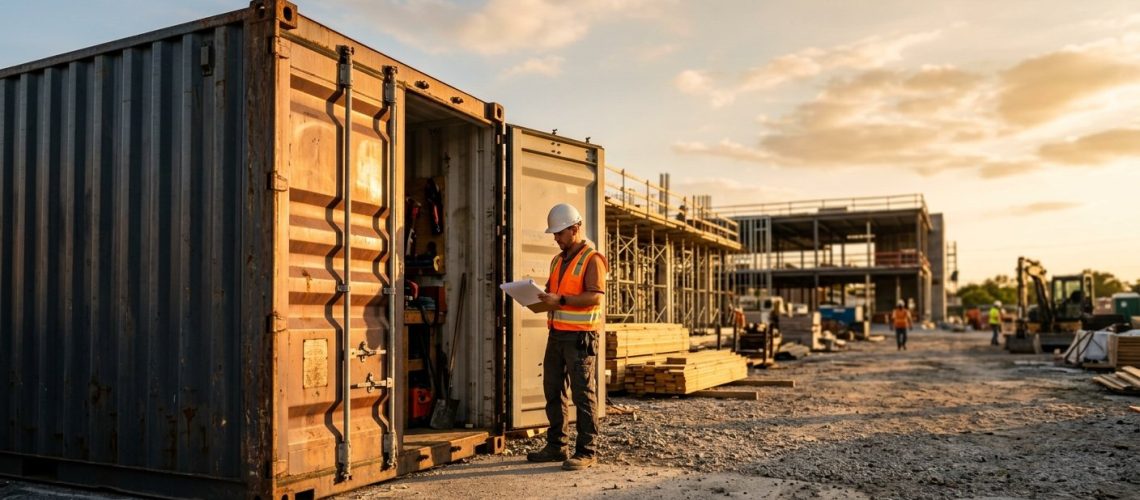
Renting a conex container — a heavy-gauge steel intermodal shipping unit delivered directly to your job site — is the most practical way for Florida contractors to secure tools, materials, and equipment on-site. Available in 10-, 20-, and 40-foot sizes, rentals offer flexible month-to-month terms with no capital outlay, no storage problem between jobs, and no maintenance responsibility.
- Conex containers come in 10-, 20-, and 40-foot sizes — the 20-foot unit suits most mid-size job sites.
- Annual estimates put the U.S. cost of heavy equipment theft at about $300 million to $1 billion (NER/NICB); a locked steel container is a stronger deterrent than fencing or job boxes.
- Renting beats buying for most Florida projects: no upfront capital, no storage problem between jobs, and no maintenance responsibility.
- Permit requirements vary by Florida municipality — always confirm with your local building department before delivery.
- Dash Mobile Storage is backed by 70+ years of logistics experience through the Armellini Logistics heritage.
Whether you’re managing a residential renovation in Port St. Lucie or overseeing a commercial build-out in Palm Beach County, here’s what you need to know before you rent a conex container in South Florida or the Treasure Coast.
What Is a Conex Container?
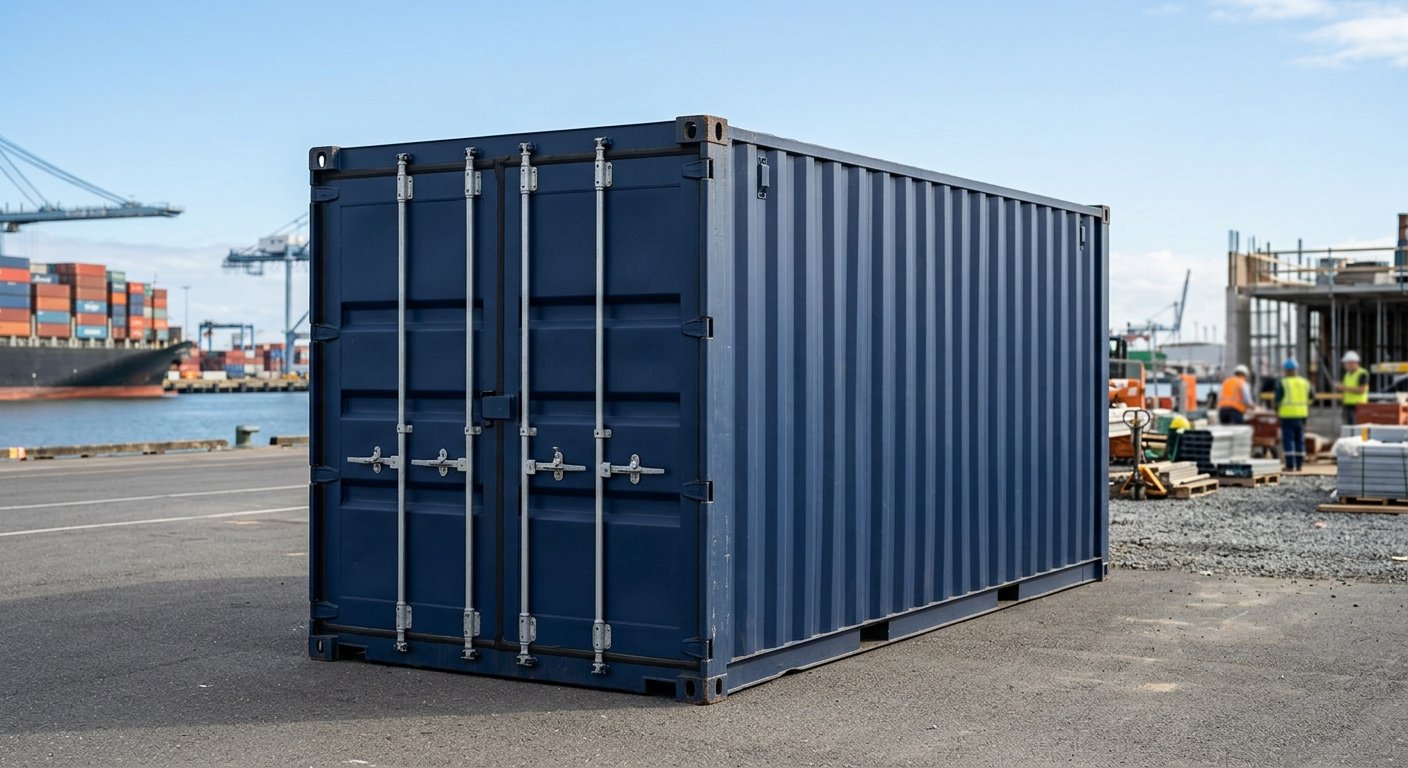
A conex box — short for “container express” — is a steel intermodal shipping container originally designed for transporting cargo across ocean freight routes. Today, these durable steel storage containers have found a permanent second life in construction, retail, and industrial applications because of their strength, modularity, and security.
When contractors refer to a conex container rental, they typically mean renting one of these ground-level steel units and having it delivered directly to the job site for the duration of the project. The unit serves as a locked, weatherproof storage space for tools, equipment, materials, and valuable assets — without requiring workers to haul supplies off-site at the end of every shift.
For a deeper look at the range of applications, visit the conex shipping container rentals page to explore how Dash Mobile Storage structures these solutions for Florida contractors and businesses.
Standard Conex Container Sizes for Construction Sites
Choosing the right container size is one of the first decisions you’ll make. Ordering too small means overflow and disorder; ordering too large means paying for space you don’t use. Here are the most common conex container sizes used in construction applications:
- 10-foot containers: Best for smaller renovation projects or residential work where space on-site is limited. Suitable for hand tools, small power equipment, and supplies.
- 20-foot containers: The most popular choice for mid-size job sites. Offers roughly 1,160 cubic feet of storage — enough for significant material inventory and larger equipment.
- 40-foot containers: Ideal for large-scale commercial construction projects requiring dedicated staging areas for materials, tools, and crew equipment.
When evaluating which size fits your project, consider not just your current inventory but how materials and equipment volume will shift as the project progresses through different phases.
Why Florida Contractors Rely on On-Site Storage Containers
Florida’s construction environment has unique pressures that make on-site storage containers more than a convenience — they’re often a necessity.
Tool and Material Theft Is a Real Risk
Construction site theft is a significant problem across the country. According to the equipment theft report from the National Equipment Register (NER) and the National Insurance Crime Bureau (NICB), annual estimates of the cost of heavy equipment theft range from about $300 million to $1 billion. Florida, with its high volume of active construction projects, is not immune. A locked steel storage container on-site provides a strong deterrent that temporary fencing and job boxes simply can’t match.
Florida’s Climate Demands Better Protection
South Florida’s humidity, afternoon thunderstorms, and hurricane season create real risks for exposed materials. Lumber warps, drywall deteriorates, and electrical components corrode when left unprotected. Steel shipping containers are built to withstand ocean crossings — they offer a significantly more protective environment than tarps or open trailers for on-site material storage.
Conex containers provide strong weather resistance but are not designed to prevent all damage in extreme flooding events. Contractors in low-lying areas should assess site drainage and container placement as part of their overall project planning.
Project Efficiency and Organization
When tools and materials are stored in a designated, locked container on-site, crews spend less time searching for equipment and more time building. An organized job site storage setup reduces downtime, limits unauthorized access, and can even support OSHA compliance by keeping hazardous materials properly contained and labeled.
According to OSHA’s construction safety guidelines, maintaining organized and secured storage of materials on construction sites is part of broader housekeeping and hazard management requirements — something a properly placed conex container directly supports.
Renting vs. Buying: What Makes More Sense for Most Projects
Many contractors ask whether they should rent or purchase a conex container outright. For most Florida-based construction projects, renting is the smarter financial choice. Here’s why:
- No upfront capital investment: Purchasing a 20-foot or 40-foot steel container requires significant capital that can be better deployed toward materials and labor.
- Flexibility by project: Renting allows you to right-size the container to each individual job rather than owning fixed infrastructure.
- No storage problem when the job ends: When you own a container, you need somewhere to keep it between projects. Rental means delivery when you need it and pickup when you’re done.
- No maintenance responsibility: The rental company maintains the unit’s integrity.
Rental means delivery when you need it and pickup when you’re done — no storage problem between projects.
For contractors managing multiple simultaneous projects, a rental model also offers the flexibility to scale container use up or down depending on the workload.
What to Look for in a Conex Box Rental Company
Not every shipping container rental company is equipped to serve Florida contractors effectively. Here are the key factors to evaluate:
Ground-Level Accessibility
This is non-negotiable for active job sites. Ground-level accessible containers eliminate the need for forklifts or loading equipment to access stored items. Workers can walk in and out with materials and tools easily — a critical factor when productivity is the priority.
Delivery Capability and Service Area
A rental company needs to be able to deliver to your specific job site — even if access is tight. Ask about their delivery equipment, lead times, and any site requirements before committing.
Logistics Experience and Reliability
This is where Dash Mobile Storage stands apart. Backed by the Armellini Logistics heritage with 70+ years of logistics experience, Dash brings a level of operational precision to container delivery and pickup that general equipment rental companies can’t match. That institutional knowledge means fewer scheduling headaches and more reliable service for contractors managing tight project timelines.
Container Condition and Security Features
Ask about lock box configurations, container condition, and whether units have been inspected for structural integrity. A damaged container or a compromised locking system defeats the purpose of having secure, on-site job site storage.
Request confirmation of lock box configuration and a structural inspection record before accepting delivery. A compromised locking system or damaged container shell defeats the entire purpose of on-site secure storage.
Practical Tips for Setting Up Your Job Site Storage Container
Getting the most out of your conex container rental goes beyond simply dropping it on the lot. A few setup considerations make a significant difference in day-to-day usability:
Position for workflow
Place the container close to where materials will be used most, but out of the path of heavy equipment and deliveries.
Install shelving
Vertical shelving inside the container dramatically increases usable storage capacity and improves organization by trade or task.
Establish access protocols
Assign responsibility for the container key and create a simple sign-in/sign-out log for tools if your site requires it.
Check local permit requirements
Some Florida municipalities require a permit for temporary container placement, particularly in commercial districts. Confirm with your local building department before delivery.
Assess the surface
Containers should be placed on level, firm ground. Soft or uneven surfaces can affect door alignment and structural stability over time.
Mobile Storage Containers for Renovation Projects
Conex containers aren’t exclusively for ground-up construction. They’re equally valuable for large-scale renovation projects where homeowners or business operators need to clear space, protect furnishings, or stage materials without renting a distant off-site storage unit.
Dash Mobile Storage’s portable storage units and conex container options give South Florida contractors a flexible tool for both new construction and renovation work — all delivered directly to the project location.
| What to compare | Conex Container | Portable Storage Unit |
|---|---|---|
| Construction material | Heavy-gauge steel | Lighter-gauge materials |
| Original design purpose | Ocean freight transport | Residential / light commercial use |
| Structural strength | Superior — engineered for stacking | Sufficient for light-duty use |
| Best suited for | Heavy construction environments | Residential or light commercial projects |
Frequently Asked Questions
How long can I rent a conex container for a construction project?
Rental periods are typically flexible and can range from a few weeks to several months depending on your project timeline. Month-to-month arrangements are common, which allows contractors to extend or conclude the rental as the project evolves without being locked into a fixed term.
Do I need a permit to place a conex container on a job site in Florida?
Permit requirements vary by municipality. Some Florida cities and counties require temporary storage container permits, especially for commercial properties or when containers are placed near public rights-of-way. Always check with your local building or zoning department before scheduling delivery.
What is the difference between a conex container and a portable storage unit?
Conex containers are heavy-gauge steel intermodal shipping containers originally built for freight transport — they’re extremely durable and offer superior structural strength. Portable storage units may use lighter-gauge materials and are designed primarily for residential or light commercial use. For heavy construction environments, a steel conex container is typically the more appropriate choice.
Can conex containers be stacked on a job site?
Standard conex containers are engineered to be stackable, but this typically requires heavy lifting equipment. For most job site rental applications, containers are used at ground level. Discuss specific configuration needs with your rental provider before delivery.
How do I know what size container my project needs?
A general starting point: a 20-foot container accommodates the storage needs of a mid-sized construction project covering roughly 2,000–5,000 square feet. Larger commercial builds may need a 40-foot unit or multiple containers. It’s always better to consult directly with your rental provider — describe your project scope, crew size, and material volume so they can recommend the right fit.
Get Your Job Site Organized with Dash Mobile Storage
Dash Mobile Storage serves South Florida and the Treasure Coast with ground-level accessible conex containers and portable storage units delivered directly to your location — backed by 70+ years of logistics expertise through the Armellini Logistics heritage.
About Dash Mobile Storage
Dash Mobile Storage provides convenient, secure, and affordable portable storage solutions for South Florida and Treasure Coast homeowners, contractors, and businesses. Drawing on 70+ years of logistics experience through the Armellini Logistics heritage, Dash delivers ground-level accessible storage units directly to customers' locations. The company specializes in helping clients navigate Florida-specific storage challenges including moves, renovations, construction site organization, hurricane preparedness, and business inventory management with a locally-rooted, customer-first approach. Visit dashmobilestorage.com →