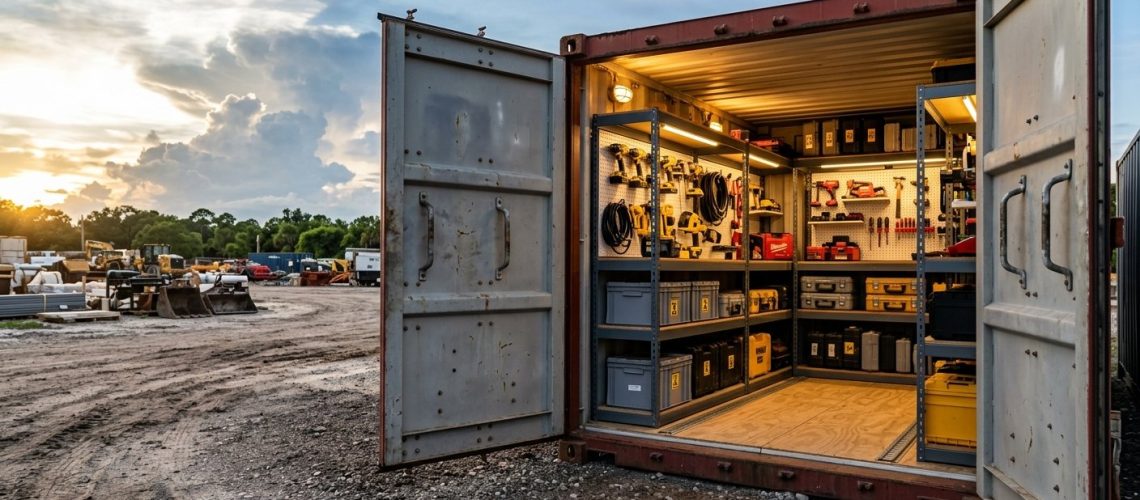
Storing tools safely on a Florida job site means keeping equipment dry, organized, and secured inside a sturdy on-site storage container—ideally one that sits at ground level for easy access. Florida’s combination of humidity, afternoon storms, and the ever-present risk of theft makes ad hoc tool storage a liability. Contractors and project managers who plan their storage setup from day one lose far fewer tools and far fewer hours.
- Ground-level accessible containers are the most practical job site storage solution for Florida contractors.
- Humidity and moisture control are non-negotiable in South Florida’s climate.
- Proper organization inside the container reduces tool loss and downtime significantly.
- Security measures—hasps, padlocks, and placement strategy—are as important as the container itself.
- Common mistakes like overpacking and poor ventilation shorten tool lifespan and raise costs.
Why Job Site Tool Storage Demands More Thought in Florida
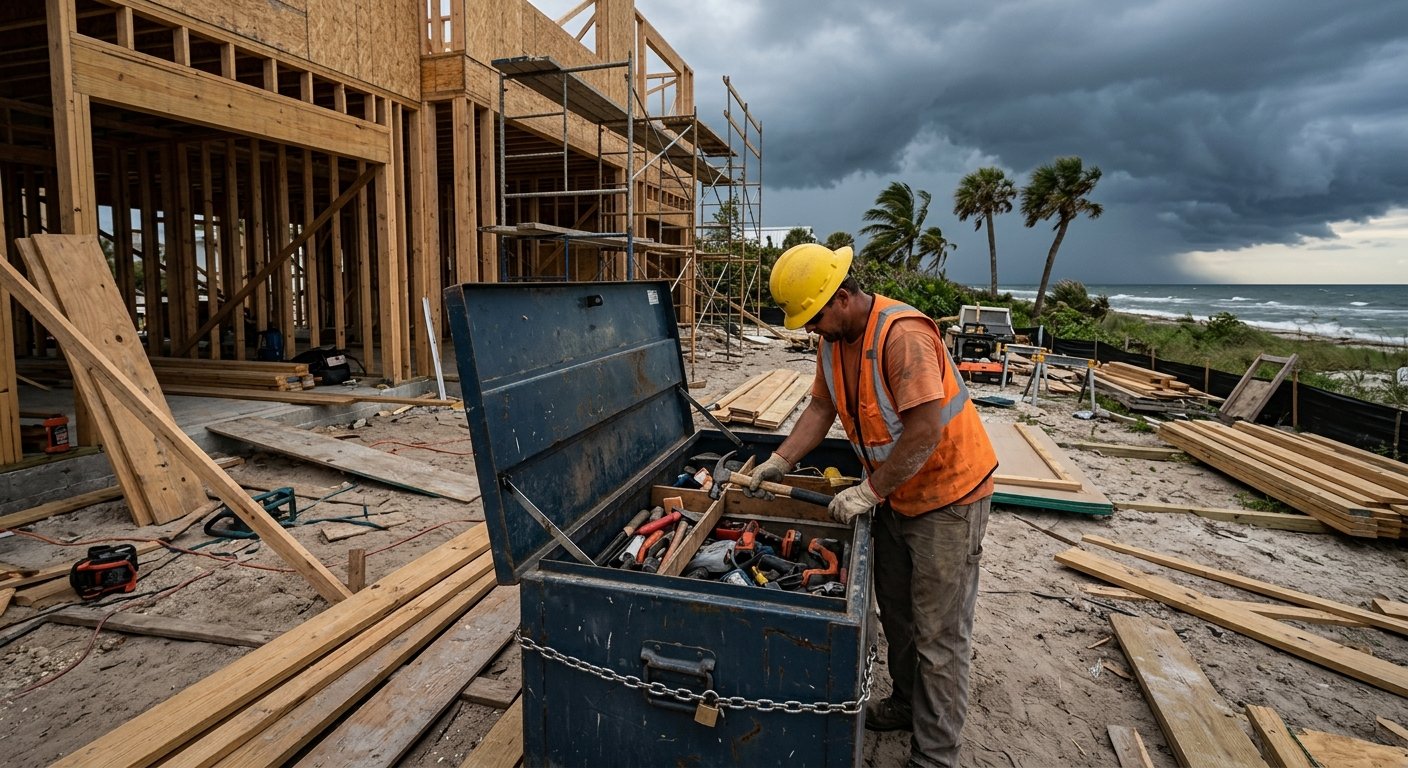
Florida’s construction environment is uniquely demanding. Relative humidity along the Treasure Coast regularly climbs above 80 percent during summer months, and afternoon thunderstorms can arrive with little warning. According to the U.S. Occupational Safety and Health Administration, unsecured tools and equipment on active construction sites are a leading contributor to workplace incidents—and improperly stored tools corrode faster, dull sooner, and create tripping hazards.
For contractors working in Palm City, Stuart, Port St. Lucie, or anywhere along the Treasure Coast, the answer isn’t stacking tools in a pickup bed or under a tarp. A proper on-site storage container delivers structure, security, and shelter in one unit—and when it’s delivered directly to your job site, there’s no time lost hauling gear back and forth.
Choosing the Right Container for Your Job Site
Not every container suits every project. Before you request delivery, think through what you’re storing, how long the project runs, and how many crew members need access throughout the day.
Size Considerations
Containers typically come in 20-foot and 40-foot configurations. A smaller residential renovation might only need a 20-foot unit for hand tools, power equipment, and hardware. A multi-phase commercial build will almost certainly need a 40-foot container—or multiple units separated by trade. Undersizing is one of the most common mistakes contractors make; a crowded container becomes unsafe and disorganized fast.
Ground-Level Access Matters More Than You Think
On an active job site, workers are moving quickly. A container that requires a step-up or a ramp introduces both a safety risk and a workflow slowdown. Ground-level accessible units—like those delivered by Dash Mobile Storage—allow crew members to load and unload tools without awkward lifts or tripping hazards. This is especially relevant in Florida where muddy site conditions after rain can make elevated thresholds genuinely dangerous.
Position your container with the doors facing away from prevailing winds and toward the most active work area. This single placement decision reduces both wind-driven moisture intrusion and the time workers spend walking tools to and from their stations.
Organizing Tools Inside the Container: A Practical System
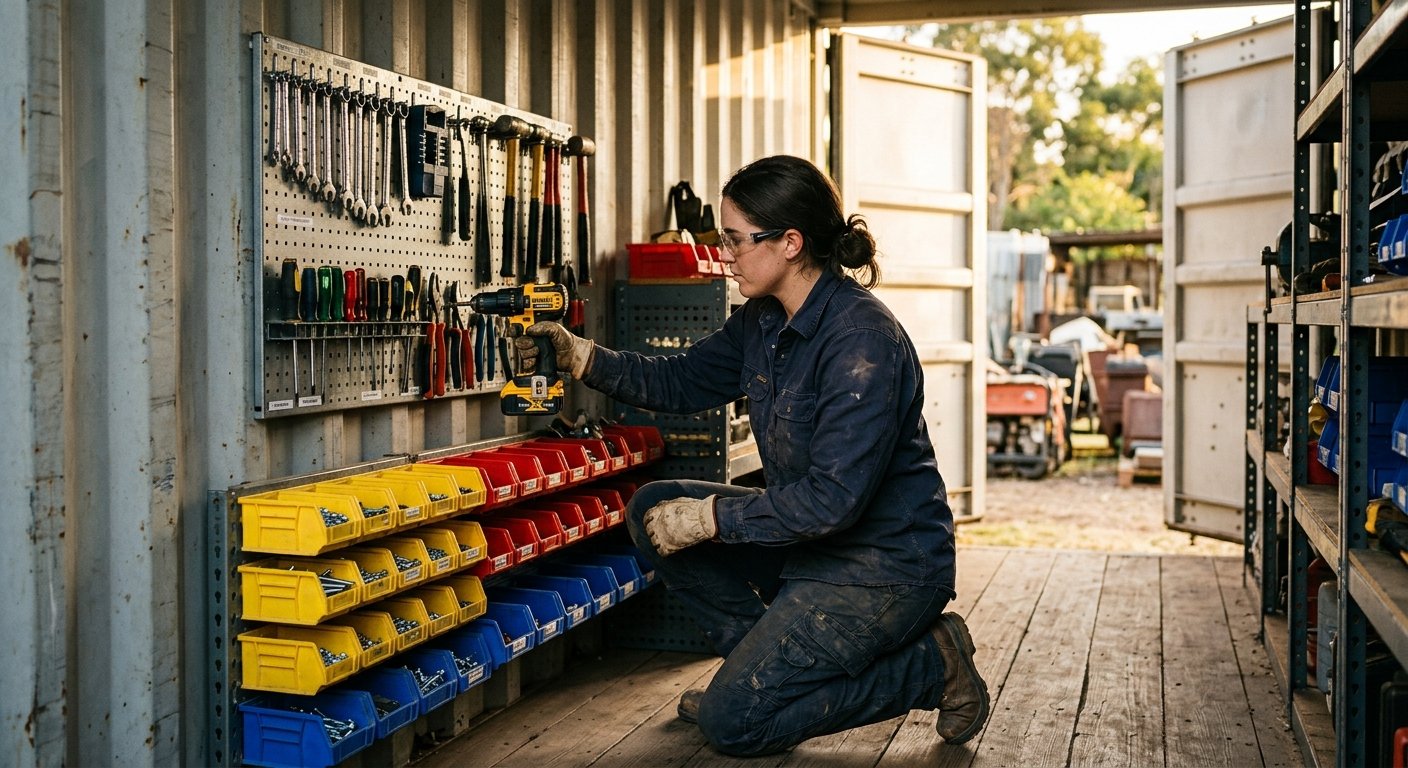
Dropping tools into a container without a system is barely better than leaving them outside. A well-organized container storage setup keeps tools accessible, accountable, and in better working condition.
Zone by trade or frequency of use
Place tools used every day near the doors. Specialty equipment used only at project milestones can go deeper in the container. If multiple trades are sharing the space, assign clear zones using labeled shelving or floor tape to prevent mix-ups and disputes.
Use freestanding shelving units
Bolt-together steel shelving allows you to maximize vertical space without permanently modifying the container. Store smaller power tools in their cases on shelves; hang cords and hoses on hooks at shoulder height to prevent tangling and tripping.
Keep the floor clear of loose tools
Tools left on the floor get stepped on, kicked, and damaged. More importantly, a cluttered floor is a safety hazard—especially when workers are moving quickly in low light or carrying materials. Use bins, pegboards, or wall-mounted racks to get everything off the ground.
Create a check-out system for high-value equipment
For drills, saws, laser levels, and other expensive tools, a simple paper or tablet-based check-out log assigns accountability. This is a straightforward way to reduce loss and know exactly who had what if something goes missing.
Label everything
Label shelves, bins, and zones clearly. When tools are returned to the wrong location—which happens constantly on active sites—the next user wastes time hunting. Clear labels make correct returns the path of least resistance.
Protecting Tools from Florida’s Humidity and Moisture
Metal tools corrode. Electronics fail. Even well-sealed cases allow moisture in over time in South Florida’s climate. Humidity management inside a job site storage container isn’t optional—it’s maintenance.
The NACE International (now AMPP), the leading authority on corrosion science, identifies high relative humidity as the primary accelerant of metal corrosion in enclosed spaces. A few practical countermeasures go a long way:
- Desiccant packs or dehumidifier bags: Place moisture-absorbing packets near sensitive electronics and battery-powered tools. Replace them monthly.
- Tool oil and light coatings: A wipe-down with a light machine oil on metal tool surfaces before weekend storage dramatically slows oxidation.
- Ventilation strips or vented doors: When selecting a container, ask about vented configurations. Even modest airflow significantly reduces condensation buildup.
- Elevate sensitive cases off the floor: If any ground-level moisture seeps in after heavy rain, tools stored at floor level are the first to suffer. Shelving provides that buffer.
Battery-powered tools are especially vulnerable. Lithium-ion batteries stored in high heat—think a sealed metal container in direct Florida sun—can degrade faster and, in extreme cases, pose a fire risk. Keep battery-powered tools in the cooler, shaded end of the container and never leave batteries on chargers unattended inside an enclosed space.
Securing the Container Against Theft
Tool theft is a persistent problem on construction sites nationwide. The National Insurance Crime Bureau consistently ranks construction equipment and tools among the most frequently stolen property categories. On Florida’s busy Treasure Coast, where multiple projects often run in close proximity, an unsecured container is a genuine vulnerability.
Here’s how to make your contractor storage solution as secure as possible:
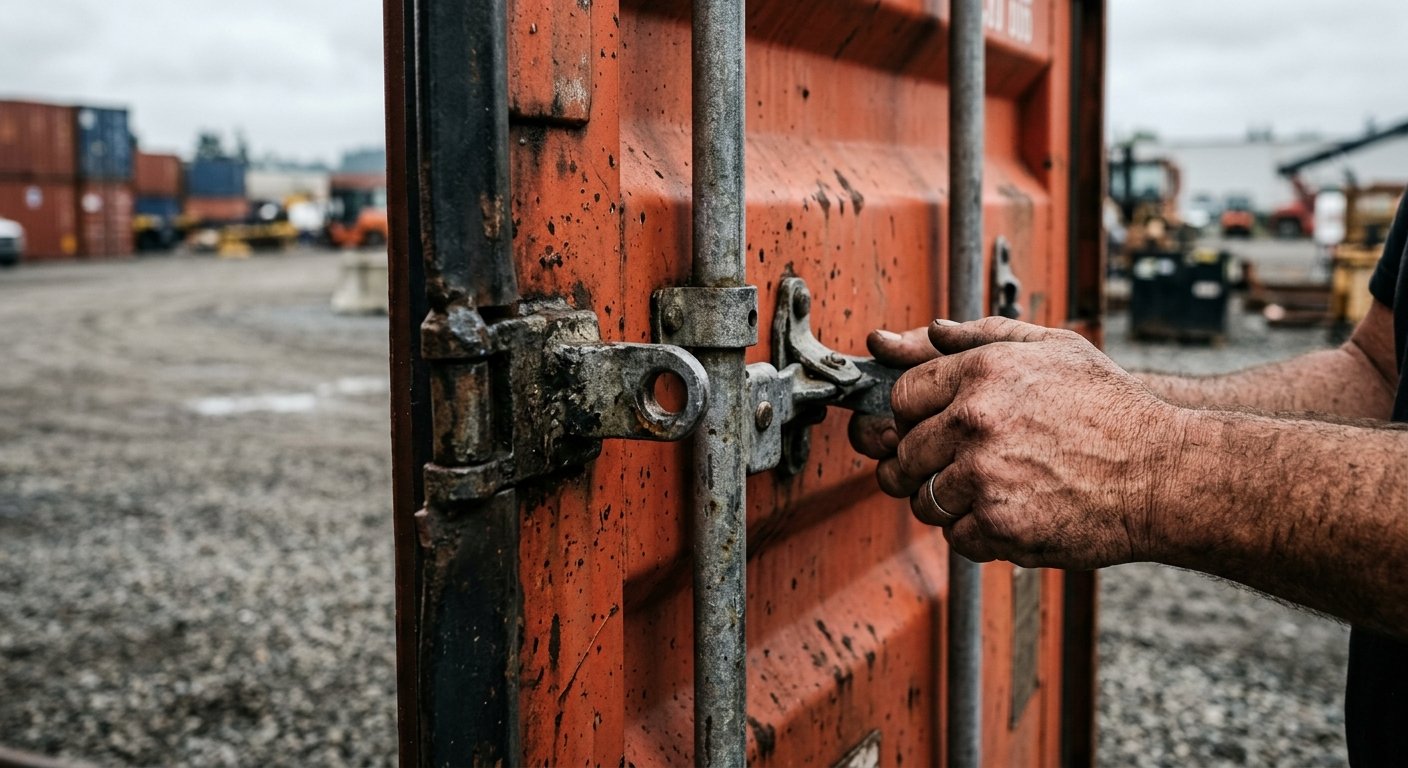
- Use a heavy-duty shrouded padlock: Standard padlocks are vulnerable to bolt cutters. A shrouded or closed-shackle padlock removes the exposed shackle that cutters need to grip.
- Add a secondary hasp: A lockbox or hasp welded over the door handle makes it significantly harder for thieves to attack the lock mechanism itself.
- Position containers in well-lit, visible areas: Thieves avoid exposure. A container visible from the street or a site camera reduces risk considerably.
- Don’t advertise contents: Avoid stacking brand-name tool cases in visible windows or leaving the container door open during breaks longer than necessary.
A container visible from the street and secured with a shrouded padlock is one of the most cost-effective theft deterrents on any job site.
Common Mistakes to Avoid
Even experienced project managers make avoidable errors with job site storage. Watch for these:
- Overpacking the container: When tools are jammed in and workers have to dig to find anything, time is wasted and equipment gets damaged. Size up rather than cram in.
- Skipping the organization step at project start: Waiting until the container is half-full to create a system means reorganizing under pressure. Set up your zones on day one.
- Ignoring the container’s location relative to site traffic: A container placed in the path of heavy equipment creates risk. Plan placement before delivery arrives.
- Treating the container as permanent clutter storage: Job site containers are most effective when they’re active inventory, not a dumping ground for broken equipment and scrap material. Do a monthly purge.
If your storage needs extend beyond a single project or your business is outgrowing its current setup, it may be worth exploring whether signs-your-business-needs-off-site-storage-before-it-s-too-late/”>your business has outgrown its current storage approach altogether.
Frequently Asked Questions
What size storage container do I need for a typical residential renovation in South Florida?
For most residential renovations, a 20-foot container is sufficient to store hand tools, power tools, hardware, and smaller equipment. If you’re running a larger crew or storing materials alongside tools, consider a 40-foot unit. It’s almost always better to have slightly more space than to pack tools in too tightly, which leads to damage and disorganization.
How do I protect tools from rust inside a container during Florida’s rainy season?
Use desiccant moisture absorbers inside the container, wipe metal tools down with a light machine oil before long weekends or breaks, and choose a container with ventilation. Keeping tools on shelves rather than the floor also helps if any ground-level moisture enters after heavy rain.
Can I use a portable storage container for construction site storage on multiple projects?
Absolutely. Portable containers are designed to be delivered, used for the duration of a project, and then picked up and redelivered to your next site. This makes them one of the most flexible contractor storage solutions available, especially compared to a fixed storage unit that requires daily hauling.
What’s the best way to prevent tool theft from a job site container overnight?
Use a shrouded padlock and a secondary hasp on the door, position the container in a well-lit and visible area of the site, and avoid leaving the container open or unattended during breaks. Site cameras or motion-activated lighting near the container add another layer of deterrence.
Does Dash Mobile Storage deliver containers directly to construction sites in Stuart or Port St. Lucie?
Yes. Dash Mobile Storage delivers portable storage containers directly to job sites across Palm City, Stuart, Port St. Lucie, Jupiter, Fort Pierce, and Hobe Sound. Containers are placed at ground level for easy access, and the team coordinates delivery to fit your project timeline.
The Dash Mobile Storage Advantage for Treasure Coast Contractors
Backed by 70+ years of logistics experience through the Armellini Logistics heritage, Dash Mobile Storage understands what South Florida contractors actually need from portable storage units on active job sites. That means ground-level accessible containers delivered directly to your location in Palm City, Stuart, Port St. Lucie, Jupiter, Fort Pierce, and Hobe Sound—no detours, no hauling, no wasted crew time.
Whether you’re managing a single-family renovation or a multi-phase commercial build, the right on-site storage container pays for itself quickly in reduced tool loss, better organization, and a safer worksite. The key is planning your storage setup before the first tool truck arrives—not after the job is already in motion.
Get a Container Delivered to Your Job Site
Tell us your project location and start date, and our local Treasure Coast team will coordinate the right container and delivery window for your schedule.
About Dash Mobile Storage
Dash Mobile Storage provides convenient, secure, and affordable portable storage solutions for South Florida and Treasure Coast homeowners, contractors, and businesses. Drawing on 70+ years of logistics experience through the Armellini Logistics heritage, Dash delivers ground-level accessible storage units directly to customers' locations. The company specializes in helping clients navigate Florida-specific storage challenges including moves, renovations, construction site organization, hurricane preparedness, and business inventory management with a locally-rooted, customer-first approach. Visit dashmobilestorage.com →