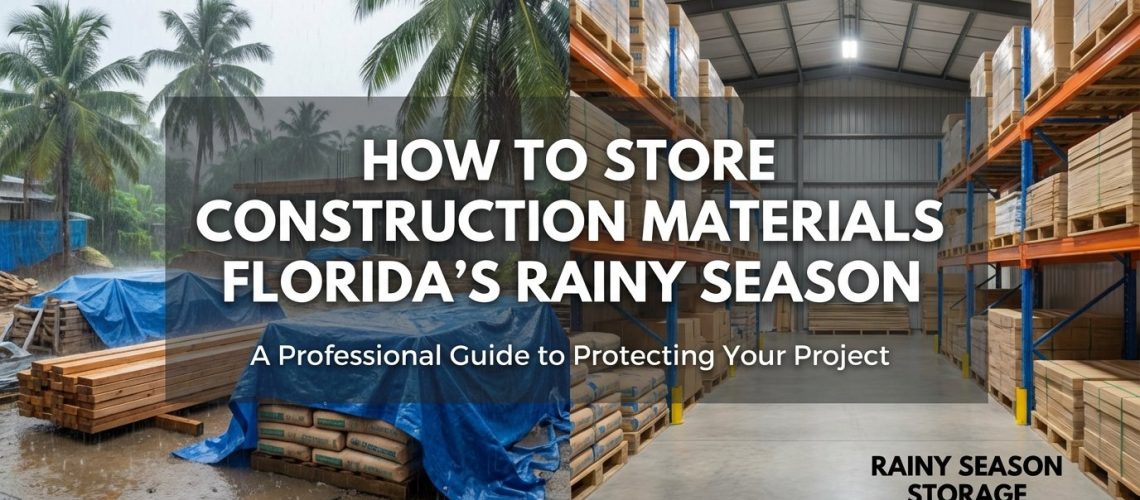
Florida’s rainy season, which typically runs from May through October, delivers an average of 30 to 50 inches of precipitation across the state. For construction professionals and property owners managing renovation projects, this six-month deluge presents a significant challenge: protecting valuable building materials from moisture damage that can halt projects and drain budgets. Understanding proper construction material storage strategies isn’t just about convenience—it’s about safeguarding thousands of dollars in lumber, drywall, cement, and equipment from Florida’s unpredictable weather patterns.
The Real Cost of Water-Damaged Building Materials
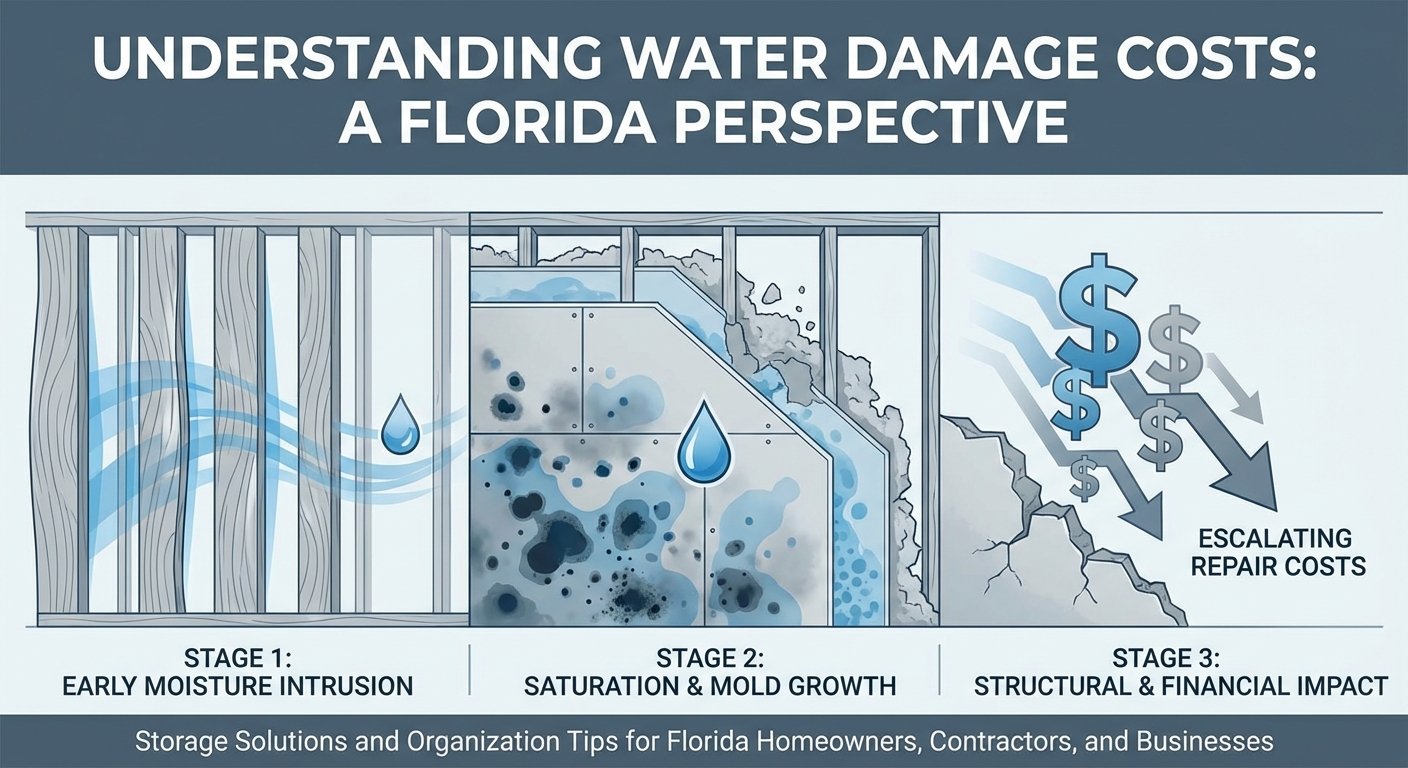
Water damage to construction materials creates a cascading series of problems that extend far beyond simple replacement costs. Wood products like framing lumber and plywood can warp, swell, or develop mold within 24 to 48 hours of exposure to moisture. Drywall becomes permanently compromised when wet, losing its structural integrity even after drying. Metal components develop rust and corrosion that weakens their load-bearing capacity. Electrical materials and tools can become safety hazards when exposed to water.
The financial impact compounds quickly. A single afternoon thunderstorm—common during Florida summers—can destroy enough materials to delay a project by days or weeks while waiting for replacements. This creates labor scheduling conflicts, extends rental periods for equipment, and potentially triggers penalty clauses in construction contracts. For contractors operating on tight margins, inadequate protection of building materials can transform a profitable job into a financial loss.
Understanding Florida’s Unique Moisture Challenges
Florida’s rainy season isn’t just about the volume of rainfall. The state’s high humidity levels, which regularly exceed 70% even on non-rainy days, create a persistent moisture threat. Coastal areas face the additional challenge of salt air, which accelerates corrosion of metal materials and fasteners. The combination of heat, humidity, and frequent rain creates ideal conditions for mold growth on organic materials.
Afternoon thunderstorms develop rapidly, often with little warning. A job site that’s completely dry at lunch can be soaked by 3 PM. This unpredictability makes it impractical to rely on tarps or temporary covers alone—materials need proper enclosure in weatherproof storage solutions that provide 24/7 protection.
Essential Materials That Require Protected Storage
Different construction materials have varying sensitivity to moisture exposure. Understanding these requirements helps prioritize your job site storage strategy:
High-Priority Items
- Drywall and plaster products: Extremely susceptible to water damage; must stay completely dry
- Lumber and engineered wood: Warps, swells, and develops mold when wet
- Insulation materials: Loses R-value and effectiveness when saturated
- Cement and mortar mixes: Premature curing occurs with water exposure
- Electrical components: Safety hazards when moisture enters boxes or panels
- Paint and coatings: Temperature and humidity fluctuations affect consistency
Moderate-Priority Items
- Metal hardware and fasteners: Rust and corrosion develop over time
- Power tools and equipment: Moisture damages motors and electronics
- Tile and flooring materials: Packaging deterioration affects installation
- Windows and doors: Weather stripping and seals can be compromised
Why On-Site Storage Containers Outperform Traditional Methods
Many construction sites still rely on tarps, temporary shelters, or hoping to store materials inside partially-completed structures. These approaches fail consistently during Florida’s rainy season. Tarps blow off in thunderstorm winds, water pools on top of covered materials, and even buildings under construction have gaps where wind-driven rain penetrates.
On-site storage containers provide weather-tight protection that keeps materials dry regardless of storm intensity. These steel containers feature sealed doors, solid roofs, and elevated floors that prevent water intrusion from any angle. Unlike off-site storage facilities, on-site containers eliminate transportation delays—crews can access materials immediately when weather clears, maintaining project momentum.
Ground-level accessibility is particularly valuable for construction applications. Workers can easily load and unload heavy materials without navigating stairs or ramps, reducing injury risk and improving efficiency. This accessibility becomes critical when managing large deliveries of lumber, drywall sheets, or bagged concrete that would be difficult to transport through multi-level facilities.
Strategic Organization Inside Your Job Site Storage
Simply placing materials inside a container isn’t enough—proper organization maximizes protection and accessibility. Start by creating elevation for all materials. Even in weatherproof containers, placing items directly on the floor creates condensation risks. Use pallets, lumber racks, or shelving to keep materials elevated with air circulation underneath.
Position moisture-sensitive materials toward the center and rear of the container, farthest from the door opening where humidity might enter during access. Store bagged materials like cement vertically on pallets to prevent moisture wicking from concrete floors. Keep electrical components, tools, and equipment in sealed plastic bins for an additional protection layer.
Organize materials by project phase to minimize the time the container door stays open during retrieval. Group framing lumber together, drywall in another section, and finishing materials separately. This organization reduces humidity exposure and speeds up workflow when crews need specific items.
Consider implementing a basic inventory system, even if just a whiteboard on the container door noting major items inside. This prevents unnecessary opening and searching, which introduces humid air and wastes valuable labor time.
Temperature and Humidity Control Considerations
While standard steel containers provide excellent rain protection, Florida’s heat can create secondary moisture problems through condensation. When hot, humid air enters a container and encounters cooler materials or surfaces, water droplets form. This is especially problematic during morning hours when overnight cooling creates temperature differentials.
Several strategies minimize condensation issues in Florida construction storage. Desiccant products or moisture absorbers placed inside containers help control humidity levels. Ensuring containers are positioned with good airflow around the exterior prevents heat buildup. When possible, parking containers in shaded areas reduces internal temperature extremes.
For extended storage periods or particularly sensitive materials, some contractors use portable dehumidifiers powered by generator or temporary site power. While this adds cost, it’s far less expensive than replacing water-damaged materials.
Protecting Materials During Hurricane Season
Florida’s rainy season overlaps with hurricane season, which officially runs June through November. Hurricane preparations require additional considerations beyond normal rain protection. When tropical storm watches are issued, ensure all materials are secured inside containers and doors are properly locked and sealed.
Position job site storage containers away from trees, power lines, and structures that might create flying debris hazards. Many Florida construction storage solutions are built to withstand significant wind loads, but proper placement enhances safety. Coordinate with your storage provider about hurricane protocols—some companies offer to relocate containers to safer locations when major storms threaten.
Document all materials stored before hurricane events for insurance purposes. Photograph container contents and maintain current inventory records. This preparation streamlines any potential insurance claims if unexpected damage occurs.
Choosing the Right Container Size for Your Project
Selecting appropriate container size balances material protection with job site space constraints. A 20-foot container provides approximately 160 square feet of storage space, suitable for smaller renovation projects or as dedicated tool and equipment storage. This size works well for residential additions, bathroom remodels, or kitchen renovations.
Larger commercial projects typically require 40-foot containers, offering 320 square feet of protected space. This capacity accommodates materials for multi-room renovations, new construction projects, or serves as centralized storage for multiple concurrent job sites.
Consider whether you need multiple smaller containers rather than one large unit. Separate containers allow better organization—one for materials, another for tools and equipment—and provide flexibility if your project spans multiple locations.
Local Expertise Makes a Difference
Working with storage providers who understand Florida’s specific challenges provides significant advantages. Companies with deep roots in Florida logistics—like those backed by decades of transportation and warehousing experience—bring valuable insights about weather patterns, permitting requirements, and best practices for different regions across the state.
This local knowledge extends to understanding municipal regulations for placing containers on job sites, proper positioning to handle Florida’s sandy soils, and responsive service when weather emergencies require quick action. Providers with established regional presence can deliver and relocate containers quickly, minimizing project disruptions.
Making Protected Storage Part of Your Project Budget
Construction material storage should be considered an essential line item in project budgets, not an optional expense. Calculate the value of materials you’ll have on-site at any given time, then compare that to the monthly cost of proper protection. For most projects, storage costs represent just 1-2% of material values—a small insurance policy against potentially catastrophic losses.
Factor storage into your project timeline from the start. Having containers delivered before material shipments arrive ensures everything has immediate protection. This proactive approach prevents the scramble to find storage solutions after materials are already at risk on an exposed job site.
Protect Your Investment With Professional Storage Solutions
Florida’s rainy season doesn’t have to mean construction delays, damaged materials, or budget overruns. Professional on-site storage containers provide the reliable protection that keeps projects moving forward regardless of weather conditions. With weatherproof construction, ground-level accessibility, and flexible sizing options, these solutions address the specific challenges that Florida contractors and property owners face during the wettest months of the year.
Ready to protect your construction materials from Florida’s rainy season? Contact Dash Mobile Storage today to discuss your job site storage needs. Our team understands the unique requirements of Florida construction projects and can deliver the right storage solution to your site quickly. With 70+ years of logistics experience through our Armellini heritage, we provide the reliability and local expertise your project deserves. Call us now to get started with weatherproof protection that keeps your project on schedule and your materials in perfect condition.