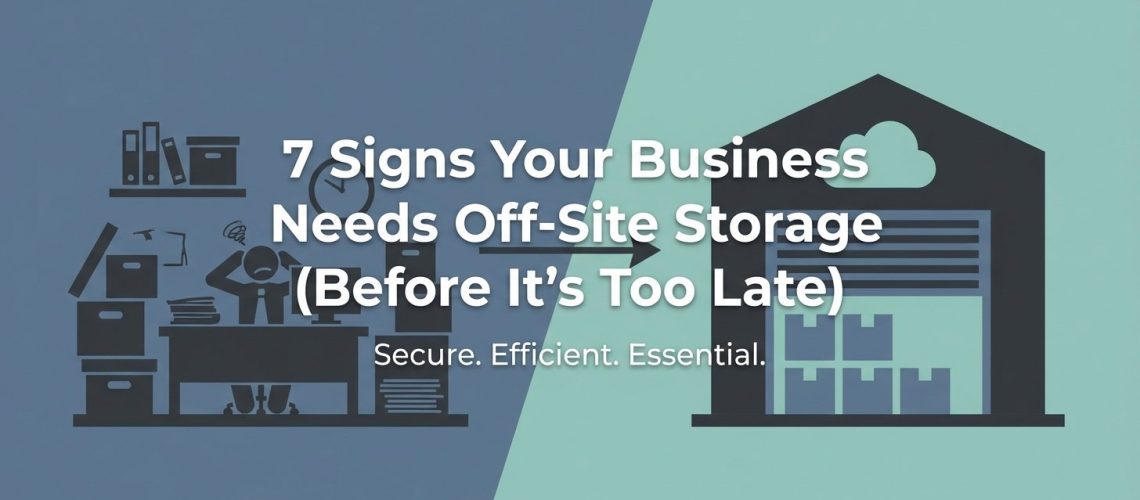
Most business owners don’t realize they need additional storage until they’re already drowning in inventory, tripping over equipment, or losing valuable workspace to boxes. By then, productivity has already suffered, safety hazards have emerged, and opportunities have been missed. The good news? Your business usually sends clear warning signals long before reaching a crisis point.
Recognizing these signs early allows you to implement business storage solutions proactively rather than scrambling for emergency fixes. Whether you’re a growing retail operation, a construction company managing multiple job sites, or a restaurant expanding your menu offerings, understanding when to seek commercial storage can be the difference between smooth operations and costly disruptions.
1. Your Workspace Has Become a Maze

When employees start navigating obstacle courses to reach their desks, or when you find yourself apologizing to clients about the “temporary mess” that’s been there for months, your workspace is telling you something important. Cluttered environments aren’t just unsightly—they directly impact productivity and professional image.
Retail businesses often experience this when seasonal inventory arrives before they’ve cleared out previous stock. Construction companies face similar challenges when equipment, tools, and materials accumulate between projects. Even professional offices struggle when document storage, marketing materials, and outdated furniture consume valuable square footage.
The cost of this clutter extends beyond aesthetics. Studies consistently show that disorganized workspaces reduce efficiency by 20-30%, as employees waste time searching for items and navigating cramped conditions. When your team spends more time moving things around than actually working, you’re paying for storage problems whether you realize it or not.
The Financial Reality
Calculate your cost per square foot for your current location. Now consider how much of that premium space is being used to store items you don’t access daily. A small business paying $25 per square foot while using 400 square feet for storage is spending $10,000 annually on inefficient space usage. Warehouse storage alternatives and inventory storage solutions typically cost a fraction of that amount while freeing up your expensive operational space for revenue-generating activities.
2. You’re Turning Down Business Because of Space Constraints
Perhaps the most painful sign that you need commercial storage is when lack of space forces you to decline opportunities. Restaurants can’t accept catering contracts because they lack room for additional supplies. Retailers pass on bulk purchasing discounts because they have nowhere to store extra inventory. Construction companies limit the number of simultaneous projects because equipment storage has become unmanageable.
Every time you say “no” to business because of storage limitations, you’re not just losing immediate revenue—you’re potentially damaging long-term relationships and reputation. Clients don’t want to hear that you can’t serve them because of internal logistics problems.
Small business storage solutions offer the flexibility to scale your capacity without the commitment and expense of leasing additional permanent space. This adaptability is especially valuable for businesses with seasonal fluctuations or those testing new product lines and service offerings.
3. Inventory Management Has Become a Guessing Game
If you can’t quickly answer basic questions about what inventory you have and where it’s located, your storage situation has crossed from inconvenient to genuinely problematic. Proper inventory management requires organized, accessible storage where items can be systematically tracked and retrieved.
Disorganized storage leads to multiple expensive problems:
- Duplicate purchasing because you can’t find existing inventory
- Expired or damaged products that weren’t rotated properly
- Missing items that are “somewhere” but can’t be located when needed
- Inability to fulfill customer orders promptly
- Inaccurate financial records and inventory valuations
Professional inventory storage allows you to implement proper organization systems with clear labeling, accessibility, and tracking. Many businesses find that moving inventory off-site actually improves their management practices because it forces them to develop better systems and processes.
4. You’re Paying for Space You’re Not Using Effectively
Commercial leases represent significant fixed costs. When you’re using valuable operational space for long-term storage of seasonal items, archived records, or equipment that’s only needed occasionally, you’re making an expensive mistake.
Consider a typical scenario: A growing e-commerce business leases 2,000 square feet at $20 per square foot annually. They’re using 600 square feet purely for inventory storage that doesn’t need to be accessed daily. That’s $12,000 per year spent on storage in a high-cost location when business storage solutions designed for this purpose would cost significantly less and provide better access.
The math becomes even more compelling when you factor in what that freed-up space could generate. Converting storage areas into additional workspace for employees, expanded showroom space, or additional production capacity directly contributes to growth and revenue.
5. Safety and Compliance Concerns Are Emerging
Overcrowded workspaces create serious safety hazards. Blocked emergency exits, unstable stacking, items stored in walkways, and overloaded shelving all increase liability risks and potential OSHA violations. For construction companies, improper tool and equipment storage can lead to accidents and damaged materials.
In South Florida’s climate, humidity and temperature fluctuations add another layer of complexity. Businesses storing sensitive inventory, documents, or equipment in inadequate conditions face deterioration, mold growth, and product degradation. What starts as a space-saving measure becomes a costly liability when goods are ruined or regulatory compliance is compromised.
Professional commercial storage facilities provide climate-controlled environments and proper safety standards. Ground-level accessibility eliminates risks associated with storing heavy items in awkward locations or requiring employees to navigate dangerous stacking situations.
6. Your Business Operations Have Outgrown Your Current Location
Growth is exciting, but it creates challenges. When you started, your space seemed perfectly adequate. Now you’ve added product lines, hired more employees, expanded services, or increased inventory to meet demand. Your business has evolved, but your square footage hasn’t.
The traditional response—moving to a larger location—comes with enormous costs and risks. New leases require long-term commitments, moving disrupts operations, and you might be paying for space you only need seasonally or temporarily. This is particularly challenging for businesses experiencing rapid growth where future space needs are difficult to predict accurately.
Warehouse storage alternatives provide a flexible middle ground. You can maintain your current operational location while accessing additional storage capacity as needed. This approach allows you to test whether growth is sustainable before committing to expensive real estate decisions.
For businesses with seasonal fluctuations—like retailers preparing for holiday inventory or landscaping companies storing equipment during slower periods—the ability to scale storage up and down provides significant financial advantages over maintaining excess space year-round.
7. Document and Record Retention Is Becoming Unmanageable
Legal and regulatory requirements mandate that businesses retain various documents for specific periods. Financial records, employee files, contracts, and compliance documentation accumulate rapidly. While digital transformation has reduced some paper storage needs, many industries still require physical document retention.
Medical practices, legal firms, accounting offices, and construction companies particularly struggle with this challenge. File cabinets consume expensive office space, old records mix with current files, and retrieval becomes increasingly difficult as volume grows.
Dedicated small business storage for records management solves multiple problems simultaneously. Archives move off-site, freeing premium office space while remaining accessible when needed. Organized storage systems make retrieval straightforward, and proper environmental controls protect sensitive documents from South Florida’s humidity and temperature variations.
Making the Transition to Off-Site Storage
Recognizing these warning signs is the first step. The next is implementing a solution that addresses your specific business needs without creating new complications.
Effective business storage solutions should offer:
- Convenient access that doesn’t disrupt daily operations
- Security measures protecting valuable inventory and equipment
- Flexibility to adjust storage capacity as needs change
- Ground-level accessibility for easy loading and unloading
- Professional guidance from experienced storage logistics providers
For South Florida businesses, partnering with providers who understand local challenges—from hurricane preparedness to humidity protection—ensures your stored items remain secure and accessible regardless of conditions. Companies with logistics heritage, like those backed by 70+ years of experience in professional transportation and storage, bring valuable expertise to commercial storage challenges.
The Cost of Waiting Too Long
Every day you operate with inadequate storage costs your business in multiple ways: reduced productivity, missed opportunities, safety risks, and inefficient use of expensive operational space. The businesses that thrive are those that address storage challenges proactively rather than reactively.
The question isn’t whether your business will eventually need commercial storage solutions—most growing businesses do. The question is whether you’ll implement them before storage problems impact your bottom line, or after they’ve already cost you customers, efficiency, and revenue.
Ready to Reclaim Your Workspace?
If you recognized your business in any of these seven signs, it’s time to explore storage solutions designed for commercial needs. The right storage partner doesn’t just provide space—they offer convenience, security, and the flexibility to support your business growth without the burden of long-term real estate commitments.
Dash Mobile Storage brings ground-level accessibility and decades of logistics expertise to businesses across South Florida and the Treasure Coast. Our solutions help you transform cluttered, inefficient workspaces into organized, productive environments while keeping your inventory and equipment secure and accessible. Contact us today to discuss how commercial storage can solve your specific business challenges and position you for continued growth.